How to Accept Mobile Payments | Platinum Payment Systems [2020 GUIDE]
In 2012, over 65% of the respondents of a survey had believed that by the year 2020, mobile payments would have completely replaced the need for cash, or even, credit card payments. And while this is not true everywhere, this same project came back in 2016 to report that almost half of the surveyed consumers [...]
The post How to Accept Mobile Payments | Platinum Payment Systems [2020 GUIDE] first appeared on Tekrati and is written by Sam Arnold
]]>How to Accept Mobile Payments | Platinum Payment Systems [2020 GUIDE]
In 2012, over 65% of the respondents of a survey had believed that by the year 2020, mobile payments would have completely replaced the need for cash, or even, credit card payments. And while this is not true everywhere, this same project came back in 2016 to report that almost half of the surveyed consumers in the United States had admitted to making mobile payments on multiple occasions!
This shift, while perhaps not as dramatic as originally expected, makes it very clear indeed that, if your business is not taking mobile payments? You’re behind the competition.
Which brings us to our question for the day! How do you accept mobile payments? And, to that end, how are they meant to work?
What Are Mobile Payments?
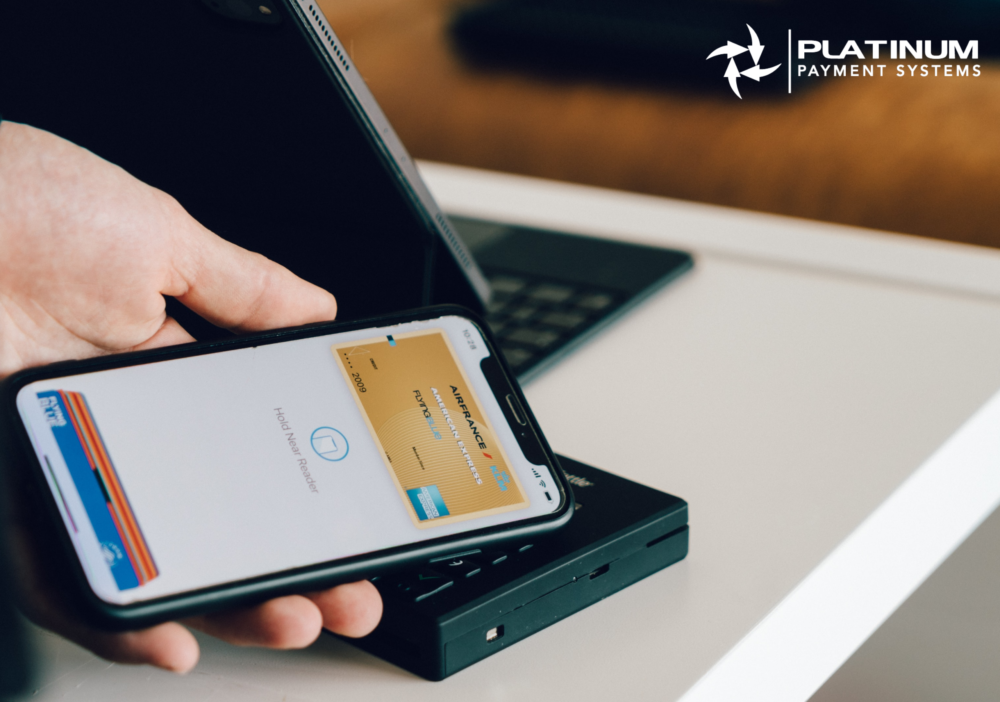
Nowadays, you can walk into stores that no longer use cash registers or any kind of point-of-sale (POS) terminals. In its stead, merchants accept only mobile payments, which is a term that describes the process of ‘sending’ or ‘receiving’ money from smartphones and tablets through mobile payment apps, mobile wallets, and/or the internet.
It’s a very ‘on-the-go’ solution for accepting payments that allow consumers to pay directly and quickly from their phones without having to constantly carry cash, credit cards, or checks.
Recent years have seen this type of payment processing rise in popularity, facilitated by mobile wallets and mobile payment processors like Platinum Payment Systems (PlatPay), which allows their clients to accept in-person and remote mobile payments in a way that is safe, efficient, and simple.
And, it should be noted that this rise in popularity is not just limited to the US either. The estimated pay volume for global mobile payments is slated to increase to around $6 trillion by 2024, which only goes to show just how important it is that you start adopting mobile payments into your process ASAP, lest, as we mentioned earlier, you get left behind in the dust of your competitors.
How Do Mobile Payment Transactions Work?
This is the part where things get a bit trickier. You see, there are actually many ways that you can start accepting mobile payments in 2020. After all, the industry has seen a lot of evolution in the last couple of years, and more and more mobile payment transaction solutions are available.
To illustrate this, we’ve included a breakdown of all of the need-to-know point-of-sale technologies used in some of the more popular mobile payment solutions:
- Near-Field Communication (NFC) Payments: The most common and popular POS solution for mobile payments are definitely near-field communication (NFC) payments; a type of contactless data transfer system that allows for near-instantaneous data transfer between NFC-enabled card machines and phones. This technology is especially popular in the UK and Japan and is used in Apple Pay (one of the most popular mobile wallets.)
- Sound Waves-based Payments: Notable because they are newer than NFC payments and compatible with most of today’s smartphones. Plus, these types of transactions can be processed entirely without any internet connection. Relying, instead, on unique sound waves that carry the encrypted payment information required for the purchase. It’s also important to note that these transactions are considerably cheaper than other options, mostly because you will need to download extra software to run it — unlike NFC-phones, the technology for which needs to be built into the hardware of a device.
- Magnetic Secure Transmissions (MST) Payments: These types of transactions use phones as pseudo-credit cards and are considered far more secure than regular credit card transactions because of it. Despite its newness, it’s also compatible with a lot of the newer credit card terminals used today. Samsung Pay is also known to use this type of technology for facilitating payments (along with NFC technology.)
What Is the Best Way to Accept Mobile Payments?
As a merchant, there are plenty of ways to adopt mobile transactions into your day-to-day processes, but one of the most fail-safe ways of doing so is to partner up with a merchant processor, like Platinum Payment Systems (PlatPay).
In fact, partnering with a merchant processor like Platinum Payment Systems will allow you to accept a variety of payment methods: be it online payments, mobile payments, mail order payments, telephone order payments, and checks & ACH payments. You also get guaranteed 100% support in case you get into sticky situations and added protection from the risks associated with some of the more common payment types, which Jed Morley, one of the managing founders of PlatPay, claims is one of their top-most priorities as a merchant processing service.
Of course, we recommend that you approach one of these merchant processors directly if you really want to know some of the finer details of their mobile payment processing systems, as many of them have different standards that they uphold and, at that, different services to offer.
The post How to Accept Mobile Payments | Platinum Payment Systems [2020 GUIDE] first appeared on Tekrati and is written by Sam Arnold
]]>