20 USA Business Experts Talk About The Unexpected Challenges In Business World
We interviewed 20 company entrepreneurs in the United States about the greatest unexpected challenges they faced with their Companies and how the pandemic prompted many companies to pivot and adapt to new market conditions. INTERVIEW HOST The host of this interview was Jed Morley. Jed Morley is the CEO of a leading payment processing service [...]
The post 20 USA Business Experts Talk About The Unexpected Challenges In Business World first appeared on Tekrati and is written by Jed Morley
]]>20 USA Business Experts Talk About The Unexpected Challenges In Business World
The host of this interview was Jed Morley. Jed Morley is the CEO of a leading payment processing service provider called PlatPay.


Mike Nemeroff
After three very tough years of my siblings and I putting all our time, efforts and money into Rush Order Tees, we were bringing in about $30k a month. We were doing everything ourselves: the marketing, printing, designing, selling, accounting and even shipping.
So the biggest challenge came when after all that hard work, at the end of the year we were either losing money or barely breaking even, even though we were saving every bit of cost we could possibly think of by doing things ourselves. This was when I reached burn out.
My tip for entrepreneurs starting the business is to factor in all the costs, including hiring employees as this is no sustainable. It is emotionally, mentally and physically draining and a business should not depend solely on it’s owners.
When creating a business plan and setting a budget, factor in every possible cost to determine what your expenses really are and ensure that you do not burn out before making by trying to take on too much. It was only when we doubled up on the marketing that we starting seeing really change and managed to slowly and gradually hire new people and work towards becoming a $90 million company.

David Ruggeri
There are millions of good ideas out there. One issue I have is that I almost have too many ideas. Seemingly daily I say to myself, “oh, that would be a great business…” It is a challenge to keep all these ideas under control. Everyone has a different way of sorting through ideas, but what I do is keep a notebook.
When I get an idea, I write it down. Then I revisit my ideas and go through them. Some ideas, after letting them sit for a while, seem ridiculous, while there are a few that have stayed very strong. I do this for both future artwork ideas, as well as for future business ideas. There are 2-3 business ideas that still get me excited when I re-read them. This excitement tells me that not only they are strong ideas, but ones that I would enjoy the challenge of starting.
For me, writing things down and working through them can really help develop an idea. Additionally, this process can often lead to other ideas. It is impossible to think of every possible variable that goes into creating a business, but by putting effort in the early stages of a business idea can help someone see the scope of what is involved. This should also create a tremendous amount of excitement, and I think that being excited about a business will increase the probability of success.
As important as being excited about a new business is, there is something far more important: research. Once you have your business idea, the research component begins. Starting a business is inherently risky, but these risks can be reduced (never eliminated) by doing quality research. This research will be what guides your decisions, and to succeed you need to make the best decisions you can. The data you collect and knowledge you gain are the foundation of your business.
You need to be knowledgeable on not only what is going on in your industry, but other industries as well. We live in an environment where everything affects everything else. Many variables are out of your control, but you need to be knowledgeable about them for when they change you have a plan ready to react to this change and minimize the impact on your business or optimize the change to grow your business.
No one should start a business without a thorough business plan, SWOT analysis, market analysis, financial analysis, to name just a few. This may seem like a lot of work, and that is because it is. However, these are vital tools that will reduce the risks that every business will face.

Lori Cheek
I’m an architect by training that one day had a light bulb moment. This moment led me to leave my safe and secure $120,000 per year job and career to build an online dating business I called Cheekd. When I launched in May of 2010, I “did it right” by putting the trademarks, technology, and patents in place to ensure I was protected. I also had partners and strategists, not to mention my own grit and passion as a foundation.
One of the greatest opportunities of my life came when I had the chance to pitch my startup Cheekd on an episode of Shark Tank. But that day has also put me in the cross hairs of someone who watched a re-airing of that episode in July 2015.
Two years later, that same individual named me in a $1 million lawsuit that claimed he “invented” the idea behind my company, while also accusing his former therapist in the same lawsuit of sharing his alleged invention with me. The catch is that the therapist and I have never met and had never spoken and did not know of each other until this lawsuit.
And despite this fact – and despite my having conceived of and commenced building the business before he even began treatment with the above referenced therapist – it took over 10 months and $50,000 to get the case in front of a judge who dismissed the lawsuit in a pre-trial conference on April 5, 2018.
Back? Well here’s where it gets crazier. Because without reproach, the same individual whose case had already been thrown out less than one year ago, has now tendered a second lawsuit against me containing the same allegations! Such is the Kafka-esque world that I’ve found myself thrust into.
So like a terrible movie that keeps generating sequels no one ever asked for, he came back. This time, the stakes skyrocketed into a brand new $5 million lawsuit against myself, my business and the therapist. The suit also requested inventor’s rights to my patent! Further, he asked not only for a “cease and desist” order for Cheekd, but also for our startup business spinoff Networkd, a Bluetooth networking app.
Fortunately, the judge dismissed the $5 million claims, but I was still forced to fight the inventor rights issue. I found myself again fighting to protect all that I have created over the past 12 years by spending over $114,000 that I do not have in order to save what is mine.
After nearly 2 years and 7 months defending my idea, my business and my patent in 2 back to back lawsuits, on December 23rd, 2019, Honorable Judge Englemayer directed the Federal Court of NY to enter judgement for the defendants (ME!) and to “close this case” as “no reasonable juror could find that he is entitled to be listed as a joint inventor.”
After a series of procedurally complex twist and turns that resulted in an agreement by plaintiff to not oppose defendants’ motion for summary judgment, U.S. District Judge Paul A. Engelmayer (S.D.N.Y.) granted defendants Lori Cheek (me) and Cheek’d Inc.’s motion for attorney fees under 35 U.S.C. § 285 and ruled that plaintiff’s counsel should pay. On May 26, 2020, defendants submitted their fee application seeking $17,000 for fees and the judge granted us these fees but the plaintiff’s counsel has appealed the judge’s decision so ultimately, this could take another year and cost another $17K to fight off the $17K this lawyer’s meant to pay back.
The story gets a little crazier because the plaintiff sued me a 3rd time for going to the press while trying to bring light to what was happening to me in hopes of trying to get my story in front of someone/ anyone that could help financially or legally… he sued me a 3rd time for defamation and all sorts of other claims in a $10Million lawsuit.
His current lawyer dismissed the lawsuit without prejudice which means the plaintiff can try again. I’ve done everything in my power to keep my business afloat over the last decade but I just can’t see the light at the end of the tunnel fighting this battle with a complete and total stranger that I still have no idea what looks like to this day.
Last spring, this lawsuit came to an end— after almost four years. The lawyer had to pay me a small portion of my legal fees for ‘vexatious conduct’ in the end. I’m still out over $100K in the end but it’s over and I can begin to rebuild now…
There’s my story. And what could help??? Our US legal system is not protecting businesses from frivolous lawsuits. From my conversations and investigations, it is clear that these types of frivolous lawsuits are epidemic and even the best PR support, strategic advisors and board of directors cannot help overcome.
And while an employee of a company is protected, someone who boldly follows their own vision and chases their own dreams is virtually unprotected from the absurdity of lawsuits claiming that your idea is not actually yours.
As far as my current app (a Bluetooth app) that is meant to help singles connect in real space and time– within a 30 foot radius in bars, cafes, at the gym, etc… Now during this time of social distancing, the beauty of our app has become obsolete… hence the need to evolve.
A New Yorker of 25 years, I recently relocated (due to the above financial reasons) to my home state of Kentucky and am working on a new app idea inspired by my own struggles trying to network and meet new people in a new city during an extremely unsocial time of purposefully distancing.
My solution will allow users to have a more organic, yet virtual way, of making connections for anything from business, networking, dating, fitness, friendship, hobbies or anything with anyone all over the world!
It’s a big brand new start for me in so many ways… and my dream plan for 2022 is to launch my new dream inspired by this dreadful pandemic.
My favorite quote that keeps me fueled every day of my entrepreneurial journey::: “You just can’t beat the person who never gives up.” – Babe Ruth

Charmaine Allen
BLOCKING OUT THE NAYSAYERS
When you first start a business you are ridiculously overenthusiastic. However, as you progress and you are constantly bombarded with problems or setbacks the doubt begins to creep in.
At the beginning of your entrepreneurial journey, you can find yourself going weeks and sometimes months without clients or sales. When you have this situation exacerbated by the naysayers it’s normal for doubt to start to set in. My advice to entrepreneurs in this situation is to find yourself a seasoned entrepreneur as a mentor who can help you navigate the various stages in your entrepreneurial journey.

Jake Hare
The greatest challenge was not realizing how important sales and marketing was when I first started out. I had the belief that if I just built a good product or offer that people would find it and flock to it, and I could sit back and relax. That thinking caused 2 years of frustration, thinking to myself, “We have a great product and offer, and all our customers love it, so why isn’t our balance sheet reflecting that?”. Once I realized how important marketing and sales were, and that without being an expert in those things, I dedicated 100% of my time to learning how to be a scrappy marketer, specifically related to copywriting and traffic generation. Once I did that, the business grew exponentially, and we went from me working in a room above my garage to a team of 12 and growing. The advice I give entrepreneurs now is that if they want to start a company, they better learn how to generate traffic and get conversions before they spin their wheels focusing on their product.

Andrea Sok
So many new entrepreneurs that I work come to me after diving into marketing their business without a strategy in place. They may have a decent budget, but they don’t see the results because there is no plan! Spend time mapping out your strategy.
What are your goals? Who is your customer? What is your budget? If you start with those three basic questions you can begin to map out a strategy. Also, seek help! A Fractional CMO is a great way to get the executive level strategy and implementation without busting your budget.

Julia O’Mara
One unexpected challenge that I’ve faced while starting Pickle is determining the ideal target audience and most effective marketing messaging. It is very easy to fall for the “if you build it they will come” fallacy, but at the end of the day an inferior product can win market share through superior marketing.
I’ve learned an incredible amount in this space and am continuing to learn what the best strategies are to present Pickle. My recommendation to new entrepreneurs would be to make sure they are focusing on the marketing aspects just as heavily as the product portions of building the business and to make sure they have a marketing strategy in place prior to launch and are ready to adapt as they measure its success.

Deb Porter
Honestly, had I known I might not have started at all—so maybe it was for the best that I didn’t know…nevertheless.
I very naively believed that all it would take to be successful was an announcement to friends asking them to share and we would have clients. I did NOT know that it can take 23 touches before someone decides to buy a product or service. I have since learned this is a very common mistake of new business owners.
This led me to scramble to find mentors, and it required grit to continue believing HOLD’s service is valuable and needed in the world. One mentor, Rod Jorgensen, a connection through the SBCA, suggested that my business is unique—that is both the greatest weakness AND the strength.
I heard him, and I have been using that leverage to write articles and speak on Podcasts. I allow people’s natural curiosity to propel both my story and the goal of HOLD, to “Mr. Rogers” the world. Another mentor, Renee Taylor Plain, who volunteers her time at the Adams Hub for Innovation, has been given me invaluable counsel teaching me the basics of marketing–I do the work, but she helps me see what’s next.
I have gone from knowing nothing about marketing, (because really–you can’t count the grade school assignment to make an ad) to confidently identifying and sorting evergreen content, and using a customer avatar to adequately target my ads. I even understand what “brand” means thanks to her. As soon as you stumble on something you don’t know, find a resource or a person to guide you.
I have also kept an open mind, and pursued any and all ideas that came to me, quickly choosing the best way to implement them so that I didn’t get bogged down in my perfectionism or fear. Further, I have a mental image of pouring concrete into the whack-a-mole game to stop negative thoughts. I have learned to ask myself the question, “What is going right?” multiple times a day, and let the positive reframe of that propel me forward.
I have so much joy because I jumped into the unknown and took the risk to bring what I saw in my imagination to life. I hope you do too!

Art Shaikh
The biggest challenge that I didn’t expect when I started CircleIt was the amount of investors that wanted to own part of the company. There are plenty of startup incubators out there that promise the world to new founders, but they don’t tell you that they want to take 10, 20, or 30% of the company in return. I worked two jobs and created my own seed money to avoid this problem, because eventually, the company wouldn’t have been mine. I think that’s the best advice I can give any new entrepreneurs

John Gardner
The biggest challenge is not finding leads, it’s converting them into paying customers and keeping them on. The problem with the fitness industry is not providing a great product or service, the biggest challenge is convincing your potential users, even though they already know how important fitness is for your health, to actually start heir fitness journey.
Tapping into a users brain and trying to change their habits while they already know what’s best for them and still come up with excuses of why not to exercise isnt an easy task. It takes a lot of pcychk analysis, studying human behavior and finding a mix of health benefits with other benefits that will resonate better with the consumer is a challenge.
We’ve come to realize that user-geenrated content is highly appreciated by potential consumers as it comes from someone who was in their exact position, understanding their struggles, fears and insecurities showing incredible results just by finally taking a step. User generated content has the ability to persuade consumers, trust in the service/product being provided and boost sales like no other.

Nandini Sharma
Entrepreneurs face a range of challenges at one time or the other. Things are tough when starting a business, but even when you have a well-established business, you can run into some unexpected obstacles.
As an entrepreneur, there are some challenges you are mentally prepared to face (shortage of resources, potential losses, failing to hot set sales goals, red-tapism, etc,), and then there are those issues that spring out of nowhere when you least expect them to.
These unexpected challenges make you think out of the box because you had not anticipated them in the first place.
For me, the biggest unexpected challenges came in the form of attracting the right talent, building a results-driven team of individuals, and then retaining your top performers.
Organizations across various industries make every effort in the book to hire the best people. It’s not easy to hire the right people when they are offered attractive incentives by other recruiters. And what makes the task even more challenging is that more people prefer to work for companies that offer them the flexibility of remote work.
I have personally conducted interviews with many candidates and found that they have as many questions as you have as an employer! You have to make them understand how they’ll benefit and grow by joining your organization not just professionally but personally too.
Once you have a dedicated bunch of people working for you, keeping them together is another great challenge that you have to tackle. When people with varied personalities, working styles, and cultural backgrounds work together, there are high chances of conflicting opinions and misunderstandings.
If you don’t control minor issues early on, these can quickly turn into major conflicts. So, I make sure that we regularly organize team-building activities, like team outings, games, and fun events. Such events help team members know each other well and understand others’ way of working.
Now, moving on to employee retention. Again, retaining your top performers is an uphill task as your competitors try to lure them with seemingly lucrative job offers. When your best performers leave, it does impact your business’ productivity and it can take some time to find the right replacement.
I regularly hold one-on-one conversations with the most talented lot of my organization to understand if they are facing any bothersome issues at work. This gives me an opportunity to find the cracks early on. I listen to their problems and if something needs to be fixed from the organization’s end (unrealistic deadlines, excessive work pressure, bad employee behavior), we resolve it soon.
This approach also helps our employees feel that their opinions, problems, and ideas are listened to carefully and acted upon, if required.
I hired the right people who worked tirelessly as a cohesive team to nurture a dwindling startup and turn it into a flourishing business. So, I try my level best to retain our best performers and I can brag that I have succeeded in it!

Greg Friedlander
One of the biggest unexpected challenges in business is, ironically, one that a lot of aspiring entrepreneurs create for themselves. They know they want to be a CEO, and they start there, identifying an industry that aligns with their expertise or passions, and launching a business.
Few, however, plan in advance for (rapid) growth. Not considering this possibility can lead to structural issues in the foundation of your business that will haunt you for years to come and hold you back in times that demand innovation.
The best way to avoid this problem is to plan ahead for all growth possibilities — slow, moderate, and rapid. When I first founded my business, I definitely didn’t fit the mold of a typical CEO — owning a business was never my plan. I have always been a very competitive person, and I saw a way to disrupt the talent booking industry.
By first focusing on people (our team and our clients) and then leveraging the power of technology (via the internet initially, then by building our own proprietary software that we use every day) we’ve been able to grow faster than many other companies in our market.
Two years into a pandemic that hit the event industry particularly hard, and amidst abysmal hiring and retention statistics, our company is breaking records, minimizing turnover and continuing to grow our team. All of these metrics speak to the power of building a scalable foundation based on disruptive ideas.

Chris Gadek
We were struggling to grow our business past a certain point. We found that we had plateaued and needed an extra boost to build greater brand awareness, so we turned to digital marketing. However, digital marketing can be a fickle friend as it’s challenging to find consistency in the results.
Some months we’ll perform really well and others we won’t. While digital marketing is now a critical part of our overall marketing strategy, we primarily focus on SEO. And working with a digital marketing agency helps increase the number of backlinks to our website. Whether through articles, guest posts, or digital PR, strategic link building creates a network of websites connected to your home, blog, and inner pages.
Having lots of other sites linking to yours builds awareness and authority for your brand, which boosts consumer trust in your business. Backlinks also drive more visitors to your website, leading to greater conversions. While digital marketing agency fees can be pricey, the return on investment is worth it.

Henry Bell
Though it’s hard to imagine, founders of a startup, the very individuals who worked tirelessly to turn their vision into a company may be adding to its difficulties. Despite their best efforts, the company’s founders will not be able to do everything on their own.
And even if they could, it’s not something that should be allowed to go place. It’s more than simply a matter of time, it’s a matter of expertise. Good leaders are aware of the limits of their own knowledge and abilities.
A great developer, for example, does not always mean a terrific salesperson, or even a great financial manager or an expert in human resources management. Avoid assuming you can do it all on your own as a startup entrepreneur. Distribute the effort and the responsibility for big choices rather than keeping them entirely to oneself. Fill up your knowledge gaps by hiring other CEOs and listening to what they’ve got to tell.

Gerrid Smith
The absence of guidance
In order to take your product to the next level, it may be that you lack the appropriate advice, market experience, and/or expertise to do so. In order to cross such obstacles, you’ll need a mentor, someone who has the experience and confidence to guide you.
One of the most helpful things you can have when making big decisions is someone to bounce ideas off of who has been there and done that. As a result, not all students will have mentors. Find inspiration from inspiring entrepreneurs you respect via books, articles, or podcasts if you don’t have the opportunity to meet them face-to-face. Focus on expanding your professional network while you’re at it.
It’ll come in handy later on. As soon as you reach the top, use your own hard-earned expertise to help others in need. We’d love to hear about your startup experience now that we’ve disclosed some of our biggest hurdles. Is there anything in particular that you’ve had to overcome as a new company? What were your methods for dealing with them? Please let us know in the comments section.

Laura Schaack
One of the greatest challenges in starting Tattd was hiring and managing my first employees. I’d managed teams before but it’s so different when you’re hiring the first or second employee that’s having to help you build from the ground up.
It’s such a delicate balance to find someone that not only has a great skill set but also has the commitment and endurance to push through the rockiest of times. When you’re hiring, absolutely prioritize that quality over anything else that an employee brings to the table, otherwise you’ll have to be dealing with turnover during the most important, high-stakes time of your company’s growth.

Mark Daoust
The biggest unexpected challenge we have faced is tackling our administration needs. Our business is fully remote with employees all over the world, and bookkeeping, keeping track of costs, purchases and sales are necessary and unexpectedly time-consuming.
Adequate bookkeeping is vital to keep the cash flowing. We now have a payroll service that helps take care of our needs, and we have been on top of adopting new technology, which helps us focus on time with our clients rather than administrative tasks.

Gregg Cantor
We are a design – build construction and remodeling firm in San Diego California. Our projects have always been contracted at a fixed cost with our customers who are homeowners.
The greatest unexpected change we faced in our business is the supply chain issue that caused shortages, major shipping delays and huge price increases. At the same time, the municipalities who issue building permits become backlogged causing the process twice as long.
We had to pivot quickly by securing labor and materials much earlier, even before we have permits, to minimize the additional cost to our customers. This type of business challenge is impossible to anticipate. As a new entrepreneur, I recommend having regular communication with your customers and being transparent. It makes all the difference in the world!

Vimal Patel
The greatest challenge we faced was with the lender – post covid with a CMBS loan, you are still obligated to pay a monthly mortgage and there is no person like a local bank manager that you can talk to, and explain your situation – so we defaulted and we came in real danger of losing our asset, our hotel. In this kind of scenario the owners have to ensure they have enough line of credit or loan available – whether there is a natural disaster or covid, you have to be able to self sustain and meet your obligations – so either don’t do it – don’t go with a CMBS loan or make sure that you have enough reserves at your disposal.

Admir Salcinovic
Due to the pandemic, there’s been a shift in focus to essential products. Over the last couple of years, a lot more people discovered how well they enjoyed staying at home while executing DIY home improvement projects which skyrocketed across world.
This shift in focus led to increasing prices of products. More people are now cooking in their homes, spending less on luxury, and spending vacations around their community. The question is “What if you don’t sell essential products? “. It is important for your sales team to identify ways to approach customers and convince them of the necessity of the products you offer. Creating Buyer Personas and understanding their psychology takes priority today, more than ever.
A lot of customers express increased comfort with technology today, compared to the pre-pandemic period. As remote work policies are implemented across numerous industries and workplaces, a lot of people work from home using technological devices like laptops and desktop systems.
They’re savvier about the significant number of identity theft attempts and expect your brand to make security and compliance a priority, protecting their precious information. Embrace new technologies as they arrive and invest in the ones most likely to benefit your users. Look for ways to make the sales funnel run more efficiently for your users.
Employee churn is always a problem for companies. You spend money, time, and effort recruiting and training the best staff you can find. You pour resources into making sure they have the latest skills in your industry. Unfortunately, they often choose to leave for better prospects.
You may not be able to compete with the salaries of the large corporations, but you can offer perks they can’t, such as a family-like company culture, remote work options, and causes they can get behind. Talk to your workers about the things they’d like to see implemented and start the programs you’re able to offer. The more your staff loves their jobs, the more likely they are to stay and not bounce to a competitor.
The post 20 USA Business Experts Talk About The Unexpected Challenges In Business World first appeared on Tekrati and is written by Jed Morley
]]>
How Businesses Reacted and Adapted To The Covid -19 Pandemic
It’s exhilarating to start and run your own company, but it’s also difficult. Unexpected challenges will inevitably arise, even with the finest available coaching and preparedness. What matters is how you respond to the unexpected difficulty. In this interview series, we spoke with 20 business owners and CEOs from various companies in the United States on [...]
The post How Businesses Reacted and Adapted To The Covid -19 Pandemic first appeared on Tekrati and is written by Jed Morley
]]>How Businesses Reacted and Adapted To The Covid -19 Pandemic
The host of this interview was Jed Morley. Jed Morley is the CEO of a leading payment processing service provider called PlatPay.

Renee Bauer
Tasks have a funny way of stealing your time. When you stop focusing on how to scale your business and only focus on tasks, the growth of your business halts abruptly. Make sure your schedule has plenty of time to work ON the business and not just IN the business.

Paige Arnof-Fenn
My biggest challenge was that the people you start with are not always the ones who grow with you. The hardest lesson I learned when I started my company is not getting rid of weak people earlier than I did in the first few years of my business. I spent more time managing them than finding new customers.
I knew in my gut they were not up to snuff but out of loyalty to them I let them hang around much longer than they should have. It would have been better for everyone to let them go as soon as the signs were there. They became more insecure and threatened as we grew which was not productive for the team.
As soon as I let them go the culture got stronger and the bar higher. “A” team people like to be surrounded by other stars. It is true that you should hire slowly and fire quickly. I did not make that mistake again later on so learned it well the first time. I wish I had known it even earlier though but lesson learned for sure! Another key challenge has been about the importance of focus.
There is so much noise out there with social media, 24/7 news, climate change, etc. that for my clients and me staying focused with all the distractions we are bombarded with on a daily basis can be tough. So my top tip is to learn to give yourself permission to say no.
Whether it means passing on joining another committee, delegating to someone on your team to attend the event, sleeping in (no to an alarm clock), meditating, taking a walk, or just turning off my phone and computer (no I will respond later on my own schedule), simple acts of letting myself focus, relax and be present in the moment are the very best gifts I can give myself as an entrepreneur.
Like most small business owners and entrepreneurs there are never enough hours in the day to fit everything in so when something has to give it is usually time I have allocated for myself to think, exercise, read or just relax. What I have come to appreciate and realize in my 50s is that “me time” is not a luxury or pampering like it was in my youth, now it is maintenance! To improve productivity in my experience when you focus and do less you can get more done.

Emily Lawson
When growing a small business, things rarely go exactly as planned. Within the first few years of the company, we were still understanding the market we were in and figuring out how to produce consistent product. And then all at once, I lost three of my key team members (at that time we were more like a family), and the blow of their departure felt personal.
They all worked on the production of the product and were looking for other opportunities in life, which they all found within a month of each other. This left a gaping hole in the most important role in my company, the production of the product by hands that truly cared what they were producing and that I trusted beyond measure to produce our product. So, I adapted. I rehired and reworked our systems for an entirely new team, brought everything back to basics and got back into the kitchen. The result has put us where we are today.
It was a gift that they moved on and, in the end, we created a new system where people could thrive in their positions, and I made shifts that we didn’t even know we needed to make. These things happen often in growing a small business. All these common issues are things that we deal with and have learned to meet head on. I always have a plan B and have never wanted to give up.

Gary Kohn
The greatest challenge will always be getting past your own self-created boundaries. No matter how head strong the entrepreneur, there will often be moments of self-doubt, uncertainty and moments where you want to run in the other direction.
The solution is to keep pushing forward, even if it’s just for a small amount of time daily. Over those months and eventually years, the hard work and resilience becomes cemented and helps you get past the times that are extremely challenging. The well-formed habit of working daily on your dreams is hard to break, and will get you through the biggest challenges.

Ewen Finser
Challenge:
Having a Robust Business Process Documentation If you think documentation has an insignificant role in your business, think again. It is one of the most critical parts that every entrepreneur should focus on, especially when kick-starting any venture.
The documentation process is the structural backbone of any business. Due to the divergent workflow of your business (especially going online, being in a remote work environment, or adopting a hybrid model), your internal operation may be prone to inconsistencies, confusion, and unproductive staff if proper documentation procedures are ignored.
Most especially, when someone tenured or knowledgeable in the team leaves, no one knows what’s going on or how to move forward because there’s no black-and-white procedure to guide everyone.
Also, you will undergo a constant trial and error phase in starting your business. Thus, it requires a robust document-centric process to define what works and what doesn’t.
How to Overcome it:
Prioritize Creating a Standard Operation Procedure (SOP) I know this is an arduous process and painful process. But writing and paying attention to your processes will allow you to map your business process and growth. A straightforward way is to write everything down while you do tasks (or you can record it through video). Outline every process from start to finish. This will allow you to streamline your process, make more informed decisions and reduce errors in the long run.

Ian Sells
There was a time when I was still managing my first Amazon brand, that I would launch a product and it would fly and get sold out within hours. The thing with eCommerce is that it grows very fast. In my first Amazon brand, I was astounded with how fast the sales were going.
This success has caused me to be impulsive and expand my brand too fast. I impulsively made the decision to launch a lot of products at once. The thing was, I didn’t have systems in place to keep up with the growth my hasty actions has caused. You may say that it is a good problem. But it would not be a problem if I only planned well and followed a gradual process.
I didn’t have the capital to keep up with the sudden surge of order volume nor the manpower to handle the influx of orders. Basically, I didn’t have systems in place and can’t keep up with the growth. At the time, I was a one-man company. Lesson learned: Scaling your brand sinvolves planning and preparation. Don’t scale just cause the market is good. Scale up when you have enough cash, have the capacity to leverage hard and have the systems in place.

Sardor Umrdinov
I always associate my business with chess. Everything, like in chess, must be carefully considered from all angles before making a move. It’s impossible to predict every action with 100% certainty.
However, the beauty of this game is that it can be played by anyone because there are no predetermined goals or rules. I believe that if you always go with the flow, you will lose interest in being an entrepreneur. As a result, I enjoy taking risks because it keeps me on my toes and ready for any challenge that comes my way.
I took one of the biggest risks in 2016 for Home Alliance. I decided to design and develop our own software. We sought the help of Ukrainian developers because dealing with this process on our own would be impractical. We created our CRM system, and our profit margins increased by 15%.
However, by growing so fast, we couldn’t keep up. In 2017, the gross revenue growth slowed down. I didn’t make many projections. We had no process in place. It was me managing most of the things myself. There wasn’t enough coaching and accountability. We started becoming the limits to the growth of our organization.
When a company’s revenue reaches $10 million to $15 million, I’m sure it has a crisis. If you don’t adjust, the organization can die or get stuck. Then I learned to trust my people and let go of control. I started delegating and my team learned to delegate to their teams. This was our first step in developing accountability and structure. It’s more dependable. Rather than focusing on people, we’re focusing on roles and functions in the organization.
Every mistake is a chance to learn something new. When you fail, be kind to yourself. Analyzing yourself now will help you avoid repeating unpleasant situations in the future. Put your faith in your employees and team to take care of the most critical aspects of your business. Your company’s systems, corporate culture, and mission are the lifeblood of your company, and they will change regularly.
You will always maintain control and direct the direction in which the business grows based on how you handle these changes. I have learned to practice detachment as one of the most effective ways to manage change in my business and build trust with my employees.

Emily Martin
Too many tools…..as a first-time entrepreneur, I feel like it’s hard to decide what tools to use for which purpose. While I don’t know things about legal contracts and business operation, there are 15+ different platforms to decide to use for contracting and even then you don’t know what it means.
There are 15 different accounting tools but not all of them connect to the same banks. Also, there are HR management and payroll platforms but not for all types of employees.
It feels like when creating and growing your business you choose a tool that is good for now but then, it adds 10 other tools for other specific use cases. I wish there was just 1 tool – a business-use platform…. where accounting, payroll, contracts, etc. All were in 1 place. My advice is to find a founder with a similar business model to you and follow their tech stack and business setup.
Try to leverage other founders who have already done it and understood the benefits of the software they chose.

Alex Lefkowitz
I’m Alex from Tasty Edits, a video editing company for content creators. I founded Tasty Edits in 2020 as a solo entrepreneur, and bootstrapped it to a team of 10 that has become the best video editing service on Google (in terms of organic traffic.) My answer is about managing crises and what to do when they occur. ———- Being an entrepreneur is hard, especially if you’re a solo founder, because the onus of finding a solution when something goes wrong is solely on you.
When you’re starting your business, solving a crisis doesn’t seem like a big deal because you have very few processes in place, thus, only a limited number of things can go wrong at any given time. As you build your business, however, the number of potential crises increases commensurate with the number of processes you create and the complexity of your workflow / supply chain.
I made the mistake of thinking that once something is done — in other words, a system is built or a process is created — it’ll work perfectly in perpetuity. Unfortunately, that’s not the case. At one point in late 2021 I found myself overwhelmed by multiple crises occurring all at once, causing me an insane amount of stress, needing to work non-stop for weeks straight, and ultimately questioning if I should give up on the business.
To make a long story short, I spent several weeks building a video order workflow and quality assurance system. The goal of which was to make sure we’re producing the highest quality edits to reduce churn. Shortly afterwards, I started working on building our own custom project management software, dubbed our Video Order Management Application or “VOMA”, for short.
Everything was advancing about as well as I could have expected until, simply put, it wasn’t. Seemingly all at once, several of our editors suffered personal emergencies, our quality assurance workflow brokedown resulting in angry clients, and software compatibility issues wreaked havoc on VOMA. Handling the stress of it all at once was too much to bear, and I vividly recall leaning against the shower wall with warm water running down my face thinking, “maybe I should quit.”
Luckily I didn’t. Through sheer perseverance I put my nose to the grindstone and worked non-stop for weeks until everything was resolved. Everything turned out ok in the end, but it was honestly very traumatic. My advice to new entrepreneurs who want to avoid a similar situation is to be prepared before things go wrong. In other words, actively expect that things will break (even if they’re working perfectly right now) and put a plan in place to fix them if they do.
That might mean setting up an alternative workflow system that you can easily switch to if your current one breaks, or having employees on call in case you need them. Another tip is to not build too fast, especially if you’re a solo founder. You’ll find that most problems present themselves within a week or two, so wait for them to pop up before starting the next item on your roadmap. Alternatively, find a cofounder who can help you shoulder the burden when something goes wrong.
Lastly, I’ll say that money can solve many of the problems you’ll face when something goes wrong, so consider searching for angel investors or pitching VCs. Tasty Edits is, for better or for worse, fully bootstrapped so this was never an option for me — you need to have the money ready before crises occur. In other words, don’t search for an umbrella during a tempest.

Michaela Vybohova
When I was starting my brand I had an idea how the industry works seeing it from the other side working as a model for other designers but boy was I wrong.
The greatest challenge I’ve had is how to get established and find distribution without a budget, i bootstrapped my business without any funding, I think that’s were most people struggle and are scared to even start a brand of their own.
Best way to overcome it is to start small, meaning that don’t go into major production ordering thousands of units and then sit on inventory.
If you are new, take baby steps, don’t do something that will bankrupt you if it doesn’t work out, ideally invest maximum 30% of your savings at the begging and whatever your returns are, invest it back into the company, it will take time but there’s a room for everyone and I believe you can make it if you play it smart.

Cody Miles
No one ever said running a business would be easy. As an entrepreneur, you’re always being surprised with new and unexpected challenges, what determines your success is how you handle them.
I started Ashore, an online proofing and approval software, with one goal: to make collaboration accessible to everyone. Today, our app is used by creatives worldwide, including the creative teams at Disney, Adidas, Uber, and Coca-Cola, but it took a lot of work to get to this point.
The biggest challenge we faced, hands-down, was funding. We bootstrapped Ashore, and without big investors, we had to rely entirely on our product to bring in capital. We couldn’t afford much. So, instead of employing massive marketing efforts, we focused on building relationships, and instead of hiring professionals with years of experience, we found people with hidden talent.
Eventually, we were able to overcome this challenge. To start, we focused on our sales and development velocity, as the amount of time it takes to gain a customer or to develop new features is a huge determinant of your trajectory. This helped us keep money coming in the door, which was vital to our long-term efforts.
For other companies facing funding challenges, I’d recommend doing the same. Focus on your sales and development velocity, make sure you have money coming in, and don’t lose sight of your long-term goals.

Rany Burstein
Our biggest early-on problem was a technical one. We started Diggz, our roommate finder web app, with a MVP version that worked great and quite fast. As we grew and acquired more users, our app slowed down and the user experience was quite bad.
At one point, our roommate search section took longer than 10 seconds to load. Our MVP wasn’t built for scale and we didn’t plan for it initially. To solve this problem, we sought guidance from several technical growth experts (who actually helped us voluntarily).
They advised us about what technologies to implement to speed things up and how to redesign our algorithm and database to work in a more efficient manner. We implemented multiple of the proposed solutions and that got our roommate search to load in less than two seconds. Major improvement.
This problem challenged us not to think only on how to make our app work today, but build it for scale and for continued growth. This lesson had an impact on any new feature we released since and we continueosly work to improve our user experience even when it seems it works well at the present.
While you don’t want to spend time and money building the perfect platform or app with all the bells and features from day one. You still want to keep your eyes on the road ahead, and not end up paying for “technical debt” later. Build things simple, but make sure you have a plan for scale, whether it’s your code, infrastructure or even team.

Mark Aselstine
Without a doubt, it’s government regulation and enforcement, especially when both of those things change consistently!
When we opened our wine club, we saw a number of court cases moving through the system, all of which seemed to suggest that more states would be open to more types of shipping of alcohol. That happened, but only for wineries and not for retail.
How can you overcome it? While government regulation is always going to change, especially after elections, there are almost always work arounds. Even in alcohol sales, which we’ve been arguing about in this country for over a century now, there are work arounds.

Sam Cohen
The biggest challenge I faced in recent years was finding suitable candidates for vacant positions after the Great Resignation. A lot of employees quit their jobs which left me in dire need to hire new people.
However, it was not as easy as I thought it would be. The applicants that were applying didn’t have the experience or the skills to fill in the role. So, I took a different route after constant failure to find what I had been looking for in potential hires.
I automated my accounts by using bookkeeping software’s like Zoho and QuickBooks. It took some burden off my shoulders, as I wasn’t manually doing the finances on my own. Therefore, I advise every young entrepreneur to automate any process they believe is demanding too much of their time and energy. This helps you to focus on what’s more important in the growth and stability of your business.

Michael Dean
The most unexpected challenge of running a business was how much goes into maintaining an online presence. If you are a business leader and you are not investing in your online presence, then you are missing out on endless opportunities for growth and longevity.
Consumers are spending more time on their devices than ever, so optimizing your business’ website and marketing for the digital landscape is crucial. When I first started my business, I underestimated the importance of social media and SEO, but now it is a top priority, as those are two major factors in securing my business’ audience and brand.
Having a good online presence includes unique social media content, an accessible website and consistent communication with your audience. All of these factors have the ability to set your business apart from your competitors, but it is up to you to invest the time and money.

Regan Ervin
Snippet:
I started my business on an ethical premise. The problem was that I needed excellent, agency-caliber storytelling to develop the concept and make it viable, yet I’d left behind my job to do the right thing (a financially risky choice). My now-partner and I began an unconventional creative partnership to help me accomplish all this, and it worked out for us.
Detailed Story:
Three years ago I started Capital E Advisors, a wealth management firm in the Kansas City area. Leaving an established firm to start my own business was a Jerry-McGuire-kind-of-moment for me. I had quit my job because I believed a large swath of the financial services industry had gotten some fundamental things wrong, and I was embarking to get it right.
I had a big vision, and knew the unique advantages I planned to offer our potential clients were compelling ones. The challenge I faced was communicating my business’ messages in a simple, effective way—and doing so without hiring a big agency with an even bigger price tag.
The answer to my problem was simple, strategic storytelling. I formed a partnership with a local creative director, Stephanie Klein, who used a combination of her academic background in fiction-writing and the StoryBrand marketing method to tell my story. Eight months after launching the new brand, we’ve been able to gain 250+ followers on both LinkedIn and Facebook, 100+ on Instagram, and high-relevance engagement on our Twitter.
We’re also very pleased with our client acquisition rate since then. Attached to this email is a simple case study with audience data and financial results included.
We credit our success to four distinct solutions. The first solution was a brand messaging guide with story-driven messages. The second solution was implementing those meaningfully and strategically. We implemented these messages on a new website, social channels, and a short video series. Implementing our guide also included a visual rebrand to match the messages we’d written.
The third solution —which powered the first two—was an unconventional, small-business-to-small-business partnership. Solution four was simple, but can’t be overlooked. We had a business model that was worth taking a bet on.
Solution Number One: Our Brand Messaging Guide
The brand messaging document was intended to make sure our marketing copy was purposeful and succinct (and it’s done just that). Creating powerful messages required a deep dive into the brand’s history and motives. Stephanie was emphatic that we were thorough with this part, reminding us that the story has to be deeply true for story-centric marketing to work.
We spent several days in interviews, ending the research with beers at a local brewery. Stephanie recorded the conversations, journalist-style, just like she had been doing all week. During that conversation, the four of us who were involved in the interviews collectively hit the answer we’d been looking for. A couple weeks later, she called me, saying she’d finished the first draft. It needed more work, as she’d indicated it would, but the feeling I got even at that early stage was that we were
telling our client’s story. And, by extension, our own.
The above order of the characters in our story is particularly significant. We know now that the most captivating stories for customers place them in the main characters’ role and help them imagine a successful journey with a brand. We found it to be crucial that potential consumers see one of our messages and feel immediately seen. This messaging step set us up well because we had a central checkpoint for our marketing strategy, something to make sure whatever we were writing aligned in all the ways we decided were important at the onset.
Solution Number Two: Implementing the Messages
We took on a massive amount of work to implement our messages. Maybe even more than we needed to. But it ended up being more fun than tedious. We built a website with the help of a local developer, spent a couple of days shooting the videos (and many weeks editing them). Once the brand was ready, we established social media objectives and channels to meet those objectives. The process took months, with a launch date almost a year later.
Stephanie shares her perspective of this stage here:
One of the coolest moments we had was after the brand was launched and we started running a social paid campaign. We’d been pretty thorough in our audience research, and we noticed that there were some big gaps in the potential audience and the current audience being targeted by other firms.
- We identified that millennial men of all ethnic and racial backgrounds, and women 35 and up, would be interested in the transparent promises of our brand, and we believed that there was data out there that proved this interest would turn into leads.
- After we launched the first brand awareness campaign, our click spend was incredibly low—and we discovered that 60 percent of our audience was women in the targeted age bracket.
- Finally, we noticed that the men who engaged with us were from a far more diverse age and race demographic than other firms were experiencing.
Solution Number Three: Building a Partnership
Like most new business owners, I needed to find a way to market my business without adding more financial risk than was fiscally prudent. A partnership was the solution, and we both had to take risks
to form one.
As I mentioned earlier, my big vision was difficult to convey. I was inspired, but I needed help captivating and inspiring others. I’m merely an entrepreneur with an idea, and I needed a creative with vision of her own to take this idea and mold it into a tale that can have an impact.
Finding the partner I needed required me to take a risk. Agency costs for the kind of project we completed are intended for corporations, and even small-scale collaborations with creative consultants (like the one I opted for with Stephanie) can eat profits in those early days. In my case though, the story and the business were so dependent on each other that I couldn’t see myself waiting to work on the brand.
I haven’t heard of a financial firm with a creative partner before, but doing it this way meant both of us could experience exceptional results. We feel great about the success we’ve found in this joint venture.
Stephanie’s perspective:
When we started negotiating, we chose to be transparent about our mutual business goals. If we hadn’t started this way, I don’t know if it would have worked in the long run. We ended up reaching an agreement that included profit-based compensation for me, and ownership of certain business assets at a second growth stage. It was a risk for both of us. There was risk for me because there was a lot of commitment involved up front, and for Regan, he was giving up a significant share of future earnings if we were successful.
I think the reason why this arrangement worked is because we both really believed in this idea. Regan was willing to take me on based on my passion for his story. He chose to overlook the fact that my corporate acumen was different than partners he may have envisioned having when he made the leap—he was a former COO at a successful investment firm; I was a former English instructor finishing an MFA degree.
When we met, I was wearing a teacher’s blouse and cardigan, and probably came off as a little reserved. I was definitely the unconventional choice, and it would have been easy to dismiss me as “not a good fit”. But he prioritized risk differently, and we’ve both benefited from it.
Solution Number Four: A Business Idea Worth Betting On
When I launched Capital E, I had a big vision to genuinely help clients simplify their financial lives without sacrificing investment quality. I believed there was a better way to serve clients and I was eager to put this into practice. Under a standard fee structure, I aimed to deliver a robust, holistic client experience inclusive of estate planning, tax preparation, financial planning and unique investment management that prioritized value-added activities.
I knew how improved the results would be compared to traditional RIA outcomes, even from good firms. Stephanie had to have her own discovery of my idea. Her’s came from an outside perspective of what I was offering (one that was more similar to what my clients might have). But the important part was that, looking at it from either end of the idea, the business was a solid concept.
Stephanie’s take:
One of the things I like best about telling stories is this possibility on the horizon that I might discover someone with a really great story. I didn’t know when I met Regan that I’d get that feeling of epiphany. But during our early days of what we marketing professionals call “brand discovery”, I started to realize he had that indescribable thing I am always hoping to find when I met with a new client.
We connected over the logic (and yes, it was logic) of why he’d quit his incredible c-suite job at a respected firm to rally a small slew of clients under a different premise. As Regan described to me the systemic problem he noticed —across the investment industry—I realized he was pitching something brave. Smart. And in an industry nearly void of empathy—his whole idea was particularly empathetic.
In the investing industry, most clients hire their advisor to manage their money. Therefore, the advisor needs these clients to believe they are good investment managers. But studies repeatedly indicate the vast majority of investment managers underperform their benchmarks. Regan had data to show how he’d corrected this aspect, but the corrections he’d made for investment performance were only part of his overall plan.
He explained that the over-focus on investment decisions distracts from the aspects of wealth management in which advisors have a greater impact on their clients’ well-being. Regan reprioritizes the allocation of resources to those items he can control.
Truly knowing each client as a person allows him to identify the matters that are a source of financial anxiety and complication. Consulting with clients on financial matters that are important to them, keeping clients organized and on task, helping clients optimize their financial decision making, facilitating the completion of estate planning and tax preparation by professionals –these are the things an advisor can do to add value. After all, isn’t the experience of wealth the whole point?
This realization was my moment of epiphany. I thought of luxury brands I’d worked on and how honesty and adding holistic value was high on the “needs” list of Regan’s high-net-worth client demographic. I also thought of big brands who successfully told their disruptor stories and changed their industries.
For me as a storyteller, a disruptive brand with a big heart is one heck of an exciting find, especially since I could also see how the business could scale. The story and the scaleability combined gave me the courage to jump in with both feet.

John DiBella
The greatest challenge that my business has ever faced and had to overcome was the sudden demand for our services when the pandemic hurt. All of a sudden, everyone was working from home, launching their own online businesses, and looking for any edge that they could utilize to increase their profit margins.
And it felt like they all decided at exactly the same time that the one thing they really needed if they were going to be the best at what they were doing was SEO optimization. The sudden influx of business meant that we went from working eight-hour days to twelve-hour days, and we’re still locked into the same pattern, and it doesn’t look like anything is going to change anytime soon.
The greatest challenge my business ever faced is the one that it’s still facing, and that’s the incredibly enviable position of having more work than we can comfortably handle. It is a challenge, but someone has to rise to face it head-on, and that someone may as well be me.

Tequila Cousar
The greatest and unexpected challenge that I have come against as entrepreneur in business was creating content on a consistent basis that converts. Warming: in the beginning you will be fired up and may be finding customers or clients, but you need to create a long-term strategy for growth.
The best thing you can do now is to start creating content that converts. How? There are 3 fundamentals of creating content that converts into 1-3 clients.
The 3 keys are: results, pain points, and invitation to work with you. It really is that simple. You want to highlight the results in the headline of your content. Touch on the pain point of what they may be struggling with to receive results. Invite them to engage on your post or reach out to you.

Jim Rennert
There are so many challenges when you go to work for yourself. First and foremost, as an artist, you not only have to create the work, but you also have to find those who are interested enough to purchase it.
While most artists can create, not all artists can sell. And without sales, you can’t continue to create the work. So it’s important to find a gallery and build a loyal collector base so you have those consistent sales to continue creating more work.
In addition to that, the financial aspect is huge for most artists and was a challenge when I wanted to become an artist full time.
Typically, when a piece of artwork is sold, there are three people that get paid – the gallery that makes the sale, the foundry that produced it, and the artist that created it. Back in those days, the breakdown of payment was 1/3 for each of these people. Now, if a piece of my work sold for $3,000, the gallery would make $1,000, the foundry would make $1,000 and I would make $1,000.
The problem was, I then had to pay the foundry another $1,000 to make the next piece, so I couldn’t figure out how I was supposed to make any money. So, I had a decision to make. I could either open a gallery to receive 2/3 of that payment, or I could learn the casting process and receive 2/3 of the payment.
When opening up a gallery, you need a brick and mortar, a lease, employees and other aspects I didn’t want to take on. I’m a worker, and have always been a worker, so I knew I would be able to figure out the casting process. And that’s what I did. Learning the process allowed me to create my own work, have the independence to cast it myself and make my money go twice as far. To this day I still cast my own work and haven’t looked back.
My advice to everyone is to believe in yourself and keep going. It can be tough at times, but if it’s something you truly enjoy, go for it. And most importantly, don’t let those who can’t do what you can do determine your future.

Howard Birnbaum
Uncertainty is one of the biggest challenges that my business faced during the pandemic. Uncertainty in business can arise at any time, sometimes because of the global debt or sometimes due to the economic crisis. Due to uncertainty, many businesses tend to shy away from long-term planning and so did I.
A failure to plan your next 5-10 years can destroy the value of your business. Always plan for more reactive long term policies.
The post How Businesses Reacted and Adapted To The Covid -19 Pandemic first appeared on Tekrati and is written by Jed Morley
]]>
Entrepreneurs Discuss the Top Unexpected Business Challenges They Have Faced
Many firms were prompted to pivot and adapt to changing market conditions as a result of the pandemic. We spoke with a number of business owners in the United States to learn how some of the country’s most successful entrepreneurs altered their firms and added new product lines or services. INTERVIEW HOST The host [...]
The post Entrepreneurs Discuss the Top Unexpected Business Challenges They Have Faced first appeared on Tekrati and is written by Jed Morley
]]>Entrepreneurs Discuss the Top Unexpected Business Challenges They Have Faced
The host of this interview was Jed Morley. Jed Morley is the CEO of a leading payment processing service provider called PlatPay.

Wiliam Scott Goldman
Having pioneered the field of Branding Law and working primarily with startups/entrepreneurs for the past thirty years, here are three very common but easily avoidable mistakes:
1. Using a brand name with the mistaken belief that filing as a corp. or LLC with the Secretary of State confers trademark protection.
2. Applying for a trademark and/or using a brand name without properly clearing it first with a thorough database search, including all possible variations, checking for similarities in sound, appearance and meaning.
3. Choosing a trademark that’s generic or descriptive rather than coined, arbitrary or even suggestive as generic marks are unregistrable and descriptive marks are considered ‘weak’ and difficult to enforce. BONUS: Mistakenly believing that hiring an independent contractor confers copyright ownership as a work made for hire.
Instead, the contractor automatically owns copyright unless otherwise assigned by written agreement.

Chris Kille
The greatest unexpected challenges I have faced in my businesses over the years have always been people-related. Daily challenges will occur in day-to-day operations, and usually, those can be anticipated and corrected without much damage.
Employees and talent, however, are a completely different story. Employees can be like the ocean: ever-changing, unpredictable, and even hostile at times. On the other hand, they can also be gentle, warm, and calming. Both perspectives can change without notice.
The past 2 years have been extremely challenging because of what has been going on in the world. People have been laid off and started their own hustle. Some have decided they do not want to go back to work altogether. Some have risen to the top and made the best out of a bad situation.
Now that things appear to be calming down, there are another set of challenges. Who’s coming back? Do we need as big of an office as before? Can people continue to work from home indefinitely? These challenges can be frustrating, but are also some of the most rewarding because building and maintaining a business is one of the most satisfying experiences an entrepreneur can have.
Chris Kille is the Founder and CEO of Payment Pilot- a financial technology company, and Elevate Outsourcing- a global outsourcing agency. He has been an entrepreneur since 2005 and has built and sold multiple businesses for a profit. He currently resides in Charlotte, NC with his wife, Kristen, and their 3 dogs.

Leandro Sandmann
The most unexpected challenge we faced was scaling quickly enough to meet the demand. Since ExitLag was originally created for ourselves and a few friends, we were not prepared for a lot of users to be using the software but word quickly spread and more and more people were interested in signing up for the software.
From payment approval to granting access to the software, everything was done manually. One day, there were suddenly hundreds of clients waiting for their payments to be processed and their accesses to be granted.
I had to spend the entire day grating access to the new clients and processing their payments manually. I learned that business can grow a lot quicker than you anticipate and you need to be ready for that growth.

Christina Russo
Too Much Content – The Right People For The Right Job When my friend Cassie and I started our business, we thought it would be a humble little site that maybe twenty or so thousand people visited a month and we never expected it to grow into the behemoth that it has.
Instead of twenty thousand visitors, our business now attracts more than three million, and as the site grew faster and faster, we had to research and create more and more content, and before we knew it, we were overwhelmed and had to face the truth.
If we were going to stay in business and satiate the appetite of our community, we needed to hire researchers and writers and we need to do it fast. So we reached out to the people who mattered most to us, our community of faces and readers, and within a month we’d recruited a team that knew exactly what kind of content we needed, as they were part of the community that we were trying to appease.
I never imagined that runaway success would ever be an unexpected problem that I’d have to deal with, but it was and I’m eternally grateful that the universe saw fit to throw that problem at us.

Paul Sherman
I never thought that hiring the right team members would be so incredibly difficult. This is especially difficult when you’re small because small businesses often need employees that can wear many different hats as they grow and figure things out.
I would warn entrepreneurs to be very careful about hiring people that are qualified but a poor cultural fit. This is hugely important when you’re a small business because if you have one bad apple in a company of 500, it’s not so bad; if you have one bad apple in a company of three, it’s a real problem.
We overcame this issue by focusing on word-of-mouth hiring and less on traditional hiring boards. At the time, and still very much today, I felt more comfortable getting a referral from someone I trust because that person knows me and what I’m looking for in an employee. This made it easier to hire people that were cultural fits for the company.
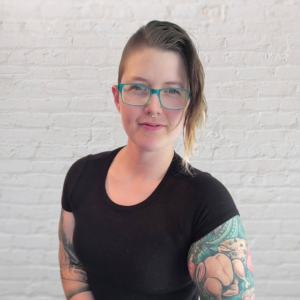
Annie Singer
The biggest surprise to me in launching my own business was the sheer patience it takes to be successful. After launching, it is incredibly common to enter a phase that my business mentor refers to as the “trough of sorrows”. During this phase, your business is growing… one user at a time.
It makes you question everything you know to be true about your business and your product. It might take weeks to get out of this trough — or it might take many months! The best way to persist through this challenging phase of business is to have a strong network of support, including your family, friends, and business mentors.

Anthony Martin
Insurance companies pool money to pay claims. They have a ballpark of the premiums they will receive and the payout they will have to make. The pandemic resulted in a increase in the number of payouts in the form of business interruption claims, travel, cyber liability and trade credit.
This means that payouts have seen a massive spike in a very short period of time. Even though certain insurance companies factor in unexpected events, pandemics are difficult to gauge as they occur rarely and lack historical data. Since we are directly in touch with insurance companies in our line of business, this has affected us as well.

Yuvi Alpert
Our industry typically relies on an in-person experience, as consumers often wish to have a tangible feel for the types of products we offer, so recreating that in a virtual environment was our biggest challenge.
Whenever a business, especially those in the fashion and accessories industry, utilize an ecommerce platform, finding the best ways to instill confidence in the consumer can be a difficult hurdle.
I never anticipated the amount of platforms and programs, content, and service outlets we would need to utilize in order to find that perfect combination. Definitely, recreating the consumer experience in virtual space was the biggest challenge I faced in my business.

Adelle Archer
When we started our business, we knew that our product was unique and rare, and although it touched upon several different market spaces, the greatest challenge was identifying the best ways to communicate that to the public.
The vast majority of startups are entering a well defined market space, where expectations are already set on what is required of a product and service. Ours was a completely new and different concept, and deciding how to promote what we did, both to stakeholders and the public, was more difficult than I had anticipated and presented great challenges. After much work, and some trial and error, we were able to overcome these difficulties and carve out our space.

Joel Jackson
It’s a challenge to find the kinds of people willing to listen. In the entrepreneurial space, you have a lot of talkers, a lot of aggressive salespeople – but not a lot of listeners. I started early at Honest, and no one noticed what we were doing, but we didn’t let that deter us. In the end, the entire diaper industry changed its practices because of what we did.
You can’t let discouragement creep into your head. You have to be willing to put yourself out there. The key is to get your ideas in front of as many people as you can find. If you’re persistent enough and strategic enough, you will find those people who are receptive to your ideas. You never know which conversation will lead to success, so keep finding ways to put your product in front of people.

Gene Caballero
The thing I didn’t expect when starting my business was how lonely the journey would be. Immediate family and a few friends will always be supportive….sharing on social media, writing reviews, actually using your product, bringing food to the office at midnight, etc. Second-tier friends, like your bar buddies and old co-workers, just don’t understand the work it takes to build something from scratch.
They can’t fathom why you are not able to grab a happy hour or grab dinner on a Tuesday because you have to work. Slowly but surely, these friends will eventually quit asking and become mere acquaintances. There are 3 8-hour workdays in 24 hours…pick which two you want to work and you will be successful.
Nakia Whittaker-Woody
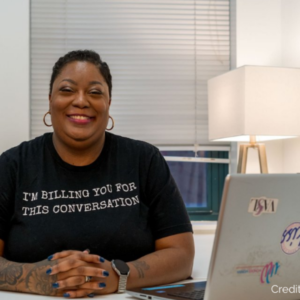
I am an entrepreneur, small business for 4 years now, my greatest and most unexpected challenge was Imposter Syndrome. I have been an Administrative Professional for 24 years and I am a ROCK STAR! But when translating those years and skillset to being a business owner, I cowered like it was day 1 of my career.
I would hyperventilate on camera, studied everything I could get my hands on, and still felt incompetent. I had never had any business experience or knew how to be an entrepreneur, so I learned to align myself with like-minded individuals who encouraged and supported me. I invested in some courses, because coming from Corporate, education equaled authority, thus helping my confidence.
I also invested in Mindset Coaching. It was an investment in myself, I was lucky to be associated with a great coach who was growing and testing her program using a Pay What You Can process. It was so instrumental in me learning to celebrate small things in my business, understand the reason for my pricing, and gave me the courage to increase my pricing to my expertise level.

David Jacobs
The greatest, unexpected challenge most successful business owners will face in the lifecycle of their company is successfully exiting from the business. With the success rate of finding a buyer and negotiating a transaction which closes close to 20%, most business owners will be unable to successfully from their companies after years and years of hard work and effort.
It is typically for successful business owners to receive unsolicited offers from time to time. While it is possible for a cold inquiry to result in a sale and a lucrative exit, most end up as wasted weeks or months spent supplying highly confidential materials for a due diligence process to a buyer who ultimately walks away. This happens because buyers reach out to hundreds of potential business owners per year but only make 1-2 acquisitions. After a few of these failed deals, many buyers conclude their business can’t be sold.
The most reliable path to a successful business exit is to find an advisor who understands your industry and can create a competitive auction between the potential buyers. The competition not only pushes up the transaction value, it also keeps deal structures and terms reasonable. A good intermediary will be able to properly package up your business for sale and then attract a large number of potential buyers quickly in order to create the needed competition.
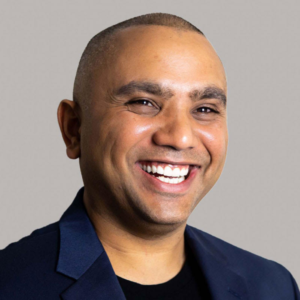
Shaunak Amin
SnackMagic launched in 2019 and scaled rapidly. Our team now consists of in-house, hybrid, and remote employees across the globe. While flexible schedules offer a better work/life balance, we quickly discovered that good team collaboration doesn’t come down to workers being available at all hours.
Round-the-clock communications can put a significant amount of pressure on your team and lead to lower productivity and higher staff turnover. Fostering a good work/life balance for hybrid and remote employees across time zones comes down to managers and team members being mindful of everyone’s designated hours.
As projects require a significant amount of interaction, workers must be conscientious of when and how they contact their teammates to avoid a constant sense of urgency. We find that being considerate of time zones keeps the stress levels of our employees lower and reduces the chances of human error.

Becky Brown
One of the greatest business challenges that I had to face was learning how to set up, organize, and manage a remote workforce. As an executive, working remotely comes down to so much more than “work-from-home using a computer.”
First, it was the technology — I had to research, develop, optimize, and manage all of the technology necessary to run an efficient remote business. After all of that, I had to learn how remote management and leadership so that my whole team was up and running efficiently. If you are considering working remotely, you should be ready and prepared to do your research and optimization to make it all work. I hope that helps!

Zach Letter
Taking a passion and converting it to a business requires viewing that market differently, and making the transition from enthusiastic participant to a business creator represented my greatest challenge. It is very simple to critique a business from afar, passing judgement while not fully understanding the complexities they face.
]When taking my passion into a business model, I began to realize some of my unrealistic expectations, forcing me to make adjustments and thinking about modifications I never considered. Being able to merge my vision with the reality of business, and picking and choosing where I could realistically meet my goals was my biggest challenge.

Omer Reiner
The greatest challenge we experienced with our business was cash flow. We underestimated the importance of keeping healthy cash reserves in the bank to cover months where cash was not flowing in steadily, but the expenses, on the other hand, did not stop flowing out.
So we learned the hard way, and now we try to keep at least 3-4 months of operating expenses in a separate savings account just in case we have slow revenue months.

Jaclyn Strauss
Be aware that you don’t know what you don’t know. As entrepreneurs, we plan to launch our new company and feel quite confident that we have dotted every “I” and crossed every “T.” However, the truth is that you will have no way of knowing what the market desires until you launch your product or service.
Every entrepreneur should have completed numerous potential customer interviews, received feedback from a BETA version, or had a fresh set of eyes and ears on the concept and/or the product pre-launch. Before launch, these are all must-do items; however, the real valuable stuff comes in after the service or product is on the market. Be ready and willing to change paths, incorporate new ideas, change your target market, adjust your product/service for better market fit.
Do NOT resist what the market is telling you, or you will fail. We must be willing to listen, take the feedback as a gift and continue moving forward. Thinking that I had all of the answers and not quickly releasing this belief would not have been a recipe for my company’s success since the launch of my company. I am solving a real problem, but the way I am solving it looks different and feels different from what I initially thought it would be.
Overcoming the hurdle by being flexible and receptive to embracing the feedback has been the most valuable shift I have made on my entrepreneurial journey.

Nikhil Arun
Developing testing and vaccination products for governments, corporations, and communities in need during a pandemic was the hardest challenge we’ve faced. We were able to accomplish this by spending a lot of time understanding our customers and the intricacies of the issues in the pandemic to understand exactly what would help our customers.
When you do that, you recognize patterns and build solutions that address many problems at one. Doing this, we were able to deliver the first at-home saliva test, a way for organizations to launch their own tests, and a simple way for organizations to track and report vaccinations.
The post Entrepreneurs Discuss the Top Unexpected Business Challenges They Have Faced first appeared on Tekrati and is written by Jed Morley
]]>
How 20 entrepreneurs in the United States Adapted To Changing Market Conditions During The Pandemic
The Covid-19 outbreak wreaked havoc on the commercial sector, forcing several enterprises to close or file for bankruptcy. Thankfully, some people made it out alive and even stronger. Many business owners quickly adapted to the pandemic situation by converting to a digital office. Some pivot only to improve the corporate culture and flexible working paradigm, [...]
The post How 20 entrepreneurs in the United States Adapted To Changing Market Conditions During The Pandemic first appeared on Tekrati and is written by Jed Morley
]]>How 20 entrepreneurs in the United States Adapted To Changing Market Conditions During The Pandemic
The host of this interview was Jed Morley. Jed Morley is the CEO of a leading payment processing service provider called PlatPay.

Paul Moody

Logan Mallory
The biggest challenge we faced was ensuring that we retained employees during times of change and uncertainty.
The way that we did this was by doubling down on the employee experience and employee engagement. With the Great Resignation looming, ensuring employees are happy and engaged is the secret to helping a business thrive by keeping turnover rates low and morale high.
A company’s performance overall can be tied back to one factor – and that’s employee engagement, for better or for worse. Increased employee engagement leads to happier employees, which in turn leads to a better customer experience, which means that we have happier customers as well, and happy customers remain loyal and become long-term clients.

Mark Pierce
The biggest challenge we faced was constantly evolving market conditions. We pivoted to adapt to the changing market conditions by re-focusing our efforts on services geared towards entrepreneurs.
We’ve seen an increase in entrepreneurship driven by the Great Resignation, so we’re more actively promoting our business formation services, and added a more robust offering geared towards entrepreneurs.

Tom Schaefer
I would say the greatest unexpected challenge is exactly that: dealing with the unexpected. In business, you can very easily fall into a mode of doing business as usual, where you expect the jobs and orders to come in just as they always have.
You get comfortable to the point that you can’t imagine the work not being there. It seems like a safe assumption until something like COVID comes along to disrupt that. The warning to new entrepreneurs would be to avoid being one-dimensional. Be able to work in multiple business sectors and keep a good variety of companies or products that you do business with.
If a certain area or sector has a lull or even completely disappears, have a contingency plan where you can swing your efforts into other areas.

Thomas Samuels
As a full-service trade show and exhibition company, we provide exhibit rentals and management services to a large number of clients all over the country. When the pandemic began, we had to quickly adapt to protect our clients, their customers, and their livelihoods by offering high-quality personal protective equipment (PPE) for our display booths and demo stations.
With venues having to adjust their events and safety precautions—sometimes without much notice—it was also important for us to ensure fast turnaround times for these new products in small and large quantities alike. We began to offer protective additions such as sanitizing stations, sneeze guards, and clear barriers, all of which help to keep our clients (and their employees) safe. Additionally, we began to print custom face masks and floor decals, incorporating our clients’ logos and branding into their public health protocols.
To account for the uptick in open air trade shows, we began to offer new outdoor curbside signs and flags, hanging banners, and weather-resistant tents, ensuring that our clients’ outdoor exhibits are just as impressive as their indoor booths. These new signs, displays, and safety products encourage social distance and physical separation, keeping customers protected and ensuring that trade shows can continue safely.

Brian Nagele
One of the most challenging tasks I faced as an upcoming digital marketer was staying relevant. Technology has infiltrated nearly every industry, and it’s accelerated the fluidity of customer behavior.
Print ads worked well for specific demographics, but they were no longer a leading tactic for marketers by the 2020s. Being an entrepreneur pushes you to be creative and always think one step ahead of your competitors.
Ultimately, my team spent countless hours not only strategizing for existing marketing clients but looking for new ways to keep scouting prospects for our startups in such a face-paced landscape.
That dry spell taught me that if I wanted to expand my client base, I’d have to meet people at their level and develop the agility to maintain their attention. Through humanized marketing – curating a social media presence and engaging within niche consumer groups – I was able to scale multiple businesses to multi-figure brands that sold for their value. If you’re looking to be a successful marketer, you have to run at the pace of your audience (or faster).

Stephen Light
A mission statement is why you start a business in the first place and is what keeps you energized and passionate. What I didn’t expect was how easily the myriad of moving parts involved in starting and running a business can get in the way of that initial spark, and how much work goes into continually recommitting and reminding yourself of why you began.
Entrepreneurs wear a million different hats and make a thousand decisions a day, and it can really bog you down. Continually recommitting to your mission is difficult but necessary, and entirely worth it. Schedule a specific time with your team to regularly reassess your mission statement and to take stock of anything that doesn’t align.

Scott Spivack
For instance, we’ve added an ‘Accessibility Adjustments’ feature on our website that adjusts the interface as per the user preferences. As a medical financing company, we get customers facing all kinds of health problems and physical disabilities.
With this feature, we were able to smoothen their experience. Here’s how it works: If a particular user selects ‘Seizure Safe Profile’, our website automatically eliminates flashes and reduces color. Similarly, if someone selects ‘Cognitive Disability Profile’, our website assists with reading and focusing. This has helped us earn the trust of users and build loyalty during the challenging times of the pandemic.

Marliis Reinkort
The greatest challenge that has faced my business so far, was definitely Covid-19, and as we know now, changed the world for everyone. I’m the CEO of Code Galaxy, which offers online coding courses to kids of all ages.
We teach kids coding, design and other technology subjects and skills in a virtual classroom. However, before the pandemic started in March 2020, we were a fully in-person coding school, about to open up a new location in Austin, Texas. Once the pandemic started, we were forced to close our in-person locations for an unknown amount of time, so we decided to make a pivot and transfer our business from in person to fully online.
Since our curriculum was already online and we had a good amount of courses available for kids, the transition ended up being easier than we initially expected. We had to create online scheduling systems, find a virtual classroom platform to run the classes, retrain our teachers and completely change our marketing strategy.
It was definitely a challenge but now that we have fully made the switch, we are actually very grateful that we were forced to pivot the business model, since now we get to work with students all over the world as well as with schools across the U.S. to provide their coding electives and after school programs. It’s a more accessible, flexible and financially viable business model.
Learning from this experience, what I would like to warn all entrepreneurs about is that never get too comfortable with your current business model and always look for new trends and options to diversify your business. And once the change has to be made, in a situation like the pandemic was, even if you’re not ready, be open-minded and try to find solutions that can turn around your business quickly. Don’t wait and just start testing and experimenting to find out what works. The more you try, the higher your chances of success.

Ryan Reed
CHALLENGE 1
The home improvement sector is currently experiencing the most severe labor shortage in its history. Failure to break the labor code will stifle growth, profit, and cash flow. Some businesses can perish due to their incapacity to deal with the issue.
The second option is to “survive” rather than “thrive,” with an insufficient profit to compensate for the risk and work necessary to produce a little net pre-tax profit. As a result, many businesses are sacrificing potential earnings to develop and strengthen their businesses while also providing stability for themselves and their families.
CHALLENGE 2
Advertising, the web, exhibitions, events, and self-developed leads, such as canvassing, have all seen an increase in lead development costs. This, along with backlog and cash flow issues, reduces profitability and restricts expansion.
It’s vital to have a well-thought-out strategy for dealing with these challenges. It also needs to be consistent with a plan to make your company stable and capable of weathering unanticipated changes, which can come from a variety of sources: a lack of financing, changes in the current economy, high turnover, the cost or effectiveness of the lead generation sources you use, and so on.
CHALLENGE 3
The expense of acquiring, training, and sustaining employees rises for small businesses. The ease of finding a job due to Great Resignation, especially for persons with mediocre talents or bad experience, results in high turnover, borderline mediocrity, and increased personnel expenditures.
These three challenges can become quicksand for small, closely-held businesses. This nation’s expanding economy, consumer confidence, and disposable income produce a two-edged sword: the sparkle of higher revenue clouds judgment and lessens the caution required in concerns such as staffing shortages, mis-hires, and mishandled staff.
OVERCOMING CHALLENGE 1
To overcome challenge 1, you need to train your labor. You need a highly efficient training mechanism to train your workforce effectively. You may have to cut back on potential profit in order to retain your skilled workforce as it will be beneficial for you in long run.
OVERCOMING CHALLENGE 2
As the advertising cost has skyrocketed, you need to set aside a specific budget that should be solely used for marketing purposes. I know this will cut down significant portions of the profit but it will effectively generate many leads for your business and it’s a necessity for eventual growth and expansion of your business.
OVERCOMING CHALLENGE 3
Every business is suffering from a wave of great resignation. Coupled with challenge 1 you need to effectively manage your employees or it will put an end to your business. To tackle this provide your employees with good remuneration packages. Provide them with effective perks and benefits that are actually beneficial and provide value to your employees.

Sherrie High
One of the challenges about running a business is that you need to expect the unexpected! There will be unexpected expenses that you did not plan on for your business, slow periods where you may not get as much business as you thought you would, payment delays even supply increases.
Whatever it may be make sure you have the financial resources to keep your business afloat, a good budget plan which includes extra capital for these unexpected events.

Carolyn Barbarite
In business nothing ever goes exactly the way you had planned and as entrepreneurs you must be open-minded to change.
The most unexpected challenge that I faced with Javamelts Flavored Sugar is having to completely rebrand, reformulate and reintroduce Javamelts to the marketplace as a direct result of losing not only one manufacturing facility (co-packer) but the second one we had found.
This challenge, by far, was my most difficult because my original product was very labor-intensive to manufacture. I had to figure out a way, as fast as possible, to create a seamless, more efficient, better-for-you and packaged more conveniently product all at once. The trick for me was to PIVOT and not fight the situation. It was very important that I evaluate all of the pros and cons and go down the path of least resistance.
I simplified the ingredients, packaging and formulation to allow Javamelts to stay in the game. My advice to anyone who is faced with a tremendous problem or hurdle is not to resist the change that is inevitable. Gather the information, consult with a team of experts in that field as best as possible, ask for help and then make a sound, informative decision.
Most often than not the problem that you are having is meant for you so that you can learn so don’t be afraid to switch gears and prevail. The problems I had led me to creating better products, packaging and process overall.

Shira Truitt
Work/Life balance was my greatest, unexpected challenge with my business. After the newness of business wore off, no one wanted to hear about the business as much as I wanted to talk about it.
Moreover, I was spending extraordinary time working, but I was making extraordinary progress– and it was great! I was enjoying myself, my work, and my accomplishments.
I didn’t miss any of the big things, but my quality of life was diminished by the amount of work I was doing–even though I enjoyed it. I managed to overcome that by determining what, specifically, I would do if my business went as planned so that time and resources were not an issue. Then, I selected all the ideas that did not have a financial basis and that did not serve a dual purpose of helping me AND helping my business.
In that way, no change would be financially incentivized. Additionally, the changes that I choose to make would only impact me–not the business. I worked to implement those ideas by scheduling everything that was important to me and committed to keeping that schedule. That made time for things like a more meaningful prayer life, journaling, and exercise. I scheduled one night a month were work ends no later than 5:00 p.m. and I must do something I enjoy.
That lead to crafting, binge watching tv, and planning new opportunities. Additionally, I took classes at the local community college on everything from cooking to jewelry making and, even if I weren’t successful, I’d had a positive experience and raised the quality of my life for just those few hours.
That lead to meeting people with similar interests but from a different walk in life. I scheduled a monthly review of my activities so that I am intentional about maintaining this balance. The regimented nature of this decision took some time to get used to, but it has allowed me to be relevant in my community, meaningful time to reflect, a healthy lifestyle, and time to do the things I enjoy while my business continues to grow. As an entrepreneur, I could not ask for more.

Steve Silberberg
Marketing is a loathsome, never-ending Sisyphian task that not only drains my company’s finances at an unprecedented rate, but also drains my spirit and the amount of time I can devote to any and all other aspects of running my business.
It forces me to permanently assume the role of a repugnant, self-aggrandizing, narcissistic shyster in a desperate attempt at getting the fleeting attention of prospective clients through a dense fog of sales messages incessantly generated by unimaginably wealthy, over-capitalized business interests.

Devin Schumacher
The pandemic changes globally brought a new reality for the business and its own set of challenges. Pivoting during the pandemic is not just a concept for me but a reality we live with in the new normal of businesses.
Since our service is in digital marketing and transformation, I pivoted in this pandemic by onboarding new types of clients. I began developing campaigns for traditional companies that are new to digital marketing and diversifying our client base.

Alexa Allamano
Before the pandemic my answer would have been split between overcoming a store burglary and partnering with a flash-sale website that was a flop and left me with thousands of pieces of unsold inventory. However, the pandemic caused unexpected disruptions to my main sales channels – in-store retail, wholesale partnerships, and pop-up events.
My online sales had been the smallest growth area since establishing a storefront in 2014, but everything shifted to DTC during 2020. I shuttered my previous storefront and ended an unpleasant relationship with the lessor during covid lockdown, re-establishing in a new tiny storefront later that year.
Due to the size limit of the new space, I innovated Scan to Shop window shopping by merchandising my window display to be shoppable 24/7 with QR codes. Now my storefront drives business online and I am in-store by appointment (I also teach other store owners how to implement Scan to Shop).
Overcoming the disruption of a global pandemic requires flexibility, creative problem solving, and making hard choices on what best aligns with your business goals and values. Making those tough decisions centered around my ethics led my business to prosper in a way I couldn’t imagine before the pandemic. I gave up my dream store and created my dream life.

Kathleen Ahmmed
Speaking from personal experience, one of the biggest challenges that I faced at the start was overcoming the need to hire fast in order to fill empty positions in my business operations. This is because when you are first launching a business it can often feel like you are in a race with yourself to get things done and solve problems quickly.
However, when it comes to recruitment, this is a process that usually requires a lot of time and patience, because one wrong hire can often damage the reputation of your company by having a negative impact on employee morale, productivity, and collaboration, which ultimately leads to a toxic work culture.
And in my case, I was only able to see the effects of my hiring decisions much later in the startup process, as it was apparent that I failed to take into account other important factors like soft skills and cultural fit, with some of them either not meshing well with others, some lacking the necessary skills needed to communicate effectively with customers and others failing to collaborate with their team members in the field.
As such, I learned the importance of taking your time to do your due diligence and always hiring for intelligence, skills, and cultural fit first, because while it is easy to recruit people who are “good enough”, they can often end up being “detrimental” to your business progress down the road.

Ouriel Lemmel
The biggest challenge I faced when I started was that there was no model for my particular business. It was a new idea, and no one had really tried anything like an app to connect drivers with lawyers to help fight traffic tickets. So I did my research. I studied my market well and ensured my product is something people want and need.
Don’t stay in your own bubble. My partner is a very good check on that as we come from different backgrounds. I’m also fortunate to have great mentors, advisors, and friends that are super helpful. Most successful entrepreneurs I know didn’t wake up one morning and decide to become one, they’ve always had an entrepreneurial mindset. If you have a business idea or project, don’t be shy—try it.

Sam Cohen
The greatest, unexpected challenge was staying focused on business development. Sometimes the distractions are too heavy to resist. So I had to learn to manage my time properly. I will share how I did it and you can do the same too.
The solution is to reserve some time in your calendar for business development, and don’t let anything disturb you during those times. Also, you should try not to get too attached to any project because you will have to let go of all of them eventually.

Glen Bhimani
Marketing was my greatest initial and unexpected challenge.
Ultimately, it came down to an assumption I made. After spending years in the security industry as a guard, I realized most guards don’t care about the clients because they aren’t being taken care of by their employers.
That was when I started BPS Security. My company’s purpose is to provide a better security option at a lower price, so I developed an operations system that allows us to provide highly qualified guards who are well-paid so that they put their best effort into taking care of the customer. My assumption was that clients would find me because I had a website and was offering a better service at a lower price. That was a big mistake.
Because of that assumption, we spent several years without any clients at all: it’s a miracle we’re still standing. But when I finally realized we needed to work on our marketing and sales to actively let people know we are here, the business exploded! Even though it wasn’t all at once, it still exploded and today we’re one of the fastest growing security firms in the United States because of it.
I would love for new entrepreneurs to avoid my mistake: don’t assume people will come to you just because you’ve started your business. You need to find ways to actively attract clients.
Also, allow time for your marketing to kick in and begin working.
Our sales improved our clients drastically, but I had a business partner who would constantly argue for the first month that our marketing needed to be cut because it wasn’t bringing in new clients. I reminded him of exactly what I would tell new entrepreneurs: marketing isn’t a magic pill that works overnight.
Most of the time it doesn’t even begin to show serious results after two to four weeks. But marketing is a crucial part of building out your company’s reputation and improving your client base, and needs to be an essential part of your company at all times! Especially during difficult times.
These are a few of the very important things I learned and implemented that helped me overcome my marketing challenges:
Continue adjusting
The market is constantly changing, so you have to continually adjust as you go. One marketing campaign might not work super well, but another one might be incredibly effective. So keep trying different things and give them a few weeks to work before you cut them.
One of the ways we’ve developed such strong marketing is that we’ve continually revamped what we’re doing. Our website has changed multiple times in the last two years, and it has resulted in much higher leads and client acquisition every time we’ve changed it. So continually adjust your marketing and pursue what seems to work best after you’ve given it a few weeks to work.
Don’t expect immediate results
I know I mentioned this already, but understanding this is crucial. There are going to be marketing companies that tell you they can bring in hundreds of leads a month right from the start. They are frauds. Not because they can’t get leads, but because their leads are bad leads.
Good marketing requires time and effort, and as one of my mentors says, “great marketing has exponential growth.” Which means you might not see much right now, but it will grow and expand on itself if you keep at it diligently. Ours did, and now we’re getting regular news features and sometimes have more client requests than we have capacity to take on.
Be consistent
Marketing is a huge part of your reputation, so you need to make sure you have the same reputation everywhere. Your brand needs to be consistent, from your brochures, to your social media, to your website, to even how you answer the phone!
Building a consistent feel across every aspect of your company is a great way to work on your marketing, because it creates a more solid relationship between the company and the clients. If you look at your marketing assets and realize that your facebook page is completely different from your website, that’s a sign your marketing isn’t consistent and that your potential clients may not even know they’re looking at the same company.
Get feedback
Finally, getting feedback is one of the most important parts of marketing. Speak with your current clients to find out why they work with you and build that into your marketing. If you compete in the market on service or price alone, you’ll run yourself into the ground and won’t be able to compete with bigger companies. Find out what makes you unique and why your clients like working with you, then build your marketing on that feedback. When we began to do this, our marketing took a huge turn and began to show serious results.
The post How 20 entrepreneurs in the United States Adapted To Changing Market Conditions During The Pandemic first appeared on Tekrati and is written by Jed Morley
]]>
Entrepreneurs On The Greatest Unexpected Challenges They Faced With Their Businesses
Entrepreneurship comes with a lot of challenges, and if you want to succeed in the business world, you will have to overcome obstacles and challenges along the road. In this interview series, we spoke with a number of business owners and leaders about the unexpected challenges they encounter and how they overcome them. INTERVIEW HOST [...]
The post Entrepreneurs On The Greatest Unexpected Challenges They Faced With Their Businesses first appeared on Tekrati and is written by Jerome Knyszewski
]]>Entrepreneurs On The Greatest Unexpected Challenges They Faced With Their Businesses
Hello, my name is Jerome Knyszewski, I’ll be the host of your interview today. I am the CEO of HeavyShift. My specialties are online reputation marketing and SEO. Looking forward to reading your insightful answers and publishing your featured interview.


Jesse Solomon
Co-Founder, Mickey
“The biggest, unexpected challenge we’ve faced has been with financing our business. As a startup with little-to-no history it’s hard to get credit. Banks don’t care about your vision and projections like a venture capitalist does. They care about the historical data and eliminating their risk.
Given that our business requires working capital to facilitate deals, we thought it would be smart to use debt rather than equity capital and ultimately have had to use a combination of a bank, a non-bank lender, and a factoring partner to grow.”
About Mickey:
Mickey is a commoditech company that brings physical commodity trading online and allows suppliers and traders around the world to transact openly. Mickey has built a digital platform that modernizes the complete commodity transaction — from sourcing and shipping to invoicing and payments — providing a marketplace that’s fast and easy for global buyers to purchase, track, and acquire the commodities they need.

Alex Rabens
The Co-Founder, CEO, Mickey
“In Mickey’s early days, we used outsourced technical engineers to build our first platform. As dilettantes leading our first tech startup, we felt that as long as the business had a strong sales and growth trajectory, that actual product could be pieced together by an offshore team.
Unfortunately, the product couldn’t iterate as fast as the business (in its early stage) needed it to adjust and we ended up with a product that no longer fit the needs of our company. I would recommend our offshore team to any business, but an early-stage company needs an in-house team and should be careful venturing out without one.”
The post Entrepreneurs On The Greatest Unexpected Challenges They Faced With Their Businesses first appeared on Tekrati and is written by Jerome Knyszewski
]]>