From Theory to Reality: Practical Applications of Quantum Security Solutions
In the ever-evolving landscape of cybersecurity, a new frontier has emerged: the world of quantum security solutions. This article delves into the cutting-edge advancements in this field, exploring how the principles of quantum mechanics and the potential of quantum computing are being harnessed to safeguard data and communication against the looming threats of the quantum [...]
The post From Theory to Reality: Practical Applications of Quantum Security Solutions first appeared on Tekrati and is written by Gia Patterson
]]>From Theory to Reality: Practical Applications of Quantum Security Solutions
The post From Theory to Reality: Practical Applications of Quantum Security Solutions first appeared on Tekrati and is written by Gia Patterson
]]>
Quantum Computing Cryptocurrency
However, noise is a problem with today’s quantum computing cryptocurrency. Many factors outside of the qubits’ control could contribute to an increase in this noise. There is a lot of resistance as well as high temperatures. To be sure, a quantum computer only with 100 qubits could outperform a classical computer to trillions of transistors [...]
The post Quantum Computing Cryptocurrency first appeared on Tekrati and is written by Jerald Swenson
]]>Quantum Computing Cryptocurrency
However, noise is a problem with today’s quantum computing cryptocurrency. Many factors outside of the qubits’ control could contribute to an increase in this noise. There is a lot of resistance as well as high temperatures.
To be sure, a quantum computer only with 100 qubits could outperform a classical computer to trillions of transistors throughout significant computational benefit across multiple fields if indeed the qubits had been noise-free.
It is possible to build an effective qubit in one of two main ways. The first step is to create a quiet atmosphere. Secondly, to produce qubits that are resistant to noise generation. Many researchers are indeed modeling noise immune qubits, despite the fact that scientists are primarily concerned with ensuring the first situation.
 Introduction: Quantum Computing Cryptocurrency
There are many situations in which classical computers simply can’t perform the necessary operations on data because of limitations imposed by quantum mechanics, including such quantum entanglement. An analog of the traditional bit is used in this information: a qubit.
For example, trapped ions, as well as superconductors, incorporate information inside the particles themselves, making them vulnerable to noise as well as decoherence. The goal of topological quantum computing cryptocurrency is to create a more robust qubit by storing quantum information throughout non-Abelian tissue.
In such a system, information is encoded; it isn’t in the quasiparticles independently, but rather in the people, they communicate with and thus are braided together. As a result, this model is topological, where only macroscopic spatial relationships of the particles’ set of force that acts are relevant. Topological quantum computing has been better protected from decoherence as well as noise issues than some other qubit deployments.
Quantum computing qubits have been created as non-abelian anyons, that further exist according to their own antiparticles throughout topological quantum computing. Its anyons’ worldlines have been “braided” to execute commands on these qubits, which we can believe of as quantum gates. The way these particles have been exchanged matters even though they are non-Abelian.
If the perturbations are small enough, they will not affect the system’s state, but if they are available to create fresh braids, they will. Besides fusing the atoms, a measurement was made. Several of the particles would be destroyed during fusion even though anyons would be their own antiparticles. This is being used as a quantification.
But What Were The Properties Of Topological Particulate?
Logical qubits are the number of physical qubits which contribute to creating results that are as good as though there is no sound in a stack. Evey physical qubit in a perfect quantum computing cryptocurrency could indeed function as a logical qubit, according to theorists’ conceptions.
 Qubits with ‘topological’ particulates have recently been attempted by scientists. Non-abelian anyons, as the name implies, are not polarised or spin-polarized particles. Instead, the canyons are distinguished by their topology or the way they have been connected to one another. Stringing together two anyons results in an extremely useful property of particulate braiding which can be applied in creating qubits.
It’s Unclear How Well A Topological Quantum Works
By storing quantum information throughout non-Abelian atoms and molecules, topological quantum computing hopes to achieve a more robust qubit. The canyons’ worldlines are “braided ” to perform operations upon those qubits, which we can believe of as quantum computers.
What Exactly Is Topological Quantum Issue?
When it comes to quantum theory, topological order seems to be a type of sequence inside the zero-temperature step of matter. Some many physical systems, including spin liquids, their quantum Hall effect, as well as fault-tolerant quantum computation, can benefit from the study of sequential manners.
What Is A Topological Qubit?
In 1997, Russian-American scientist Alexei Kitaev proposed a conceptual quantum computer known as a topological computing device. The stability of a quantum computer known as quantum braids seems to be superior to that of a computer-based on entombed quantum computing cryptocurrency particles.
For What Reason Are Topological Qubits Better?
Alexei Kitaev, a Russian-American physicist, initially proposed the concept of a topological quantum computer in 1997. Unlike some of the other particles whose polarisation or spin countries are highly sensitive to changes in temperature, those same nonabelian particles’ dutch braid has become so strong that any of them can be used as a logical qubit.
Because topological qubits could be used in quantum computers, those same computers have indeed been referred to as topological quantum computers.” These qubits are important because the order throughout which they are stacked is critical in creating strong entanglement among the particles, which makes them resistant to noise. This qubit, on the other hand, can help solve computational problems such as high precision.
Anyons And Topological Quantum Computing Cryptocurrency Bits?
Throughout the two-dimensional room, anyons seem to be quasiparticles which are neither fermions nor bosons. Steady paths of braids have been formed because they cannot both be in the same nation. A plaited anyon system’s quantum state will only be affected by the braid’s topological structure, so the information entered into the system has been impervious to tiny trajectories mistakes.
Anyone qubits are able to withstand the effects of noise because of this particular trait, which allows them to be a single specific qubit as well as a rational one. Variants can be formed from excitations in such cooler, two-dimensional conduction electrons in a really powerful magnetic field as well as carry fractional components of magnetic force, according to Bell Labs researcher Bob Willett.
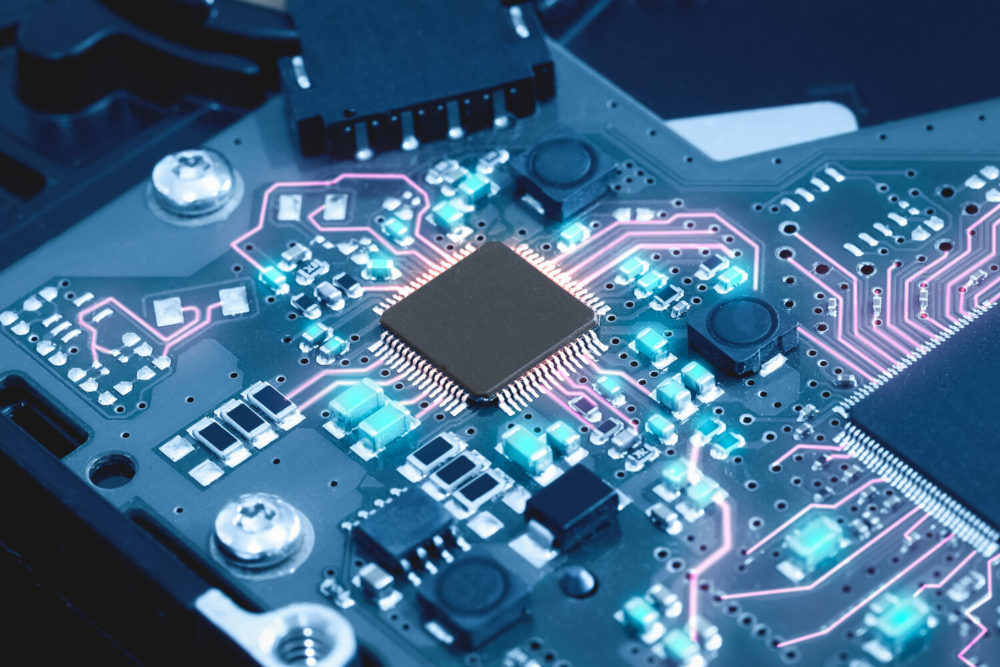 “Its comparatively small quantum Hall effect” seems to be a name given to this phenomenon. There are two layers of aluminum gallium arsenide sandwiched here between electron gas as well as the electrons in typical laboratory processes. Anyone interacting with magnetic fields has the opportunity to assist manufacture different qubit states and calibrating quantum gates, as demonstrated by this observation.
What’s The Point Of Majorana?
Its idea of manipulating Majorana particles (a category of anyon) seems to be a major breakthrough in this field. Particles of such Majorana type seem to be antiparticles of their own. Majorana fundamental particles have piqued the scientific community’s interest for use as qubits.
Majorana fermions really aren’t observed in nature, although in experimental physics they may seem to be quasi-particles – its collective motion of several subatomic molecules, or even just one.
Non-abelian statistical data govern them. To put it another way, the super quantum computing cryptocurrency attempting to perform quasi-particles zero method defect governs that Majorana particles shape a topological braiding including that of anyons because they are in the classification of zero method defect. Definite particles form such tight braids that they remain constant even when subjected to noise. When it comes to maintaining entanglement (lengthier decoherence time), its braid of particles plays a big role in Majorana particles.
Is The Quasi Real?
After a few researchers tried to claim to have created stable Majorana atoms in the lab, some of these research papers have been withdrawn from various journals because of their questionable experimentation methods. They are receptive to change in order to build quantum computers utilizing non-abelian activities done by Majorana particles.
However, before having committed to manufacturing qubits based on a topological plait, Microsoft is conducting further research into anyons and their qubit encoding qualities. The scientific community, but on the other hand, is skeptical about the existence of these anyons, that’s quite dangerous contemplating whether something is advantageous to construct qubits predicated upon those particles without first obtaining their digital trail in nature.
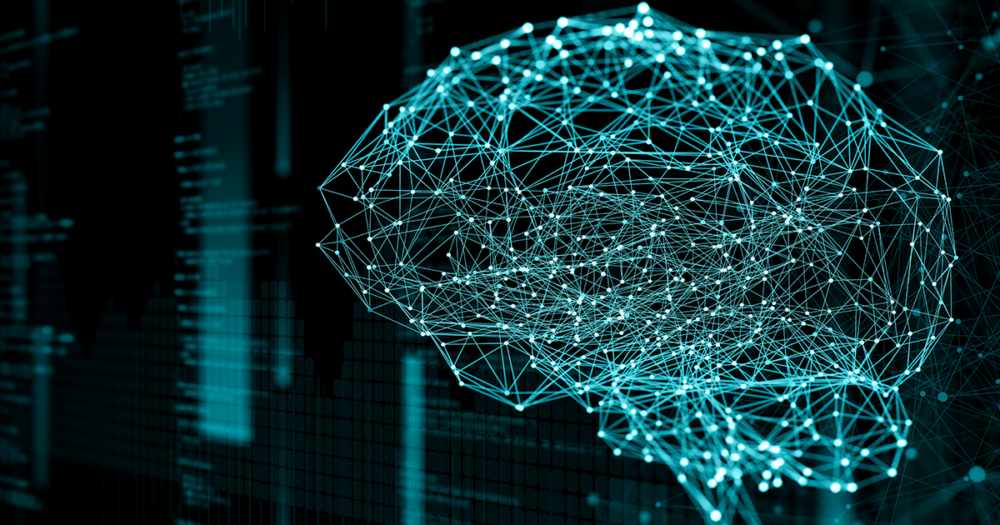 The above risk is worthwhile because it pledges qubits without sound for the advancement of new technology. Understanding the hidden potential of topological particles, extra quantum computing start-ups are ready to invest in just this technology.
Conclusion
An expert on quantum computing cryptocurrency there at Institute For Advanced Study, John Preskill, believes that “from a philosophical standpoint, topological quantum computing has been the most elegant method to realize robust quantum computation,” as he explains why.
This ground is theoretically wealthy, and it’s only a question of time prior to actually technology transforms so that these qubits can be manufactured. When topological quantum computers want to be a reality, we can all look forward to being amazed.
The post Quantum Computing Cryptocurrency first appeared on Tekrati and is written by Jerald Swenson
]]>
Know About Quantum Computing Stocks
When it comes to investing in the rapidly expanding quantum computing stocks gold rush, often these investors assume they will be left out. Venture capitalists, business angels, and private equity firms have been the only ones who can invest in companies developing quantum computers and related innovations. However, this isn’t entirely accurate. While independent, non-accredited [...]
The post Know About Quantum Computing Stocks first appeared on Tekrati and is written by Jerald Swenson
]]>Know About Quantum Computing Stocks
When it comes to investing in the rapidly expanding quantum computing stocks gold rush, often these investors assume they will be left out. Venture capitalists, business angels, and private equity firms have been the only ones who can invest in companies developing quantum computers and related innovations.
However, this isn’t entirely accurate. While independent, non-accredited investors have few, if some, simple quantum computing investments, its technology would be mature enough such that certain publicly traded companies would then directly benefit from this QC revolution, then they will definitely benefit.
I don’t think it’s a coincidence that most businesses have various products as well as revenue streams in addition to their primary ones. In the short term, quantum technology is prohibitively expensive, and this could change as more and more well-funded companies enter the field.
While you won’t get the maximum potential of seeing your money invested soar with only a quantum unicorn if you purchase shares that aren’t a sheer quantum startup, endorsing some good companies provides some positives again for the right shareholder.
 In other words, you can put money into cutting-edge technology while also protecting yourself against the possibility of starting it to market. You didn’t have the opportunity to be a good investor, a growth shareholder, and a quasi-angel investor all at once in many different investment epochs. There are a number of possibilities.
Let’s take a look at investments that individuals can make throughout quantum computing stocks as well as its ancillary technologies. Technology leaders, innovators, and quantum tech supporters are all considered when making these choices.
Moore’s Law As Well As Quantum Computing Stocks
The quantity of transistors inside an integrated circuit multiplies every two years, according to Moore’s Law. As a result of this exponential trend, the world has seen tremendous progress. In fact, it’s had an effect on every sector of the economy and every aspect of our everyday routines.
Moore’s Law can be put into perspective by comparing the speed of a new iPhone to that of the Apollo spacecraft. The speed of computers has increased exponentially. However, this fad may be drawing to a close…
Moore’s law is expected to come to an end around 2025, according to Gordon Moore as well as other prognosticators. An intricate collection of physics problems led to this outcome. Quantum computing, on the other hand, could become the next big thing.
There is a lot of interest from technology companies, but they’re spending a lot of money. Investors in the best quantum computing stocks stand to gain substantially if their efforts prove fruitful.
This new generation of computers can store more data due to a technique known as “superposition.” When compared to traditional computer systems, quantum computers take things to another level. Those who have the benefit of being able to use ones, zeros, as well as corresponding points of ones and zeroes. Classical computers had already long been suspected to be unable to solve these kinds of complex problems.
Quantum Moonshot From Google
With just an announcement in the fall of 2019 that Google (Alphabet, Inc.) had accomplished “quantum supremacy,” Google kept blowing everyone’s thoughts. Furthermore, its quantum computer may be able to outperform conventional supercomputers in some cases.
 According to Google, it has taken an early lead in the development and commercialization of quantum computers. This technology is a priority for the company. It is, in fact, an intrinsic part of the company’s DNA.
Because of the advancements in computing over the years, Google wouldn’t even be here today. With us, quantum computing stocks power has grown exponentially thanks to Moore’s Law,” Sundar Pichai, CEO of Letters and Google, said in an interview.
As a result, we see ourselves as a computer programming company just at the core of what we do. Depending on your perspective, Moore’s Law has reached the end of its own cycle. We might very well continue to progress in computer technology through a variety of components, one of which is quantum computing.”
Quantum computing, as well as artificial intelligence, have piqued the curiosity of Google researchers. There may be plenty more breakthroughs to come from this.
IBM: A Blue With A Bit Of Quality
If an investor is looking for a safe bet in the quantum computing field, IBM’s latest revelation that one’s quantum computer study team has doubled the latter’s power is an excellent choice over other publicly traded corporations.
IBM, on the other hand, is focusing on making steady, measurable progress toward quantum superiority.
“Then where does that place us with all the 2020s?” asks IBM scientists Jerry Chow as well as Jay Gambetta inside a blog post about their own latest quantum computing stocks doubling.
Cohesiveness, gates, stability as well as cryogenics components everywhere are going to get better and better over the next 10 years as a result of the creation of a dedicated hardware ecosystem. Designers will also see a quantum advantage inside the 2020s if we adopt a system engineering mindset as a society.
If you’re looking for a colored, moderate-growth, reduced company with the potential for a quantum comeback, IBM may be the best option. Even better, it pays a dividend.
As The Name Suggests, Microsoft Is All About Micro-Quantum Computing
Its word “Microsoft” still might conjure up images of just a paperclip trying to give you screen-size advice as well as grown men throughout polo shirts dancing to “Start Me Up.” Even so, that’s not Clippy’s old Microsoft. As of this writing, Microsoft’s market capitalization stands at more than $1 trillion. The company realizes quantum computing is an essential part of maintaining or even exceeding, its reputation as a leader in the tech industry.
 Azure Quantum, suggests Satya Nadella, seems to be a cloud-based method to quantum computing stocks which is critical to the next step of computing.
“Designers have several unsolved problems, whether these are all over food safety as well as climate change and the energy transition,” Nadella said during the Microsoft Revive conference throughout Orlando, Fla. We’re dealing with huge problems that require more computing power. “General-purpose quantum” is what we need.”
Microsoft may be able to take over the industry if this project is a success. Clippy, it’s just like the old days.
Keeping Warm Its Fire Quantum Computing Stocks
One of Amazon’s advantages has been its dedication to connecting its logistics prowess to quality and customer satisfaction. Throughout solving logistical issues like the traveling salesman problem, experts believe a quantum computer seems to have an advantage placed above a white classical computer.
Coincidence
Even if it’s for solving logistical problems or other utilizes that benefit from quantum computing, Amazon has no doubt that one’s future would be tied towards the long term of quantum mechanics. Amazon Bracket, a managed AWS service; it is Quantum Computing Center building; as well as the Amazon Quantum Strategies Lab were all recently announced by the Based non – profit company.
It’s time to take advantage of quantum computing stocks magic, says Ali Baba.
When it comes to e-commerce and B2B, Alibaba has made quantum computing its priority and is investing heavily in the technology in an effort to become a major player in this field.
CTO Jeff Zhang, who also serves as director of the DAMO Academy research center, says that Alibaba’s investment throughout Quantum isn’t simply aimed at improving its eCommerce site. Zhang: Their business will be affected greatly by quantum computing.
Expanding the number of qubits isn’t our only objective. We’re trying to figure out how to make quantum computers work. How do you operate existing software on quantum computers? Quantum processors can only be used for a limited number of applications, right?
There are some tasks that are better suited to quantum computers and others that are better suited to classical ones. Building a superconductor quantum computer at our Hangzhou headquarters has been one of our main goals, and we’re working hard to get there.”
A Quantum Computing Stocks Surrounds The Intel
Intel has used a paranoia-fueled technology formula to want to be a leader throughout chip manufacturing but also is ascertained to ride this as a pioneer in the production of quantum computing french fries.
 A 49-qubit experiment chip has been developed by the company. Initially, a kind of cryogenic regulated chip has recently been released by Intel Labs. This chip is expected to accelerate the development of full-stack subatomic computing systems. Its company believes that regulation, not qubit count, is the most important consideration.
For years, “controlling many qubits at once was a challenge,” asserts Intel’s filmmaker of quantum devices Jim Clarke. “Whilst also there seems to be a lot more emphasis upon that qubits part of the individual,” Clarke says.
Throughout terms of developing a major commercial quantum state, Intel recognized that quantum controls had been an essential part of the puzzle. So we’re putting money into quantum error detection and correction as well as control. Quantum computing stocks can now be tested and realized more quickly thanks to Intel’s Horse Ridge modular control scheme.”
Quantum Power might just be the new juice for the Volkswagen Beetle, according to VW.
While our quantum plays aren’t developing quantum stocks technology, they are benefiting directly from the advancement of the technology. So, Volkswagen was included. VW has been around for a long time because of its innovation and willingness to adjust to new developments and techniques.
Both quantum technology and self-driving cars are being pursued by VW at the same time. In order to guide a pilot project aimed at optimizing traffic patterns, its company would be the first automobile manufacturer to use quantum computing.
At Volkswagen, designers need to further broaden with us expert research in the areas of quantum computing as well as develop some understanding about how this technology could be put into meaningful use around the company.
Another of the possible applications seems to be traffic continuous improvement. Cities, as well as commuters, could indeed benefit from smart traffic management related to the performance functionality of both a quantum computer.
This infers that the company may be considering utilizing quantum computers to help improve self-driving cars, but no specifics have been provided.
Into The Quantum Mission, By Lockheed Martin
Lockheed Martin, such as Volkswagen, has always been at the forefront of quantum computing. Scientists for the company have identified one specific use case for their D-Wave 2 quantum device checking programming code.
And according to the quantum squad at Lockheed Martin, “Quantum computers provide economically high-confidence solutions to enhance security as well as meet growing regulations even though half its cost of designing a new technology has been rooted throughout software verification as well as the elimination of errors.
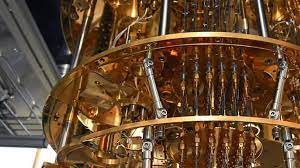 There’s a good chance that this isn’t the only place in the company where a quantum computer could be put to use. It is critical for the aerospace and military contracting industries to conduct research on materials and logistics. Quantum computing stocks have proven useful in a variety of fields, including quantum chemistry, materials formation, and logistics planning, among others.
A Quantum Dragon’s Hideout?
Baidu, a company frequently compared to Google, is also focusing on quantum computing as a way to gain an edge over the competition. Artificial intelligence as well as Internet-related products and services are the specialties of this Chinese multinational firm.
Co-located research centers in Silicon Valley, Portland as well as Beijing are responsible for the bulk of the company’s efforts in quantum computing. Within five years, the business wants to just have quantum applications that can be applied to its company.
Quantum Consultants at Booz Allen Hamilton (BAH)
Companies and other organizations are already considering what quantum computing could perhaps fit into their own plans as well as wondering how many advantages this could bring.
There is only one thing they’ll need: guidance. Throughout order to accomplish this goal, Booz Allen Hamilton, an U.s processes and information technology solutions provider, has created a quantum research team. As a result, Booz Allen Hamilton seems to be a quantum computing stocks gamble that isn’t immediately apparent.
The post Know About Quantum Computing Stocks first appeared on Tekrati and is written by Jerald Swenson
]]>
How To Learn Quantum Computing
In the era of quantum computing, you might well be able to go even farther in unlocking certain secrets that we couldn’t solve with human strength alone. How To Learn Quantum Computing? Utilizing quantum mechanical processes, quantum computers can process enormous amounts of data. The utilization of quantum features including such superposition of states and [...]
The post How To Learn Quantum Computing first appeared on Tekrati and is written by Jerald Swenson
]]>How To Learn Quantum Computing
In the era of quantum computing, you might well be able to go even farther in unlocking certain secrets that we couldn’t solve with human strength alone. How To Learn Quantum Computing? Utilizing quantum mechanical processes, quantum computers can process enormous amounts of data. The utilization of quantum features including such superposition of states and entanglement to speed increase processing power as well as manage a seemingly limitless number of variables is a major advantage over a traditional computer.
Transistors, the basic building blocks of traditional computers, exist in two states: on and off, corresponding to 1 or 0, respectively. It is possible to have both a 1 and a 0 at the same time in a quantum computer’s qubits (quantum bits). Using this quantum technology, quantum algorithms are capable of processing exponentially more data. It may be used in cybersecurity, search engine optimization, and artificial intelligence. There are several industries that could profit from quantum processors, from banking to farming.
 Learn About Quantum Computing
For studies in responsibility quantum computing, understanding quantum systems might be an asset. Quantum computing would still be a crucial component in the next generation of cybersecurity as well as AI again until the noise is decreased. As a result, there has been a major push by firms to develop quantum computing in order to compete with ever more sophisticated assaults on our current encryption.
It is hoped that quantum computing will be used in fields like healthcare and finance to solve problems that are too complicated for traditional computers. Quantum computers can solve increasingly complex issues as the amount of qubits grows, perhaps speeding up the discovery of new drugs, delivering more precise fraud detection, or developing better farming techniques.
Courses In Quantum Computing
How To Learn Quantum Computing And what are the courses? It is possible to learn quantum computing at these places. In conjunction with leading quantum state research universities, EdX provides courses that can help you land a high-paying job in the field.
You may learn about quantum computing, quantum physics, including quantum data management at MIT through a comprehensive range of courses. Quantum Cryptography with CalTech as well as Delft, as well as Quantum Network from Delft, are two more specific courses.
Become A Quantum Computing Engineer
If you want to work in the field of cutting-edge technology, you need to have a practical grasp of quantum particles. A 50 qubit device was unveiled in 2017 but the first commercialized quantum computer was unveiled in 2019. This shows however much research is being done in this field.
D-Wave from Google, Aliyun cloud from Alibaba, and Microsoft-Intel cooperation from Microsoft – the prospects for fascinating careers within quantum computing research are unlimited. You could tackle real-world issues that traditional computers couldn’t handle.
Quantum Computing Is Something You Can Get Started With?
By comparison, a circuit made with IBM’s Quantum Experience online tool appears to be from an elementary computer science textbook. An array of logic gates is used to translate raw materials into finished products on a digital canvas.
 However, this is really a quantum circuitry, and the gates affect qubits, this same fundamental element of quantum computing, rather than binary 1 or 0 bits. Superposition’ of both 0 or 1 exists in qubits, which only becomes clear when they are measured. Entanglement, for example, is a property of quantum computing that allows one qubit to affect the value of another qubit unless the qubits are separated by great distances.
They allow quantum computers to answer certain types of problems more quickly than conventional computers. For example, quantum computers might be used by chemists to speed things up the discovery of novel catalysts through modeling.
A Fast-Paced Area
How To Learn Quantum Computing? – Progress is still being made, but it’s going at a rapid pace. One thousand qubits are IBM’s goal for 2023, and quantum-computing supporters believe the sector is ready for growth. It’s never been simpler to get a taste of quantum computing thanks to a growing number of online tutorials, computer languages, including simulators.
Computational complexity use a well-known digital logic: 1 AND 0 = 0. Researchers, on the other hand, must grasp how qubit values are described mathematically in order to comprehend how quantum computers work.
Jeannette Garcia, a project executive at IBM Industry research quantum applications, analytics, and theory group in San Jose, California, believes scientists must also understand quantum circuits.
From left to right, these circuits resemble a musical stave and show how qubits are altered by logic circuits, like the AND, OR, but Not gates used in conventional circuits, without first being measured to disclose their status. IBM’s Quantum Experience lets users design their own circuits by dragging and dropping logic gates together in a web browser and then running them on a genuine quantum computer online.
What you really need to know about quantum computing to get started
I’ll try to lay down the information you may or may not need to get started with quantum computing. Whether you’ll succeed in the area depends on what you want to do.
A programmer or data scientist who wants to experiment with quantum approaches may not need to understand much physics as well as mechanics if they are already familiar with the concepts. You’ll need a lot more physics/mechanics understanding if you really want to dig into the building of qubits or how they function, however.
How To Learn Quantum Computing? – Programming
Programming fundamentals are definitely required to get started using quantum computing. Despite the fact that some programming languages are specifically created for programming quantum computers, you don’t need to master these languages when you start working in the sector.
 In today’s quantum computing world, Python was among the most often utilized programming languages for genuine quantum machines. You may get started utilizing IBM’s open-source toolset Qiskit if your goal is to learn how to program a quantum computer.
Programming an IBM quantum machine utilizing Qiskit would not only enable you to master the fundamentals of quantum physics, but it will also make it easier for you to learn about them. You can begin learning a quantum computer language if you have a basic understanding of quantum mechanics.
Math
First and foremost, math is likely to deter someone from pursuing quantum computers. I’m not going to lie to anyone; quantum computing does entail some math.
Several technical domains, such as artificial intelligence as well as computational linguistics are also heavily influenced by mathematics. It’s much more complicated than quantum computing in certain cases! But I know it doesn’t sound real.
Linear Algebra is the foundation of quantum computing’s ability to do its magic. Linear Algebra may be used to explain all aspects of quantum computing, from qubits through gates to circuits’ functioning.
Probability theory seems to be another area of mathematics that has a significant impact on quantum computing.
That’s all there is to it. Probability theory using linear algebra. Data science because most of the modern tech sectors rely heavily on these two subjects. Even if things grow more complicated as you progress in the area, isn’t that what happens in all fields?
Mechanics/Physics
Physical phenomena like entanglement as well as quantum superposition are at the heart of quantum computing’s underlying functioning. To understand why they occur, there are certain physical rules to follow.
How To Learn Quantum Computing? Classical computers, on the other hand, have the same internal functions. Creating wonderful things with your computer doesn’t need you to understand precisely how its hardware works. To utilize it, all you need to know is how.
Quantum computing follows the same logic. To become a quantum computer programmer, all you need to know is why a quantum computer operates and how to utilize that knowledge to create your own programs.
The physics, as well as mechanics of where a quantum computer operates, must be well understood if you plan on working or getting engaged in the construction and development of quantum computing technology. It’s likewise the situation if you wish to create a traditional CPU or GPU. There is a lot of physics that goes into how this technology works in both scenarios.
How To Learn Quantum Computing? – Conclusion
In my opinion, wonder is the most crucial mentality you need to have in order to pursue quantum computing. It’s important to clarify for the sake of this essay that curiosity would not be a piece of information.
 I became interested in quantum computing since I wanted to learn more about how it may improve present technology. How is it possible to take something that is already extremely sophisticated and create it even more so?
When I first heard about quantum computing, it seemed like something out of a science fiction movie. When I started working in the field, I was like most of my coworkers. As humans, we were drawn to anything that allows us to let our imaginations run wild. We find it fascinating when things don’t operate the way we’re used to. As a result of this inquisitiveness, we should expect to see many more scientific and technical breakthroughs in the future.
The post How To Learn Quantum Computing first appeared on Tekrati and is written by Jerald Swenson
]]>
How Much Faster Is Quantum Computing?
How Much Faster Is Quantum Computing? It’s feasible to solve issues that are impossible but would take a conventional computer a billion years to solve with quantum computers. Encryption that is virtually unbreakable? In the future, quantum computers will revolutionize data security. Many of today’s encryption methods can be cracked by quantum computers, but it’s [...]
The post How Much Faster Is Quantum Computing? first appeared on Tekrati and is written by Jerald Swenson
]]>How Much Faster Is Quantum Computing?
How Much Faster Is Quantum Computing? It’s feasible to solve issues that are impossible but would take a conventional computer a billion years to solve with quantum computers.
Encryption that is virtually unbreakable? In the future, quantum computers will revolutionize data security. Many of today’s encryption methods can be cracked by quantum computers, but it’s predicted that these computers will be able to replace them with hack-proof alternatives.
Some jobs are better performed by conventional computers than by quantum systems. The goal of quantum computers would be not to replace conventional computers, but rather to provide a new tool for solving certain issues. For example, quantum computers may be used to solve optimization issues, such as identifying the optimal routes for FedEx trucks to take to deliver packages.
Quantum computers in Google’s lab are 100 million times quicker than the fastest conventional ones. We generate 2.5 exabytes much data every day. Approximately 5 million computers’ worth of data is contained in the number. A new generation of quantum computers will allow us to process the massive amounts of data that we’re producing now.
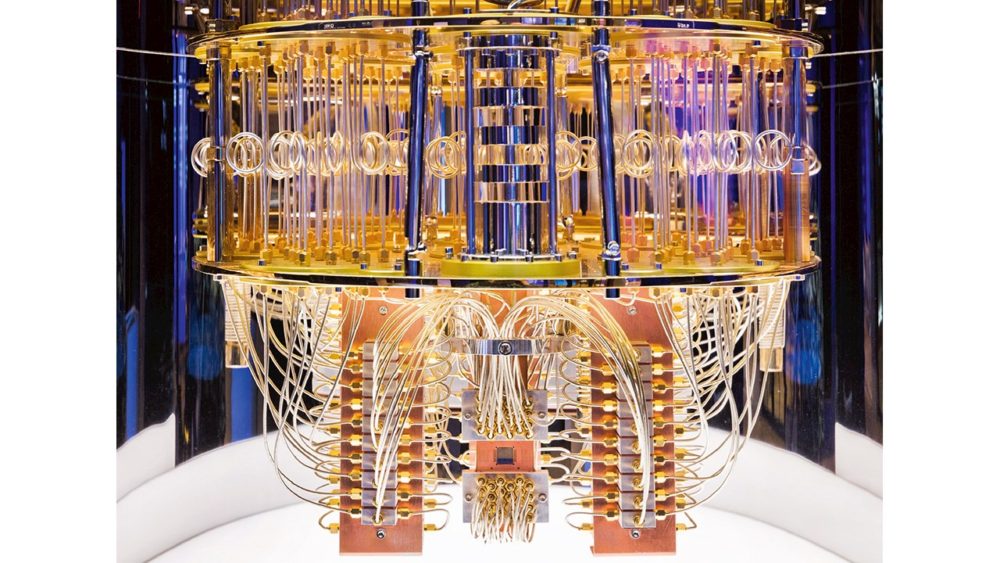
Quantum computers must be kept cool in order to function properly. And that is why D-Wave Technologies’ quantum computer is kept at -460 degrees Fahrenheit inside. Any quantum computer was “thousands of times” quicker than a normal computer, thus according to Professor Catherine McGeoch of Amherst University.
How Much Faster Is Quantum Computing? Quantum computers are capable of analyzing a wide range of factors simultaneously because of a phenomenon known as “superposition,” in which particles may exist in several states of the world. Because quantum computers employ quantum tunneling, they can cut power consumption by as much as 1000 times, rather than increasing it.
They’re prone to failure, and quantum computers are no exception. The atom’s decoherence is caused by any form of movement. Grover’s algorithm for exploring an unstructured database as well as Shor’s method for factoring big numbers have previously been created for quantum computers. We should anticipate machine learning would accelerate exponentially if a reliable quantum computer is constructed. This might mean solving a problem in seconds rather than thousands of years.
More Than 3 Million Times Quicker Than A Single Processor, A Quantum Computer Can Answer Any Issue
Canadian company D-Wave Systems and Google scientists revealed that its quantum computer could excite materials more than three million times quicker than conventional computers.
Using D-Wave processors, the researchers were able to demonstrate that performance improved with increasing simulation size and the difficulty of the task. This was the largest simulation yet carried out by a quantum computer.
‘This performance advantage demonstrated in a complicated quantum simulation of materials,’ is a major step towards applications advantage with quantum mechanics,” D-Wave claimed in a statement. Exotic magnetism, which arises in quantum magnetic circuits, is the subject of a real-world computation that was solved by the 2016 Nobel Laureates in Physics.
How Much Faster Is Quantum Computing? – More Than A 100-Billion-Times Faster Than Today’s Fastest Supercomputer
Google and NASA have started releasing more information about their quantum computing effort. We may soon be able to handle more data than ever before, according to a new quantum computing machine developed by a tech company called D-Wave 2X, which claims to be 100,000,000 times faster than a standard computer chip.
Quantum bits (or “qubits”), which are strongly tied to quantum physics, can concurrently hold values between -1 or 0 instead of being assigned to 1 or 0 as regular electrical bits are.
Small particles are suspended in temperatures slightly above absolute zero, and when additional qubits are added, their available computing power increases exponentially. The capability of quantum computing can help solve big data challenges, such as weather predictions and chemical analyses, much more quickly.
 Google’s announcement is another step ahead in bringing quantum computing a possibility that might have a significant influence on research and technology research. We’re just not there yet. According to VentureBeat’s Jordan Novet, D-work Wave’s with its devices, including those supplied to Lockheed Martin and thus the Oak Ridge National Laboratories, is also justified.
If you don’t have a degree in physics or working knowledge of scientific terminology, it’s difficult to grasp how the D-Wave 2X and its simulated capabilities were compared to the capabilities of normal computer chips when performing a similar calculation. Here is where the 1 billion bandwidth increase was found.
The theory of quantum computing is great, but we still don’t know if these concepts can be put into practice. Although the D-Wave 2X claims to be a quantum computer, not everything is persuaded; there’s also some debate over the effectiveness of Google’s computer chip simulator, which may conceivably have indeed been optimized further.
It’s a race between Google, IBM, and Microsoft to break the code of quantum computing, while academics debate its merits and draw conclusions.
It Is Claimed That China Has The World’s Fastest Quantum Computer
At least one job can be performed 100 trillion times quicker than that of the world’s fastest powerful computers using a quantum computer built by Chinese scientists.
Earlier this year, Google said that it had constructed the first supercomputer to attain “quantum supremacy,” as Live Science reported earlier on. At the moment, IBM was disputing Google’s allegation.
According to a team from Hefei throughout China, whose quantum computer dubbed Jiuzhang is quicker than Google’s. Scientists provided a detailed account of Jiuzhang’s calculating accomplishment on Dec. 3. This would make Jiuzhang its second quantum machine to gain quantum dominance anywhere in the globe if both assertions are correct.
How Much Faster Is Quantum Computing? When it comes to particular jobs, quantum computers can perform better than conventional ones thanks to the peculiar mathematics that governs the quantum realm, as Live Science noted. As opposed to bits, which may only exist in one of two possible states, qubits (also known as quantum bits) can exist in a variety of states at the same time.
With this, they are able to solve issues faster than traditional computers. Even though quantum computers have been predicted to outperform conventional computers for decades, constructing real quantum computers has been significantly more difficult.
Is Quantum Computing Faster Than Conventional Computers?
Standard computer processors have improved steadily during the last half-century. Chip components must become so tiny and stacked so close with each other before they overlap or short-circuit. This has become obvious in recent years. Something has to change when computer manufacturers want to keep making faster machines.
My own discipline, quantum physics, is a fundamental hope for a better future of ever-increasingly fast computers. Quantum computers are projected to be significantly more powerful than anything that has been built in the information age thus far. I’ve recently discovered that quantum computers would have their own boundaries and that there are methods to find out what they are through my own study.
The Boundaries Of What We Can Comprehend
Humans exist in what physicists refer to as a “classical” universe. Most people refer to it simply as “the world,” and they have developed an instinctive understanding of physics, such as when they throw a ball, they expect it to go in a predictable trajectory.
A lot of people have an instinctive awareness of how things function even in the most complex situations. The combustion engine (or battery-stored electricity) uses fuel to generate energy that is then transmitted through gearing and shafts to turn the tires, which then drive the automobile forward against the road.
Theoretically, these processes are constrained by the rules of classical physics. However, they are inflated: A automobile can never travel at the speed of sound, for instance. Whatever the amount of gasoline, road width, or building quality, no automobile will ever reach a speed greater than a tenth of the velocity of light.
There are physical boundaries to the world that people never face, but physicists are able to discover them via good investigation. Until recently, researchers only had a fundamental understanding of quantum physics’ boundaries, but they didn’t understand how to approach them to the actual world.
How Much Faster Is Quantum Computing? – Hermann’s Unpredictability
German scientist Werner Heisenberg demonstrated in 1927 that classical principles did not apply to very small things, such as atoms, and so the development of the quantum theory may be traced back to that time. As an example, it’s simple to tell where and how quickly a ball is traveling when it’s thrown.
 For atoms and molecules, however, Heisenberg proved that this is not true. If you’re watching from afar, you’ll only be able to see either what that is or when quickly it’s traveling at any given time. Realizing that Albert Einstein (among many others) felt uncomfortable with Heisenberg’s theory from the time it was first presented to the scientific community is unnerving.
“Quantum uncertainty” isn’t a problem with measuring equipment as well as engineering, but also the way our minds function. The physical mechanics of such a “quantum world” must be beyond our comprehension since we’ve been so accustomed to the “classical world.”
Quantum Leaps Into The Unknown
Researchers can’t tell exactly when an item in the quantum realm leaves one place and arrives at another. It can only be detected after a small delay because of the laws of physics. As a result, no matter how rapidly the movement takes place, it will not be observed until a few minutes later. Time is measured in quadrillionths of a second, which adds up to trillions of computer computations throughout the course of time.
Quantum Computer Architecture
How Much Faster Is Quantum Computing? – The architecture of quantum computer processors will change as researchers learn a little more about the quantum speed constraint. If you’re going to develop the quickest quantum computers, you’re going to need some brilliant invention to lower the number of transistors as well as pack them closer together on a conventional computer chip.
There seems to be a lot of ground to cover for scientists like myself. As for where the quantum-safe speed is so high that it’s unachievable like the speed of light, we don’t know for sure. It’s also possible that unexpected components in the environment, such as honey, might pick up speed quantum processes. Researchers don’t yet know how this works.
The post How Much Faster Is Quantum Computing? first appeared on Tekrati and is written by Jerald Swenson
]]>
How To Get Into Quantum Computing?
Interested in learning a new skill? Using these resources will help you get there. How to get into quantum computing? A circuit built using IBM’s internet Quantum Experience tool appears to the untrained eye to be something from an elementary computer science class. There are logic gates, the basic building frames of computation, that are [...]
The post How To Get Into Quantum Computing? first appeared on Tekrati and is written by Jerald Swenson
]]>How To Get Into Quantum Computing?
Interested in learning a new skill? Using these resources will help you get there. How to get into quantum computing? A circuit built using IBM’s internet Quantum Experience tool appears to the untrained eye to be something from an elementary computer science class. There are logic gates, the basic building frames of computation, that are laid out on such a digital canvas.
This is important to note that in a quantum circuit, the gates aren’t simply modifying binary 1 or 0 bits but rather qubits, which are the basic building blocks of quantum computation. In contrast to binary bits, qubits could indeed exist as a superposition of both one and zero, only trying to resolve one way or another when evaluated. Entanglement, for example, is a property of quantum computing that allows one qubit to affect the state from another qubit, even if the qubits are separated by great distances.
These properties allow quantum computers to outperform classical ones in certain problem categories. Using quantum computers, pharmacists could, for example, speed up the discovery of new motivators through computer modeling.
 However, it’s still a long way off. There are only a few hundred qubits in the world’s fastest quantum computers, and they are riddled by random errors. With Google’s 54-qubit quantum algorithm, it took only minutes to solve problems that would have taken 10,000 years on even a classical machine.
However, this ‘quantum advantage’ is just applied in a very specific situation. An expert in quantum mechanics at Dalhousie University throughout Halifax, Canada, forecasts that computers would need a few thousand qubits already when they can be used to model chemical systems in a meaningful way.
Thus according to Sara Metwalli, a quantum-computing analyst at Keio Faculty of Science, quantum computers are currently at a stage similar to those of classical computers inside the 1980s. In the near future, quantum technology may be able to solve interesting challenges, which is why the majority of current research is focused on proving this.
A Fast-Paced Area
Progress is still being made, but it’s going at a rapid pace. Quantum-computing proponents believe that now the field is ready for further development, with IBM aiming to have a 1,000-qubit device in place by 2023. It’s never been easier to get a taste of quantum computing thanks to a growing number of online instructional videos, programming languages, as well as simulators.
How To Get Into Quantum Computing? Classical computers use digital logic, such as 1 AND 0 = 0, which is well-known. Researchers, on the other hand, must comprehend how qubit states have been expressed mathematically in order to better understand what quantum computers start behaving.
Krysta Svore, primary supervisor of Microsoft Study’s quantum-computing group throughout Redmond, Washington, asserts, “Quantum computing seems to be largely a matrix-vector equation, it’s sequential algebra somewhere under the hood.”
The San Francisco-based physicist Michael Nielsen, as well as software technologist Andy Matuschak, had already created a walk-through power called Quantum Computing thought for The Intrigued (see for more information on this). The Qiskit quantum language has an accompanying interactive toolkit from IBM, which includes exercises that could be operated together in a Jupyter supercomputing notebook.
Jeannette Garcia, a senior consultant for IBM Study’s quantum applications, algorithms, as well as theory squad in San Jose, California, asserts scientists must also understand quantum circuits. A musical stave-like circuit diagram shows how qubits are converted by logic gates (such as the AND, OR, but Not gates that make up electronic circuits) before even being evaluated to expose their condition. IBM’s Quantum Experience lets users design their own quantum computers by dragging and dropping logic gates inside a web browser.
 How To Get Into Quantum Computing? – Quantum Linguistics
Therefrom, researchers can simulate, execute, as well as explore their designed quantum circuits using specialized software frameworks as well as development tools.
Q#, Qiskit, as well as Cirq, are all Python-based tools developed by Microsoft, IBM, as well as Google, but they all have user-friendly software components and extensive documentation to support young coders. Code libraries, as well as a debugger, will be included in Microsoft’s quantum development platform (QDK), which includes a resource estimator that predicts how often qubits an algorithm would use.
As well as it was not just the big tech companies which are involved in this problem. Py Quil, a Python library for developing quantum software, has been released by Rigetti Computing throughout Berkeley, California, which has its own 31-qubit device. Tket as well as pytket, a quantum computing library developed by Cambridge Quantum Computing in the UK, have also been released.
Silq, a language developed there at the Georgia Institute Of Technology (Bitcoin) throughout Zurich, was released last year. According to co-creator Benjamin Bichsel, ‘computation’ is one of its key advantages. Instead of requiring programmers to manually reset the momentary values used among quantum programs, the language does it automatically.
Quipper is a little less user-friendly. If you’re looking for a language that allows you to express yourself in terms of how the software will change over time, Quipper isn’t for you. More like a variety of mathematical functions than an algorithm. Nothing ever changes; that there were no variables, Selinger explains.
According to Selinger, the functional nature of Quipper could eventually find things simpler to mathematically confirm that a quantum program is bug-free as well as actually solves the problem users want it to. And it also helps make the language more difficult to understand.
In order to get non-specialists like chemists to experiment with quantum computing, “this is best to reduce that number of entries as well as start with just a programming language which most people already are familiar with,” asserts Selinger. Both these absolutely crucial, Python-based languages, such as Qiskit, may be of interest to him.
How To Get Into Quantum Computing? There are a number of private technology companies that provide access to quantum computers on even a variety of terms.
For using IBM’s extra powerful quantum machines, research organizations must join the company’s Quantum Network, which consists of universities, laboratories, and corporations.
Microsoft’s fresh Azure Quantum platform allows users to connect to the quantum computers of other companies. According to Score, early adopters can apply for a free ‘limited preview’ of this service.
Google does not offer access to its quantum machines for commercial purposes. A scientist with such a compelling proposal for just an experiment that can be run on Google’s hardware must contact Markus Hoffmann, the team’s head of quantum computing collaborations and programs. A Munich-based scientist says that “depending on the research effect in the sector, we would then find an ability to transport out that experiment”.
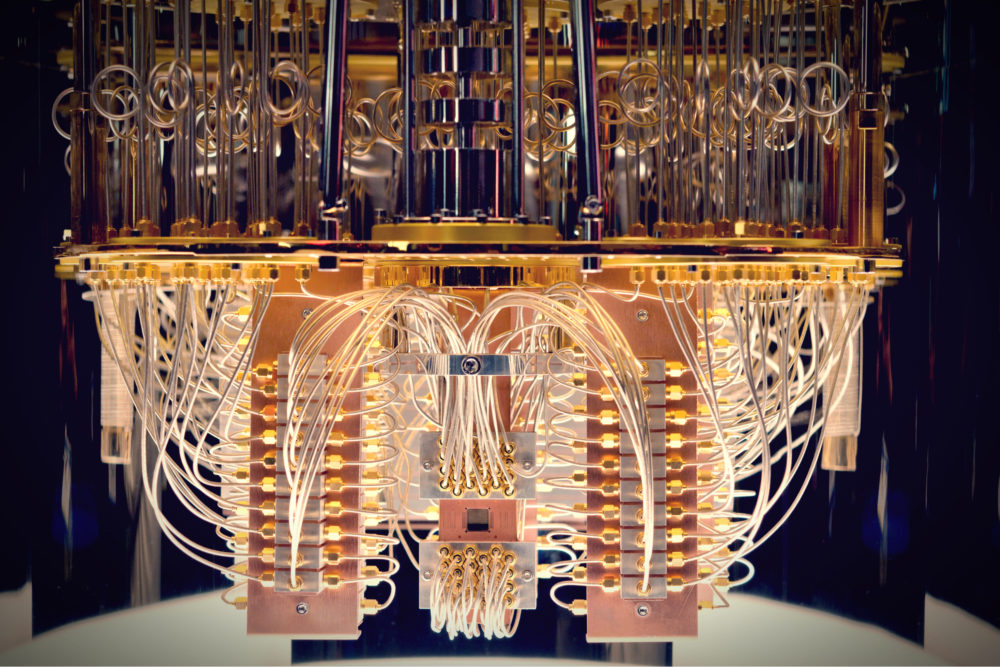 There at the University of Bristol inside the United Kingdom, quantum-computing scientist Ashley Montanaro uses Aws Services, a cloud services platform that connects to other companies’ quantum devices. A single quantum circuit ends up costing him about US$1 to check, and yet “the cost could indeed rack up” if researchers would like to test millions of them, he warns.
Start With A Few Simulations
How To Get Into Quantum Computing? A quantum computer prototype can also be used by scientists who want to play around with the technology. An emulator built into Microsoft’s QDK can run 30 qubit simulations on a laptop.
An emulator seems to be a lot more stable. The quantum states can be observed, he says. Troubleshooting real quantum computers is difficult because inspecting their state results in them collapsing in the first place, he claims. Qubits can be easily knocked out of their current state by stray background hot air or magnetic fields.
However, if possible, scientists must run their programs on just a real quantum computer in order to adjust to the new noisy, error-prone behavior of quantum computers, according to Montanaro. You can’t get the same information from emulation, “he says.
Even though quantum technology improves as well as research progresses, these headaches will diminish. Despite this, quantum computers will not be able to completely replace classical computers. If you want to use them, you’ll have to do so in the context of a larger, more traditional architecture.
There is a good chance that quantum computers will be the next big thing. A wide range of industries, including drug discovery, materials engineering, financial services, supplier management, and cybersecurity, are expected to benefit from quantum computing.
As a result, leading universities are establishing schools and programs devoted to quantum physics, one of the main reasons for this trend. Many college and high school freshmen have asked us: If quantum computing seems to be the technology of the future, what would I have to do to ride a wave?
The Following Are Our Top Three Picks For You:
Make sure you pick the right college major. Physicists, mathematicians, and computer scientists are all relevant to quantum mechanics. Electrical engineering seems to be another good option if you’re more interested in building the components. Start studying right away, no matter what you choose. You’ll be surprised at how much of a head start your career will be provided by a thorough understanding of the previous courses. The course is not graded. Find out what’s going on by studying it.
 Decide which book you’d like to read from beginning to end. Michael Nielsen and Isaac Chuang’s “Quantum Computation and Quantum Information” is a logical choice for a textbook. Professor Nielsen’s blog and YouTube channel are also excellent resources. In addition to John Preskill and Scott Aaronson’s excellent quantum blogs, there are many others.
Start writing some quantum code inside an open-source programming environment and then see how it works. A good place to start is IBM’s Qiskit and Microsoft’s Q#. Use both a classical simulation game and real quantum hardware to test your code’s performance.
Is there anything else you’d like to add on how to get into quantum computing? Improve the framework you’re using by making a contribution to the open-source project that created it. When you get your hands dirty, you’ll see the tangible benefits and have an immediate sense of belonging.
The post How To Get Into Quantum Computing? first appeared on Tekrati and is written by Jerald Swenson
]]>
How Close Are We To Quantum Computing?
How Close Are We To Quantum Computing? Quantum computers have long been promoted for their capacity to help scientists accomplish things like manufacture new materials, secure data using near-perfect safety, and precisely anticipate how and why the Earth’s climate would evolve. Now the race seems to be on to construct a real quantum computer. Microsoft, [...]
The post How Close Are We To Quantum Computing? first appeared on Tekrati and is written by Jerald Swenson
]]>How Close Are We To Quantum Computing?
How Close Are We To Quantum Computing? Quantum computers have long been promoted for their capacity to help scientists accomplish things like manufacture new materials, secure data using near-perfect safety, and precisely anticipate how and why the Earth’s climate would evolve. Now the race seems to be on to construct a real quantum computer.
Microsoft, Apple, Google, Intel, as well as other industry titans are enthusiastically praising each little, incremental advance toward a computer that is more than a couple of years away. Almost all of these landmarks involve increasing the number of quantum bits, called qubits, on even a processor chip, which is the fundamental form of information inside a quantum computer. It’s not just subatomic particles that are involved in quantum computing.
 Every qubit may simultaneously represent a zero and a one, a phenomenon known termed superposition in physics. There is an enormous increase in processing speed and performance as a result of this. However, there are a variety of qubits to choose from, and many are not the same. To put it another way: The direction of an electron’s spin determines whether or not a bit is 1 or 0. Despite this, all qubits are extremely sensitive to temperature changes, with some needing temperatures as low as 20 (250 times cooler than deep space).
Introduction
Since the introduction of the electronic computer in the 1960s, computing has undergone a revolution. Transformations in the processing of information have taken place during the previous several years. What has previously been considered science fiction fantasy is now a fact of life because of the advancements in technology. In the last few decades, computers have gotten tremendously quicker, more powerful, and smaller, and more flexible.
How Close Are We To Quantum Computing? We are entering a new data era known as quantum computing as we move away from classical computing. By changing the landscape underlying machine learning and artificial intelligence insights, quantum computing is expected to propel humankind forward. Some of humanity’s greatest and most complicated problems will be solved by quantum computing’s power and speed.
Quantum computing may be defined as “the utilization of molecular quantum states to impact computation” by the research company Gartner Quantum bits (qubits) are used to store data since they are capable of storing all conceivable states at the same time.
Despite their physical separation, information stored in qubits can influence the information in other qubits. Entanglement is the name given to this phenomenon.” Instead of employing binary bits of ones and zeroes for digital communications, quantum computers utilize qubits (quantum bits).
Non-bits: Qubits Instead of using digital bits, quantum computers do computations using quantum bits (also known as qubits). Through the use of qubits, quantum computers are now capable of processing previously inconceivable volumes of data.
Superposition. Schrödinger’s cat, a fictitious cat that is both alive and dead, is an example of a quantum item that may exist in much more than a city at the same time. In contrast to traditional bits, a qubit may concurrently represent both 0 and 1 values.
 Entanglement. It doesn’t matter how far apart two qubits are when they’re entangled; the link they make is permanent. Even Einstein, who dubbed entanglement “spooky activity at a distance,” was perplexed by the fact that a modification to one qubit would affect its entangled twin.
Qubit types that may be classified. For example, the qubit is often a particle that is so tiny in size that it shows quantum qualities rather than the rules of physics which govern our daily existence. Qubits are being developed in a variety of ways:
Transmons, or superconducting qubits, are a type of quantum computing device. These superconducting electrical circuit qubits are already in use in Google, IBM, and other prototype computers.
Isolated particles. Laser-trapped atoms can be used as qubits. Qubits can also be created from ions trapped in a charged atom.
Spin qubits are made of silicon. To control a quantum feature known as spin, electrons are trapped in silicon chambers in emerging technology.
Bits have topological properties. Majorana fermions, which are quasi-particles found in some materials but are still in the early stages of research, have the potential to be used as qubits.
How close are we to quantum computing? In computing, quantum computers signify a fundamental revolution in technology. In the field of quantum computing, we’re about to enter an exciting new phase. Quantum systems are becoming more and more reliable as they grow in size and complexity, and they may soon outperform conventional ones. Although it is still in its infancy, this new technology might have far-reaching consequences. This adds to the design of this field.
Quantum computing has a wide range of possible benefits and uses for society. “The rest of the information is contained in the following paragraphs.” For particular situations, quantum computers will provide huge speed. Algorithms are now being developed by researchers to discover and solve issues that might benefit from quantum acceleration.
Many of our current technologies, such as computer vision, 5G (and sometimes even higher internet rates), bullet trains (as well as a variety of other modes of transportation), and a host of others will benefit from the increased speed of quantum computers.
Big Data necessitates the use of high-performance computers, and quantum computing can help us do just that. When Quantum tunneling is used, even though Quantum computers are computational, their power consumption can be reduced by 100–1000 times.
When Compared To Traditional Computing, How Well Does Quantum Computing Stack Up?
A coin is a typical metaphor for illustrating the contrast between the two. Traditional processors have transistors that are either upwards or down, which is referred to as “heads or tails.” It’s possible that if I question you which side of the coin is facing up, you may say both. Building blocks for a quantum computer are found there. Rather than a binary 0 or 1, now have just a quantum bit that concurrently represents 0 to 1 until it reaches a resting state.
 How close are we to quantum computing? When using a quantum computer, you may sample an infinite number of potential states. Using the coin metaphor once more, suppose that I simultaneously toss two coins into the air. They might be in any one of four different states while they’re rotating. Eight alternative states might be represented by tossing three coins into the air.
I could symbolize more states than the world’s largest supercomputer by tossing 50 coins in the air and asking you how many you think it represents. More states might be represented by 300 coins, which is still a minor amount compared to the total number of stars in the universe.
What Causes The Qubits’ Brittleness?
How close are we to quantum computing? The truth would be that the coins, like qubits, finally stop spinning and fall into one of two states: heads or tails. It’s the ambition of quantum computing to maintain them spinning in various states for a long period. Consider the scenario in which a coin is spinning on a table, and the table is being shaken. If you do that, the coin will likely fall over sooner.
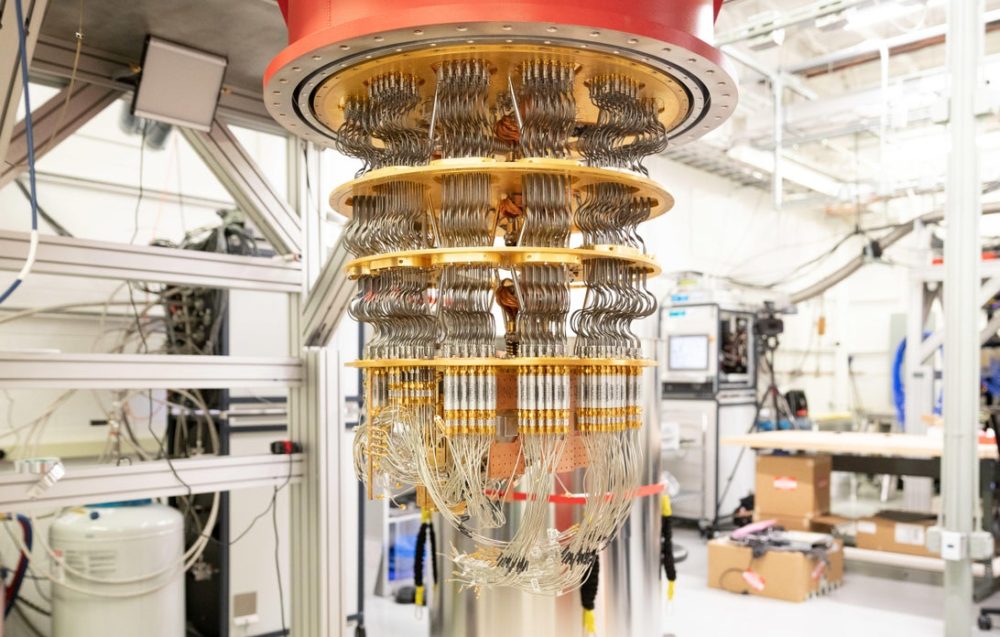
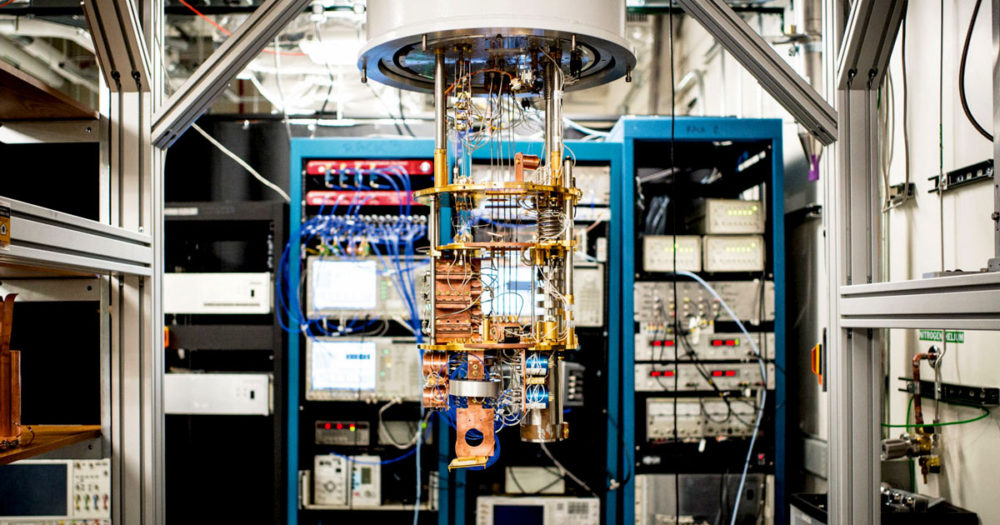
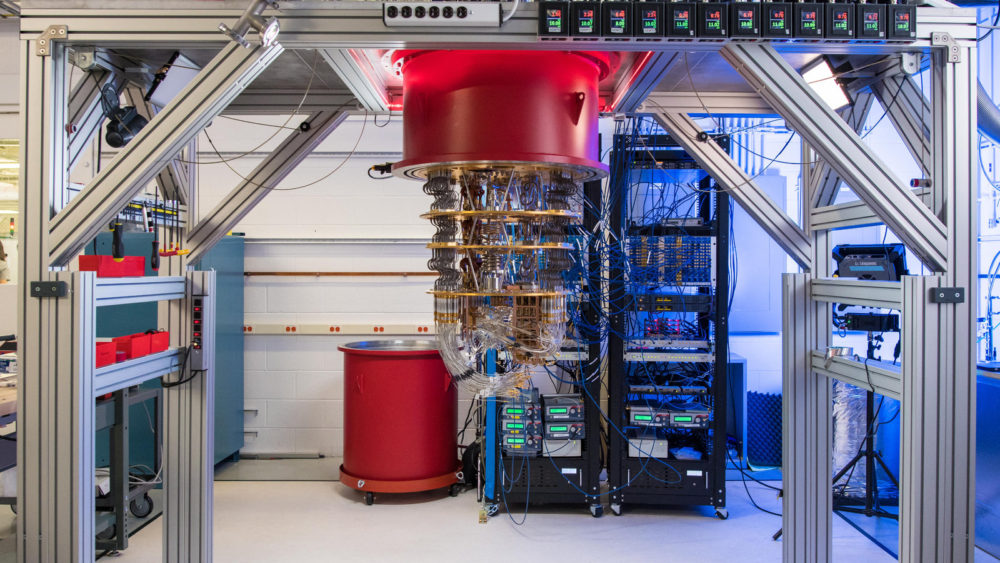
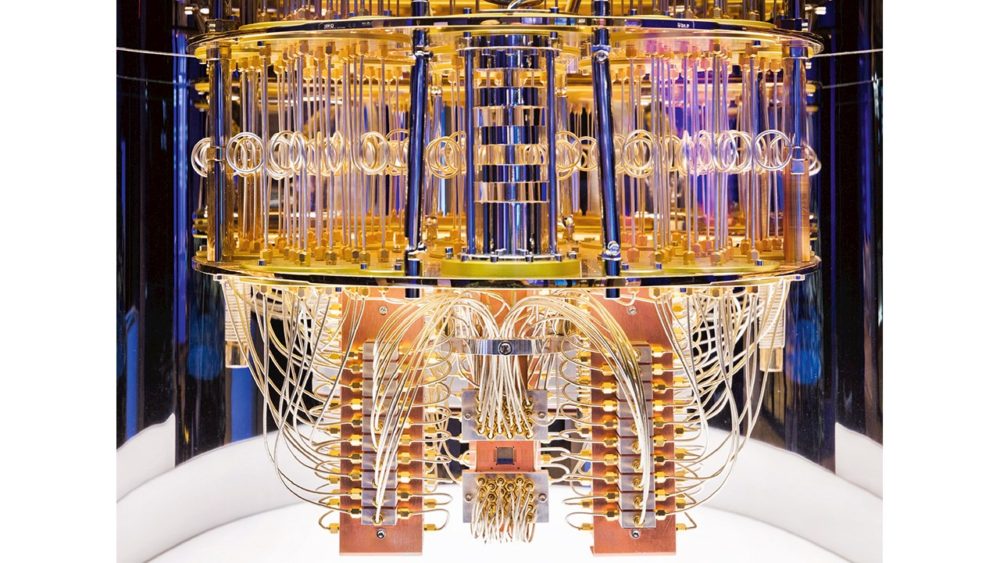
It is possible for a qubit to destroy its data noise level, temperature increase, electrical fluctuation, as well as vibration. It is possible to stabilize certain qubits by keeping them extremely cold. We employ a 55-gallon drum-sized dilution refrigerator to chill our qubits to just over absolute zero (approximately –273 degrees Celsius) using a unique helium isotope.
The post How Close Are We To Quantum Computing? first appeared on Tekrati and is written by Jerald Swenson
]]>
How Will Quantum Computing Change The World?
A new wave of quantum computing initiatives is being launched by major corporations and governments alike. How Will Quantum Computing Change The World? Quantum computers have received considerable attention for processes that have yet to be proven useful. As a result, quantum computers have been expected to bring about a new type of computing, wherein [...]
The post How Will Quantum Computing Change The World? first appeared on Tekrati and is written by Jerald Swenson
]]>How Will Quantum Computing Change The World?
A new wave of quantum computing initiatives is being launched by major corporations and governments alike. How Will Quantum Computing Change The World? Quantum computers have received considerable attention for processes that have yet to be proven useful.
As a result, quantum computers have been expected to bring about a new type of computing, wherein the hardware seems to be no longer a limitation when solving a problem, which means that some analyses that would take many years and even centuries for traditional systems to accomplish might be achieved throughout minutes with a quantum computer.
The implications for businesses could be enormous, from simulating faster and more effective materials to accurately predicting how well the share market will change. Among the leading companies experimenting with quantum technology, there are eight utilization cases that could fundamentally alter the landscape of entire industries.
 Drugs You Haven’t Heard Of
New drugs are discovered in part through molecular simulation, and that is a branch of science that studies how molecules interact with each other and tries to figure out a configuration that can fight off a particular disease.
There are so many ways in which these interactions can take place that it is impossible to accurately predict the behavior of molecules using their structure alone.
Because of the problem’s size, it’s impossible to solve using today’s classical computers. It is estimated that a classical computer would travel a large distance to 13 billion years to design a chemical compound with only 70 atoms.
A trial-and-error method is used by most scientists to discover new drugs because those who test thousands of particles against a specific disease inside the hope that one will work.
How Will Quantum Computing Change The World? Quantum computers have always had the opportunities to alleviate the molecular modeling problem in a matter of minutes in the not-too-distant future. The systems have been required to be able to perform many calculations at once, allowing scientists to quickly identify applicants for successful drugs by simulating the much more complex interactions between elements that make up molecules.
Life-saving medicines, which regularly take an average of ten years to achieve the market, might be developed more quickly and cost-effectively as a result of this change.
Where Do We Start With This Project?
A greener economy is already being supported by batteries, as well as their role has been expected to grow in the future. There are still some drawbacks to using these devices, such as their inability to hold a lot of charges and their slow charging speed.
 Using new materials with improved properties to construct batteries becomes a solution. It’s a molecular simulation problem involving molecules that could be employed in future battery components. Battery design, like drug development, is a data-intensive task best handled by a quantum computer rather than a classical one.
Forecasting The Common Wealth
Although today’s cutting-edge quantum computers have enormous compute authority, weather forecasts particularly long-range ones could still be depressingly inaccurate. To put it another way, there are simply too many variables in a weather phenomenon for traditional devices to take into account in order to make an accurate forecast.
Quantum computers, with their ability to analyze nearly all relevant information at once, seem to be likely to produce forecasts that are far more accurate than those provided by current weather models. In addition to helping you plan your next outdoor event, this could also assist governments in better preparing for natural disasters and in supporting research on changing climate.
Where To Find Stocks?
Banks like JP Morgan Chase, Goldman Sachs, as well as Wells Fargo everywhere are looking into how quantum computers can be used to improve the effectiveness of banking operations. This is seen as a potential utilization case with significant financial benefits.
Banks could use the technology across several ways, though one implementation of quantum computing toward a process called as Monte Carlo simulation already is looking promising.
Thus according to Goldman Sachs and QC Ware’s studies, quantum computers’ extraordinary computation capabilities could help accelerate Monte Carlo calculations besides up to 1,000 times. Goldman Sachs’ quantum technicians have now squeezed about their algorithms to really be powerful enough to run its Simulation Model on quantum hardware which could be accessible possible in a short as five years. This is an even extra promising development.
How Will Quantum Computing Change The World? – Assessing And Translation Of Language
Classical computers have been the subject of decades of research into teaching them to correlate meaning with individual words in order to comprehend complete sentences. Because language is indeed an interactive network, understanding a sentence often necessitates looking at it as a whole rather than just the “sum” of its parts. Then there’s the sarcasm, humor, as well as meaning to take into account.
So even the most advanced machine translation (NLP) canonical algorithms still have difficulty deciphering simple sentences. Some researchers believe quantum computers are better equipped to process language more intuitively because they represent it as a network rather than as a discrete entity.
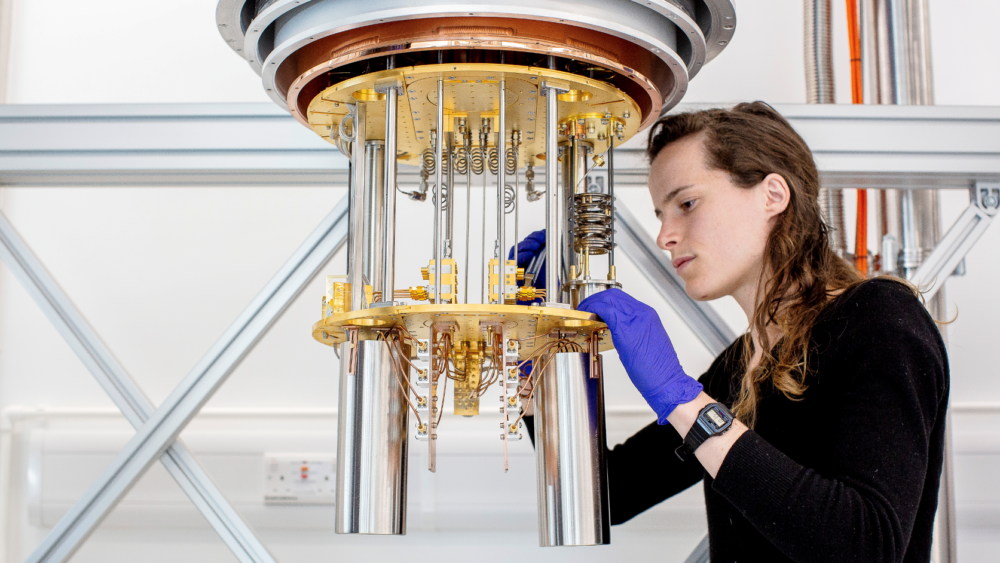 QNLP is a key area of research for Cambridge Quantum Computing, which has dubbed itself the “home of quantum computing”. Quantum circuits can be used to parameterize sentences, allowing word meanings to be embedded in the syntactic structure of sentences. Lambie, a QNLP software toolkit recently released by CQC, converts paragraphs into a quantum controller.
Solve The Problem Of Roaming Salespersons
A salesman has always prepared a number of cities for those who need to consult, and also the distance among each city, but has to keep coming up with such a route that would save them time and money. Everything just sounds simple, but somehow the ‘traveling salesman issue’ would be a common issue for businesses looking to improve their distribution networks or delivery routes.
Its amount of potential routes increases with each new city which is added to the salesman list. Major companies, with their hundreds of locations, thousands of fleets, as well as strict deadlines, face a problem that no classical computer could possibly solve in a reasonable amount of time.
In order to transport goods worth $14 trillion, energy company ExxonMobil, for instance, has now been seeking to enhance the daily forwarding of merchant vessels crossing the oceans that really is, upwards of 50,000 ships trying to carry up to 200,000 bins each.
Reduce Congestion
It may be possible to improve traffic flow as well as avoid gridlock at congested intersections by adjusting the signal timing signals throughout cities to consider the number of vehicles having to wait and the time of day.
How Will Quantum Computing Change The World? Classical computers struggle with this issue as well: the more factors there are, hence the more possibilities its system must consider before arriving at the optimal solution. Much like the traveling salesman, supercomputers can analyze multiple scenarios simultaneously, allowing them to arrive at the best solution much more quickly.
Microsoft has already been working with Toyota Tsusho as well as quantum computing entrepreneur Jij upon that use case for some time now. It is the hope of the researchers to reduce traffic congestion by using quantum-inspired methodologies designed to simulate city environments. As per the study’s most recent findings, traffic wait times might be reduced by up to 20%.
 On-Line Safety Measures
Quantum computers’ widespread adoption will have both positive and negative effects on online security. Is there anything bad about this? Our current data-encryption methods will soon be out-of-date.” As computer systems crunch large numbers, its majority of current online security measures rely on the fact that everything takes an extraordinarily long time to “crack the code.
Our computers and financial institutions are at risk because quantum computers are capable of processing this information at a much faster rate. Quantum encryption techniques including such quantum key exchange, an ultra-secure responsibility is to promote requiring a passcode to decipher a signal, have undergone significant development work.
How Will Quantum Computing Change The World? – Security Of Personal Information
Modern cryptography tends to rely on algorithm-generated keys to encapsulate data, but only stakeholders granted access to a secret key can decrypt the message. Because of this, there are two ways that data can be intercepted and decoded by hackers: either by using powerful processors to analyze and guess the key effects of the algorithm or by intercepting the cryptography key itself.
Traditional security algorithms seem to be deterministic, something that means that hackers can predict the outcome with the right increase in computational power.
This method is not considered a threat to cryptography in the near future because it requires a large number of powerful computers. Computers, as well as security researchers, are predicting that the need for more safe cryptography keys will grow in the future.
If you want to make the keys more secure, one option is to make them completely random as well as illogical in both these words, extremely difficult to guess mathematically.
There’s also the fact that quantum particles, like those that help compensate a quantum processor, are completely random in their actions. Thus, it could be used to ascertain cryptography keys that really are inconceivable to reverse-engineer, even for the most potent supercomputer.
The post How Will Quantum Computing Change The World? first appeared on Tekrati and is written by Jerald Swenson
]]>
What Is Quantum Computing And How Does It Work?
A quantum computer is like Albert Einstein’s electrical brain in a binary universe of 1s and 0s, capable of doing tasks that’d be nearly difficult for traditional computers to accomplish. The Direct Flow One, a 3×3-meter glass cube with 20 qubits that will be made accessible to businesses & researchers in 2019, is the first [...]
The post What Is Quantum Computing And How Does It Work? first appeared on Tekrati and is written by Jerald Swenson
]]>What Is Quantum Computing And How Does It Work?
A quantum computer is like Albert Einstein’s electrical brain in a binary universe of 1s and 0s, capable of doing tasks that’d be nearly difficult for traditional computers to accomplish. The Direct Flow One, a 3×3-meter glass cube with 20 qubits that will be made accessible to businesses & researchers in 2019, is the first product from multinational IBM to hit the market. Let’s know what is quantum computing and how does it work.
In practice, many cryptography experts are even more concerned that the most widely used systems for securely transmitting data. This may be obsolete if quantum computing reaches a sufficiently advanced stage.
A wide range of privacy and connectivity protocols, from mail to online retail transactions, rely on the RSA algorithm for its security. It is currently accepted and no one has the processing capability to test every feasible method of decrypting your information once encrypted, however, a mature qubit could do so in just a few hours.
 So, Know What Is Quantum Computing And How Does It Work
This was founded on the rule of superposition & quantum entanglement. This field of computer science provides a separate computation process from the one used in regular computing. Theoretically, it could store much more variables per data element and run far more effective computational algorithms like Shor’s or nuclear annealing.
To avoid the constraints of traditional computing, this younger generation of supercomputers employs an understanding of quantum mechanics, the branch of science that analyses atomic and subatomic particles as its foundation. Although quantum computing has obvious issues with scalability & incoherence, it allows for several includes operational and removes the tunnel phenomenon that now limits nanometric programming.
What Makes A Quantum Computer?
In comparison to classical computers, quantum computers can process infinitely more data because they do computations based on the likelihood of an object’s condition before it is measured, rather than just 1s or 0s.
Traditional computers use a physical state to perform logical processes. It’s common for these to be binary, which means they can only operate in one of two ways. A bit refers to a single condition, including on or even off, forwards or backward, or 1 or 0.
Qubits are created in quantum computing using the intrinsic state of an object, which is referred to it as a “qubit.” The spinning of an atom or the polarizing of light is two examples of states that have yet to be discovered what is quantum computing and how does it work.
You can’t tell exactly where you’re at with an unmeasured quantum system, like a coin that spins before landing in your hand. They can be tangled with other objects, which means that their end outcomes are linked even though we really do not know what it is they are.
To solve difficult issues that a computer program would take years to solve, the complicated mathematics behind such entangled “rotating coins” can be integrated into special programs.
Complex mathematical problems, hard-to-decipher security codes, and predictions of numerous neutral particles in chemical reactions could all benefit from the usage of these methods.
Types Of Quantum Computing
An object must be held in a quantum system long enough just to carry out numerous actions on it in order to find what is quantum computing and how does it work.
A superposition sheds its in-between phase when it comes into contact with materials that really are part of the measuring system, which is known as decoherence. Quantum states need protection from interference at the same time that they may be accessed easily.
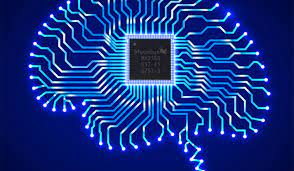 There are a variety of approaches being taken to this problem, including the adoption of more resilient quantum processes and the development of better error detection methods.
A World Ruled By Quantum Computers
Classical technology is capable of handling any challenge posed at a computing device for now. The term “quantum supremacy” refers to a subatomic computer’s ability to surpass its classical equivalents. Companies like IBM and Google believe we’re getting closer because they’re packing more qubits into their gadgets and making them more precise.
Quantum computers aren’t universally seen as worth the trouble. Some mathematicians feel that quantum computing will never be realized because of insurmountable difficulties.
When Completing A Twist, Imagine If You Were Able To Consider All Alternative Paths Simultaneously?
Rather than using binary “bits,” quantum computers use “qubits,” which are a type of qubit. It is based on quantum mechanics, which states that physics acts differently at the subatomic particles level.
Quantum mechanics can be easily shown by shining a spotlight through a two-slit wall. The light waves collide and generate an interference pattern when they collide with each other at the above and below slits.
As a result of what is quantum computing and how does it work, you’ll be blasting individual photons, the smallest particles that make up light into the air at a rate of one photon a second. Each photon will have to travel through some kind of single slit, and there is nothing to impede it, thus it’s logical. In spite of this, you still have an interference pattern.
As per quantum mechanics, the following occurs: Each photon will be in a state of “superposition” until you see them just on-screen. It is indeed as though it’s simultaneously taking every available route. However, this is only true until the dream state “collapses” in front of our eyes, revealing a single point.
Because of this, qubits are able to perform extremely fast calculations.
All possible paths through the confusion would be included in the quantum system in our maze scenario. To find the most likely route to the cheeses, you’d have to break down the condition of superposition.
Increasing the number of qubits in a quantum computer is similar to adding transistors in a classical computer.
 A quantum mechanical phenomenon is known as “entanglement” enables the researchers to push several qubits into the same configuration, even though the qubits are not in direct touch with each other. There are two possible states for each qubit, but as more qubits are entangled, the superposition of these two states becomes more and more powerful. Two-qubit systems have four possible values, while 20-qubit systems have more than one million possibilities.
In Terms Of Computational Power, What Does This Mean?
Imagining how quantum computing could be used to solve a real-world problem, such as finding prime numbers, helps. There are only two ways to divide a prime number: by itself or by 1.
Small numbers can be multiplied into large ones with ease; however, the inverse is far more difficult; you cannot simply look at a lot and determine its factors. A prominent method of data encryption, known as RSA, is based on this principle.
Two prime numbers must be factored in to decipher RSA encryption. It’s impossible to solve an issue without having the answers in beforehand, and here is where prime factors come in handy.
A Quantum Computer: What Is Quantum Computing And How Does It Work
Information is processed in a fundamentally new way while using quantum computers. Binary bits – data transmitted as ones or zeros are the basis for traditional computers. Data is sent to and from these computers via quantum bits, which can be either between one or zero at the same time.
“Superposition” is a term for the ability to combine two or more states of the same object, and it is at the basis of quantum computing’s potential for exponentially increased computational capability.
Potential For Massive Growth
However picky and uncooperative quantum physics might be, business interests haven’t held back from plunging in.
At the recent Computex, IBM stated because it so Q Network has grown to include more than 100 enterprises and organizations. Delta Air Lines, Anthem Health, and Daimler AG, the company that owns Mercedes-Benz, are among the new partners.
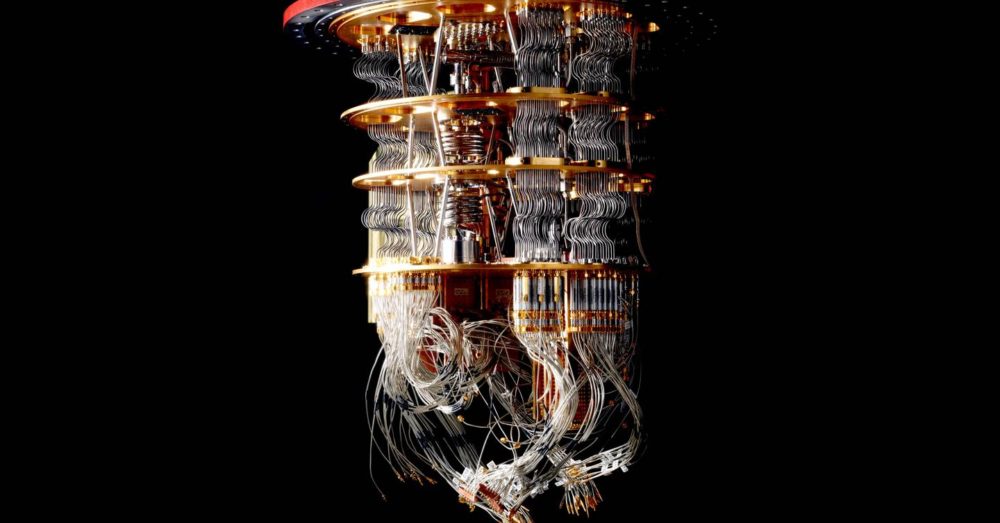 The possibility of particle physics in MD dynamics is a factor in several of these relationships. Among other things, Daimler is hopeful that the technology may one day lead to improved battery-powered electric vehicles.
Quantum molecular modeling has the potential to aid in the discovery of new pharmaceuticals, even if it is still a long way off. Partnerships between computational complexity startups and pharmaceutical giants, such as those involving 1QBit as well as Biogen, with ProteinQure and AstraZeneca, show this. Pharmaceutical development is currently characterized by expensive, low-yield trials and errors.
The post What Is Quantum Computing And How Does It Work? first appeared on Tekrati and is written by Jerald Swenson
]]>
Know About Quantum Computing For Dummies
Over the last few decades, Quantum computing for dummies power must have grown at an exponential rate. It is based on Moore’s Law, which states that computing power usually doubles every year because transistors can be made thinner. A quantum scale operation is inevitable at this point in our journey to smaller dimensions. As a [...]
The post Know About Quantum Computing For Dummies first appeared on Tekrati and is written by Jerald Swenson
]]>Know About Quantum Computing For Dummies
Over the last few decades, Quantum computing for dummies power must have grown at an exponential rate. It is based on Moore’s Law, which states that computing power usually doubles every year because transistors can be made thinner.
A quantum scale operation is inevitable at this point in our journey to smaller dimensions. As a result, the development of a computer capable of operating in accordance with local regulations of quantum mechanics is required.
A Brief Overview Of Quantum Computing For Dummies
For kids and adults alike, a puzzle is a fun challenge that can be enjoyed at any time of day or night.
In order to figure out a difficult puzzle like this, it really is fair to presume that you go through each possible solution step by step until visitors find the right one. Suppose, for a moment, that you have unlimited access to all of these routes.
 Isn’t it crazy? Quantum computers appear to be able to do exactly that, rather than elementary school corridor puzzles, they could be used to solve high-level problems example simulating conversations between molecules as well as aiding in the discovery of new drugs, for example.
Quantum Computers Are A Necessity
Over the last few decades, computing power must have grown at an exponential rate. In particular, Moore’s Law states that the ability to shrink transistors results in a doubling of computing power each year.
As we continue to shrink, we will have to deal with the consequences of working at a quantum magnitude. As a result, the development of a computer capable of operating in compliance with applicable laws of quantum theory is required.
Qubits And The Quantum Computing Revolution
A qubit’s (quantum bit) capacity being in a quantum system, or multiple states simultaneously, is what gives quantum computers their power. This is like a lightbulb in that it can be completely flexible in a traditional bit (0). Qubits can exist in a state of superposition, largely being both 0 or 1.
Quantum algorithms seem to be capable of manipulating multiple states around the same time because of this and both these quantum phenomena. It’s possible that potential developments of quantum computing for dummies may include:
- Quantum Simulation was performed
2 . The design and discovery of new drugs discovery can be expedited up significantly by being able to simulate drug effects
- Cybersecurity/Cryptography
- Optimization
- Financial Trying to model
- Predicting the future
- Computational Chemistry
Quantum Physics Applies To What Kinds Of Atoms And Particles?
Everything behaves in compliance with applicable laws of quantum mechanics, including all particles, atoms, and molecules. Only at the molecular or atomic scales would this be relevant to our understanding. According to quantum mechanics, its macroscopic world, something that we inhabit, can be affected by the physics of items there at the atomic level.
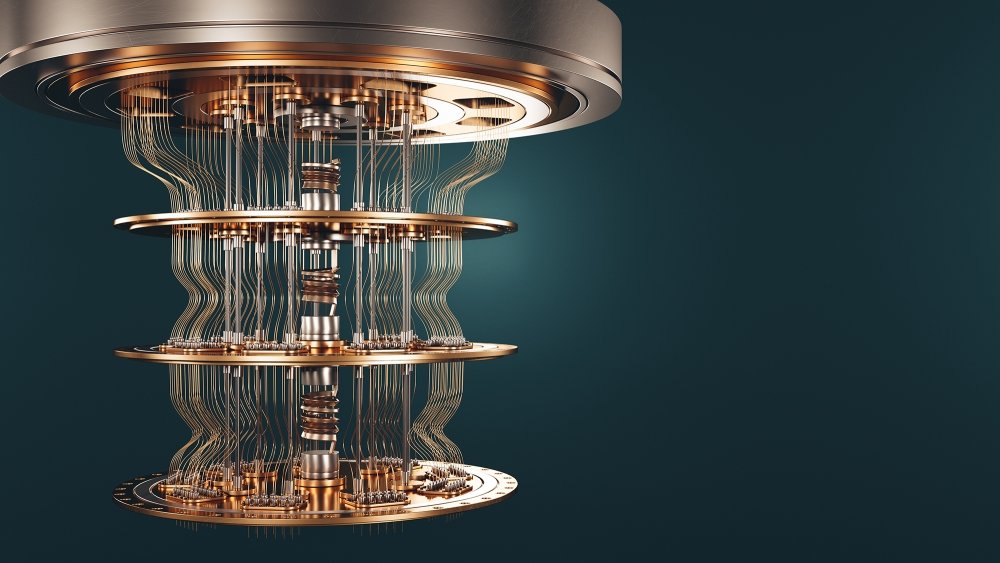 Definition Of Superposition?
Superposition seems to be a system that really can occur in different distinct states at the same time. When it comes to quantum physics, an electron can be in one of two states: spinning up or spinning down. A superposition of up and down means that an electron seems to be a complex combination from both while it is in this state. In order to take on one of the two positions, it must first be measured. This is possible to leverage the power of quantum computing for dummies state if you construct algorithms inside the right way.
What Exactly Is A Qubit?
A qubit seems to be a quantum bit that serves as the computer’s fundamental unit of information. Once it is in superposition, its quantum computer, as well as specially designed algorithms, can take advantage of the power of several of the two states it is now in.
What Is It About Quantum Computers For Dummies That Makes Storing Data So Difficult?
In quantum computers, information is stored in the form of superpositions of particles.
However, it is extremely difficult to store a quantum state, i.e., particles in superposition. Errors will be introduced into the universe by any interaction with it. Quantum computers are therefore electromagnetically shielded and cooled to near-absolute zero temperatures.
Does The Technology Of Quantum Physics Have A Single Underlying Principle?
Many engineering applications of quantum principles, including superposition (quantum computing), transference (network as well as key distribution), as well as illumination (quantum radar), have been based on these different quantum principles.
Is It Possible For Them To Use Traditional Methods?
There have been a number of groups experimenting with various approaches to this. The classical internet, as well as a standard computer, are used to connect to IBM’s 20-qubit quantum computer.
Its silicon-chip device is used to input problems, which are then converted as well as fed through into quantum computers. They’re linked, but they’re not living in the very same box, to put it another way.
Do We Still Need To Worry About Moore’s Law?
Yes, and more than ever before! It’s getting close to the end. When it comes to print on silicon chips, we’ve gotten down to 10 nanometers, though many are somewhere around 13 and 17 nanometers. Conventional computers can no longer operate on the basis of classical physics, which breaks down from about 7 nanometers.
What Are The Benefits Of Quantum Computing For Dummies?
- As a result of their superiority to conventional technologies, including quantum sensors, radar, as well as key encryption.
- Who or what is preventing the technology from advancing further?
- Keeping something like that in quantum computing for dummies states lengthy sufficiently to do this is the engineering challenge.
- There are some strange regulations of quantum mechanics that are difficult to explain.
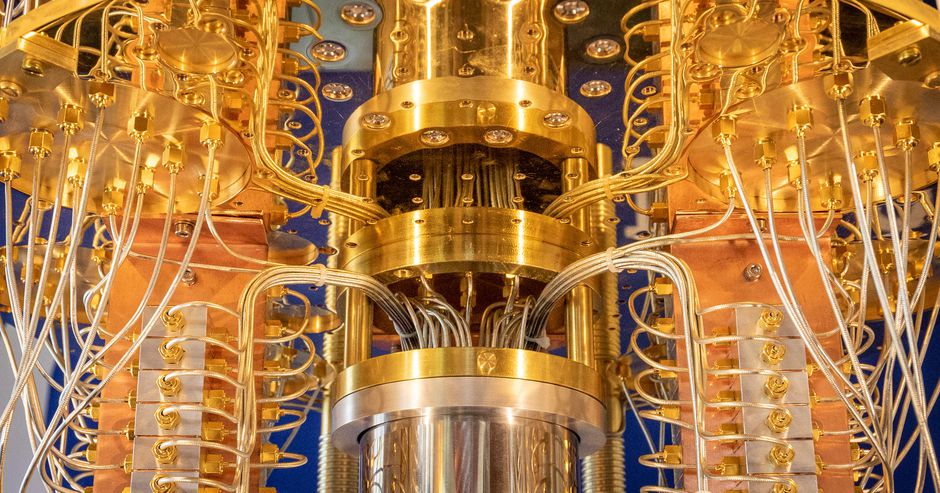 The Wave-particle Dualism
Consider the revelation of wave-particle binary opposition in the light first before looking at it in electron density. We had previously known that light was an electromagnetic wave, which is defined by its wavelength and frequency. Nevertheless, the movement of electrons, which occurs when light is directed at a specific metal plate and causes it to exit an electron, just can not be explained in this way. When it came to ejecting electrons, the intensity of light had no effect. An electron’s ejection is controlled by the light’s frequency, not its intensity.
Energy has been quantized, as well as divided into units that cannot be reduced to small components. Planck’s energy seems to be an example of this. Einstein then applied this to light, going to name these particles (particles of light).
Its photoelectric effect can be explained by striking the plate and screws with a photon associated with a particular amount of energy, which will eject an electron no matter however many photons are aimed at it (strength).
Wave-particle duality has been demonstrated in numerous experiments, such as the famous double-slit experiment. This experiment used two slits to shoot out photons, which were then tracked on a screen within the back.
This image shows how the photons behaved like waves when those who landed as well as how the interference among waves formed a probabilistic model on the right-most screen. Photons can interfere with each other and act like waves even when they’re just one photon.
Quantum Component Wavefunction
To understand as well as manipulate quantum computing for dummies theory, Erwin Schrödinger has been able to demonstrate an equation that describes its particle’s “wave equation.”
In the beginning, it was difficult to understand exactly what this meant, and we still have no idea what it clearly looks like. It is widely accepted that the squared magnitude of that kind of wave function considers giving us the likelihood of detecting a particle at any given location.
Place at a single stage in the process of measuring, “collapse” its wave perform reduced to a particular point in space, and the magnitude of that quantum system tells us how likely it is to collapse to just that point.
Superposition
A quantum fusion of even a particle means allowing that particle to be in multiple places at the same time. We’ve been referring to superposition ever since. Our understanding of a particle’s possible states is provided by the wave function, which shows us how likely it is to be at any given point in space. In this way, particles exist throughout probability clouds which collapse to a single point when observed.
Schrödinger’s Cat seems to be a classic example of a thought experiment that illustrates this. Radioactive particles are placed in a “black box” with a cat inside. When that particle decays, gas will be released, which will kill the cat. As long as you don’t “measure” (collapse the superposition), it’s assumed that now the cat would be in a state of both life and death.
When the dark-skinned box is opened, you will either see this same cat alive or the cat has died. This is similar to the situation where the camera is placed on top of a human in the black box, and the camera is then placed on top of a human inside a second black box. Because the human seems to be in a closed system, it wasn’t being measured. As a result, the human would be experiencing a dual perception of the cat’s life and death.
He managed to come up with just this experiment in order to demonstrate how absurd and irrational the current understanding of quantum computing for dummies mechanics is. However, it is commonly used today as a means of introducing individuals to quantum mechanics.
 The Challenge Of Measuring
The idea that “trying to measure” a quantum particle causes it to outperform the conventional to be reduced to a single state is what I was getting at. Scientists, but on the other hand, have no idea what constitutes “trying to measure” something.
Utilizing the double-slit experiment as an analogy, we can really see how confusing this is. We noticed patterns of interference in the measurements of where the particles landed, which were similar to waves. Unlike measurements taken when a quantum superposition is collapsed, those taken after the back screen have a different starting point.
The back screen could be viewed as a sort of “measurement” device, as it compelled the atom to collapse into a single quantum system. However, whenever a human was present, the particle could very well behave like just a particle, as well as two slits will indeed appear inside the back screen as just a result of the particle being shot.
A camera could be placed inside the environment as well as the particle might well behave like such a particle besides forming two slits inside the back screen. In order to construct an interference pattern, a wave-like pattern was created when the camera has been unplugged but still in its environment.
We don’t know why this wave function collapses to a single state, or how the world isn’t a random probability cloud. Even if we don’t know the answer to this measurement issue, we can still use quantum mechanics too with us an advantage in quantum computers.
Understanding Quantum Mechanics In Different Ways
Its Copenhagen Explanation of quantum computing for dummies mechanic seems to be the most widely taught and popular inference of the kinetic molecular theory. Developed by Schrödinger and Bohr, its interpretation provides the best computational formula for just how quantum mechanics works as well as how we might manipulate those laws to our own advantage.
Measurement issues are ignored and we are essentially urged to do the arithmetic.
The Several Worlds Theory, proposed by Hugh Everett, seems to be another popular inference of quantum mechanics. Would it be possible that instead of the ripple function ‘collapse’, there’s also a branching of the universe that allows for every possible state of the particle to exist? As a thought experiment, Schrödinger’s cat could exist in two multiple worlds: one where the cat is either alive or dead.
The post Know About Quantum Computing For Dummies first appeared on Tekrati and is written by Jerald Swenson
]]>