Interview Series: Advice for Retailers Preparing for Holiday Sales
You might be wondering how digital marketing trends affect your sales. We interviewed 7 company entrepreneurs to find out what their challenges are and what advice they have for retailers during the holiday season. The question we asked: What is your advice for retailers preparing for holiday sales? Susan GagnonCostumes Heaven For retailers, devising an [...]
The post Interview Series: Advice for Retailers Preparing for Holiday Sales first appeared on Tekrati and is written by Jed Morley
]]>Interview Series: Advice for Retailers Preparing for Holiday Sales
The post Interview Series: Advice for Retailers Preparing for Holiday Sales first appeared on Tekrati and is written by Jed Morley
]]>
53 Stories of Successful Entrepreneurs From USA that Will Inspire You on Your Journey
All successful entrepreneurs have risen through adversity and perseverance. Before becoming established, all firms must go through the starting phase. They have to start somewhere, too. Ask any ambitious entrepreneur, and they’ll tell you about the exhausting, persistent process that has kept them awake countless nights. It’s fascinating to learn about the beginnings of significant [...]
The post 53 Stories of Successful Entrepreneurs From USA that Will Inspire You on Your Journey first appeared on Tekrati and is written by Jed Morley
]]>53 Stories of Successful Entrepreneurs From USA that Will Inspire You on Your Journey
The host of this interview was Jed Morley. Jed Morley is the CEO of a leading payment processing service provider called PlatPay.


Kristina Alexandra Kovalyuk
The difficulties with becoming CEO are many and it is a journey not meant for all. As Elon Musk said, “being an entrepreneur is like eating glass and looking into the abyss”. Some of the challenges I faced in becoming a CEO have been:
- Leaving a comfortable well paying job on Wall Street that provided a salary, benefits and security and going into the unknown. Not knowing where or when my next ‘paycheck’ was going to come from.
- Marketing. Knowing what my product and service is, is one thing, but how to get it to my target audience, getting it on their radar, marketing, pitching, doing PR.
- Establishing corporate governance, accounting, operations, structure, CRM.
- Hiring talent. Probably one of the most challenging parts of being an entrepreneur is finding talent and then being able to give them the freedom to do their work and not micro-manage and let go. This was a very tough part as an entrepreneur wants to instinctively do everything themselves.

Matt Post
Whenever I am confronted with difficulties and challenges as a leader, I always remind myself that great leadership is forged in the fire of adversity. Yes, difficulties can sometimes discourage you from pursuing your goals further, but if you adopt a growth mindset around them, you will learn to embrace each challenge as an opportunity to grow. That is what I have continuously tried to do throughout my career as a serial entrepreneur.
Chris M. Walker
The hardest part for me was learning to lean on other people.
I waited literal years too long for my first hire and once I did it changed the game for me overnight and let me take things to the next level… but I still didn’t learn.
After that hire I was able to add more offers, grow more products and help more people… until I plateaued again, and had to be convinced to hire further.
This was a vicious cycle that I eventually broke out of long after I should have. I have now finally learned that not only can I not do everything myself, but I should do very few things myself so the things that I do, do get me at my best.
Your business is your creation and it is normal to think no one can do things up to your standard, but you can’t do it this way for long if you have any level of success, it will lower the quality of your work, make you hate what you do, and prevent your from rowing.
I am fortunate now to have a great team that handles most everything for me to the point that I joke that I am just the face on the sign like Colonel Sanders… but it took me a long time to get there, and if I hadn’t struggled with this I’d be years further along than I am now.

Brett Larkin
One of the biggest challenges I faced on my entrepreneurial journey was prioritizing work-life balance. When you start a business, it is hard to focus on anything else, but this hyperfocus can actually cause a lot of fatigue and stress that can lead to burnout.
The key to being a well-rounded leader and business person is to figure out how you can balance your professional life with your personal life. External factors, like friends, family and your social life can actually benefit you hugely by providing comfort and support on your entrepreneurial journey!

Kate Lombardo
The journey to becoming an entrepreneur, also a Yoga Director at YogaRenew Teacher Training is one that is filled with constant challenges. While I’ve faced all the typical ones– from conquering self-doubt to navigating bankruptcy as a result of the pandemic– I think the biggest difficulty I’ve faced is learning to accept that things are always going to change.
When it comes to being an entrepreneur, you have to be open to always learning and growing and learning how to pivot as things around you change. Every time you think you’ve finally got things figured out, something else shifts in the world and you have to adjust in order to stay relevant.
For example, right before the pandemic began I finally felt like my yoga studio was in a good place and then we had to close and learn how to teach online. Thankfully by then, I had already gotten comfortable with needing to always be able to pivot, but that took a long time for me to learn how to accept that I’ll never be “done” when it comes to being an entrepreneur.
The exciting thing about that is that it means you can never truly fail. You just need to keep trying until you find the way that works.

Adam Rossi
Many entrepreneurs have similar stories on their way to the top. Everyone has problems they face on a daily basis, but what separates those who are good from those who are great is how they deal with the adversity that appears in everyone’s lives.
I’m no different. I’ve faced the same issues, dealt with the same issues of people not believing in me or in my journey toward success. The only difference between me and those who haven’t reached their success yet? I didn’t let any of those problems stop me. That’s the big secret to being a successful entrepreneur. Don’t stop.
Don’t let anything get in your way. You’re going to have problems. You’re going to have haters. It’s inevitable. Don’t let it stop you. Let it fuel your fire. Prove them wrong. Prove everyone wrong.

Devon Fata
The core of my journey to becoming a CEO was the slow realization that it was the only way I would be able to work in a way that fit my vision and values.
I started in the web design business right out of college as a salaried employee at a big design firm. While I learned a lot about the industry and built my skills, I found that there were a lot of things I wanted to do differently, but lacked the power to change.
This led me to becoming a freelancer. This gave me a greater degree of control over my work and the freedom to find clients for myself and start acting a bit like a business instead of an employee, but I was still limited both by the clients I could find and by my inability to bring together teams for bigger projects. That’s when I launched Pixoul. Now I can finally implement my vision on entire projects, from start to finish.

Dain Dunston
One of the biggest difficulties I faced during my career journey was failing as a leader at a tech company, where I lasted only four months. It shook me to my core. The worst part was I knew in my bones it was a bad decision before I accepted the job, and yet I went ahead with it anyway.
I came into the role feeling so uncomfortable for so many reasons that I surely would have come across as inauthentic and even just a little weird. I left feeling crushed, humiliated, and defeated. I had no idea where to go next, yet I was determined to find the answer to one burning question:
How had I become so lost? The experience fired me up to find out why I had made such bad decisions and how I could rewire my mind to be the awesome, inspiring human being I always wanted to be (but secretly doubted I was worthy of becoming). Who among us hasn’t found ourselves in the wrong job, or feeling that we didn’t belong, or wishing we could stop making decisions that took us into dead-end career moves?
My failed job experience allowed me to look inward, and over time, with daily personal practice, I rewired my mind to be the leader I know I could be. Along the way, I helped many other leaders do the same, from CEOs to those just starting out in their careers. Nothing I’m doing today would be happening if I hadn’t gone through that and a few related experiences. All experience happens for one purpose: to increase our awareness.

Ryan Yount
Establishing a clear direction for the business was the most difficult challenge I faced. Developing strategies that will lead the business in the right direction is not easy, especially when starting from scratch.
You must always be ahead of time to avoid losing the relevance of the business. One of an entrepreneur’s most important responsibilities is to bring what has yet to be done into the present. An entrepreneur is also tasked to find solutions to other business issues, such as poor customer service, which is a challenge due to a lack of experience.
Keeping up with business trends and changes is another challenge I faced. When starting a small business as an entrepreneur, you must adapt to the changing trends in the business environment. Trends create or destroy businesses at their initial stages. Seasoned business owners recognize that a trend is a friend, and they are always ready to adapt their operations to the current trend quickly.
It isn’t easy to keep your eyes open for trends while you are on your journey to becoming an entrepreneur, but the real challenge is always the ability to capitalize on these trends rapidly.

Thomas Mirmotahari
The difficulty I faced was the challenges that accompanied the commencement of this pandemic. Overcoming those challenges meant finally taking a leap of faith to start my own business which I did in 2020. Fast forward to 2022, I have 7 full time employees and 2 part time employees on my team. We are dedicated and focused on producing great results that continue to sustain the enterprise.
I am a Business School graduate and my knowledge on what it takes to be a great leader started at college. So for me, making my way to the top of my own company meant hard work at strategizing a business plan that was relevant to the market, taking the bull by the horns and finally getting down to implementing a marketable solution.
Starting your own business is gutsy. It involves many long hours of hard work. So I could say that developing a higher treshold for discipline, and time management was an initial challenge. I believe that if you truly believe that you have a viable solution to a business problem then test it out and go for it. But have a willingness to work hard. You must be willing to put some skin in the game to make anything happen in life and business.

James Parsons
Digital marketing was already a highly competitive niche in 2018. It was a big challenge to market my company since many digital marketing agencies existed.
The best solution was to offer business proposals to my existing connections at more affordable rates with excellent data-driven results. I hired experienced offshore writers and marketers to save me some money and invested in dependable project management software to boost collaboration and increase productivity.
I created a website for my digital marketing agency and marketed my content marketing services across different online platforms. These steps tremendously improved the company’s online presence, gaining decent traffic for the first year and overwhelming content orders the years after that. More client referrals came in because of the soaring 700% increase in our average clients’ conversion rate in 2020.

William Cohen
One of the issues I had to deal with regularly was criticism. It could be about business concepts, small biz decision-making mistakes, or even launching a firm in the first place.
My business was continuously reminded about the different ways it may fail. People would be jealous of and intimidated by me, so these critics would get personal sometimes.
It’s also quite challenging for any new firm to acquire customers, especially if the company has a limited marketing budget. This concern was always on my mind, and the fact that consumers want to stick with well-known brands made it more difficult for me to advertise.

Tim Absalikov
Being a digital marketing agency, we did not vividly sense the negative effect of the pandemic. We have a mixed staff – both onsite and remote employees – so, we did not have to significantly change the mode of the work. At least, the effect of the changes was not painful for us as we didn’t have to adapt to changing market conditions. We were already practicing remote working, at least part of our staff.

Gian Moore
I’m a single mother. So, Building a business while my daughter was growing up was a huge task for me.

Emily Cooper
Hi Jed,
I’m Emily, the founder of Oliver Wicks, a luxury Italian menswear brand with an online presence.
Being a business leader requires a lot of social responsibility and accountability. There will always be challenges and setbacks present. The only thing that is within your control is your mindset and attitude towards things.
I value integrity and resilience the most in running my business. Enjoy the journey ahead and use the difficult times as fuel to perform better. It’s totally fine to fall down sometimes. The important part is getting back on the saddle and learning from your mistakes.
The first few years of establishing the business are usually the hardest. You are finding your footing, and grappling with growing pains at the same time. It really helps to center on your “why” in venturing into your business, as well as having the right team in place. Never be afraid to ask for help, and always give credit where credit is due.
I hope you find these inputs helpful. I will be happy to elaborate more on the topic, should you need more information.
Warm Regards,

Michael Dean
One of the main difficulties I’ve faced while being an entrepreneur is keeping up-to-date on current marketing trends. I never realized the absolute importance of marketing and SEO strategies until I started my own business.
You can have a fantastic idea, but without good marketing tactics, building an audience for that idea is next to impossible. Successful marketing requires an understanding of your brand, and solidifying your brand at the beginning of your business journey can often be challenging.
As someone who is not naturally savvy with social media, I have had to really put in effort and research into understanding how to use it as a business tool. Social media is one of the most accessible and valuable marketing tools out there. If you’re not prioritizing social media and digital marketing for your business, you are missing out on tons of engagement.

Becky Brown
I have 20+ years of experience in business, but becoming a CEO took more effort than I could ever imagine. My entrepreneurship journey began remotely when I took control of ShoppingKim, and I had to put in a lot of effort to make it all work.
The initial difficulty was learning how to navigate the online space, getting acquainted with the technology, and learning how to utilize it to grow my business. I had to learn a lot about website development, content creation, e-commerce, and digital marketing.
Managing a remote team was another difficult issue to resolve because I had to learn how to rally my employees to do their best work so that my business can grow.
All things considered, it took a lot of time and effort to learn and understand how everything works in order to make the best decisions as a CEO. Every CEO has to learn the inner workings of their business, but there’s also the need to acquire people and leadership skills to succeed.

Sherry Morgan
The hardest challenge I faced in my road to becoming a business owner and CEO is actually starting the journey. I had a lot of self-doubts and I always thought that maybe I shouldn’t start since I’m sure that there are always people better than me out there.
I got stuck in the planning stage for a long time, always visualizing what I want to happen but not taking any action towards it. Eventually, I decided not to pursue my ideas anymore but then my closest friends talked some sense into me.
They reminded me about the problems I want to solve and why I wanted to start my business in the first place. They also gave me a lot of advice and support and made me feel that I can do anything that I put my mind to.
There may be better people out there, but what’s important is looking at my own progress and aiming to be better than who I was yesterday. This motivated me to finally start and now whatever challenge I face in my business, I’m now brave to face it.

Stephen Keighery
One difficulty I faced on my entrepreneurial journey was keeping my head out of the competition.
Aside from the struggle to stay competitive in the marketplace, you also have to be aware and not get lost in the competition, which may influence how you conduct your business and offer your services.
It is challenging to stay level-headed, especially if you see your competitors earn more than you despite providing the same benefits as you do. You have to learn to extract yourself from that mindset, focus on the quality of services you offer, and establish a good rapport with your clients.

Devin Schumacher
The transition from being a technical consultant or contributor or employee to a full blown businessman providing payroll to others is a large step and it is not always a smooth road to walk on.
The growth pains of building a sustainable business in its infancy on top of a highly irregular business climate with covid-19 is a real challenge. I worked by developing grit and having systems, making small decisions on a daily basis that build into great results.
Here are the things that helped me:
Discipline through a Regimen or Workout
I was able to develop grit and resilience by training in the boxing ring for fitness. This really helped me show up for myself and my business rain or shine.
Center on a Natural Industry of Interest
You can zero in on so many materials when you are incredibly passionate about a subject. So the sucess comes more naturally on the things that feel and seem appealing to you.
Have a Why or Purpose
Ultimately, I thrive in serving clients by making them more digitally visible for revenue. I take pride in being close to the revenue line of my clients and that empowers me everyday.

Erik Wright
Any new enterprise has a significant risk because there is always a fear of the unknown. The worry that I carried with me was leaving a well-established and stable job to pursue my dream of being an entrepreneur.
As there is no in-time or out-time while running your own business, it is hard to manage a job and a new business venture at the same time. For the business to succeed, 100 percent devotion is required.
It’s difficult and scary to leave a well-paying career, but if your instincts tell you that being an entrepreneur is the best fit for you, go for it. Do something that makes you happy at the end of the day, and if becoming an entrepreneur is your desire, work hard to make it a reality. That is exactly what I did.

Bryan Scudiere
When I think about my journey into entrepreneurship it almost happened by accident. My father lost his job in the ’08 crash which removed college from my option list, and I had to get a job in sales.
With no degree, the only type of sales job i could get was a commission-only D2D position – so I had to completely trust that I was capable of producing results. I spent 4.5years in the ups and downs of a commission based sales role some weeks making great money others, not so much. My first hurdle in my career was actually learning to manage cash flow, so I could survive a dry spell of sales.
This was where I learned budget based/profit first type of budgeting. In 2016 Once I opened the doors of my first franchise, I was off to the races and grew extremely fast in just 30 days, shooting up to a 30 person organization. I was young, audacious, and exceptionally loud haha I was running a sales floor in a Class A office building with incredibly thin walls next door to a 100+ year old Law Firm.
The music blaring and sales reps on the phone trying to close appointments made the owner of the building quite upset. He stormed in, and in front of my entire sales team screamed, smashed my speaker, and proceeded to aggressively kick everybody out.
So about 4 weeks into opening my first business I was banned from ever coming back into that office building [to this day] and had to find another location on the fly, while saving as many reps from quitting as possible. I managed to hold onto 12, find a cheaper bigger office space, and still put up over 300,000 in sales in the next 90 days and over a million the following year.
Garnering me the #1 franchise spot in the company for new business created in 2017. Just one of the many wild stories from owning a small business. Hope this is inspiring and helps people who are on the verge of quitting, I know i sure was back in 2016.

Kathleen Steffey
The difficulties faced on my journey to become an entrepreneur/CEO shaped me into the successful business owner that I am today.
When 9/11 happened, I was working as an ex-pat overseas in the Netherlands and I was part of a reduction in force for the European operation. All of a sudden, I found myself unemployed and so far from home during a tumultuous period for our nation.
This was a very pivotal moment for me to stop and reflect on myself, what I want for my future and quality of life while growing my career, similar to the behaviors and decision-making that you see in our current “Great Recession”. This is when I really began to ask myself “What do I want to do?”
I took that hardship and evaluated my life. This hardship gave me a wound to look back on but also to look ahead to new beginnings. Without the events that struck the nation that day and the immediate impact it had on the world and my career, I wouldn’t have had the fortitude or even moment to reflect on what I could make of myself.
I am so glad that I took the entrepreneur road (less traveled) instead of getting back into the corporate rat race. Here I am today celebrating 20 years in business!

Paul Sherman
The key challenge that I faced in my journey to the top was growing my network. The higher you go, the more you run into groups of people that are closed off to newcomers and like things the way they are. They’ve climbed up the ladder and pulled it away from under them, so to speak.
Breaking into such groups and thus moving my career forward required me to grow my network, but it was a vicious cycle. I couldn’t grow my network because these people often didn’t welcome newcomers, but I couldn’t break into these groups because my network was so small. The solution for me was pure luck. I met someone, who I consider to be a mentor, who vouched for me and helped me break into these networks of very high-achieving experts in the field.
Once I had my first break, it was, ironically, a virtuous cycle of my network growing, being accepted into more business professionals groups, my network growing even further, and so on.
As the saying goes, your network truly is your net worth.

Dragos Badea
A little over ten years ago I was your standard software engineer working at a design agency when I had the bright idea that it would be great to be able to digitize offices – really make it so that every aspect of the office was interconnected via software rather than all of the random clunky systems and paper-based processes that dominated the office at the time.
A good place to start, I reasoned, was a digital meeting room booking tool. As luck would have it, the concept caught on and here we are in 2022 with a rapidly growing hybrid workforce management solution business that’s been ranked as an industry leader by G2.
Naturally the way to get there was paved with it’s own fair share of difficulties. At the time everyone thought I was crazy. “Why would I pay to stick a tablet to the wall just to tell me whether the meeting room is busy?” is a phrase I heard more than once, which is not a great motivational help after you’ve taken your leap into entrepreneurship.
This wasn’t helped by the fact that I was, as I mentioned earlier, a software engineer. I knew next to nothing about the business side of running a company, but thankfully you really can learn just about anything online these days. I was putting together the tool, gaining our first clients and taking an online sales course on our way to bring in our first million of repeating yearly revenue.
What I took away from this is that not knowing how to do something or going against the way things are done are no real excuse for not giving your idea a try. Find the way to make it work and change the industry paradigm as you’re doing it.

Pati Recarte Iguaz
Patricia Recarte Iguaz is the founder and CEO of KADO Networks, a remote networking company. Pati created KADO during the pandemic as a way for businesses and individuals to grow meaningful relationships through a remote app you can download to your phone.
You can learn more about KADO by going to www.kadonetworks.com. Here’s what Pati has to say about some of the difficulties she’s faced on her journey to becoming an entrepreneur / CEO:
“On a personal level, preserving my mental health was an issue and still is, but to a lesser extent. Not managing my personal anxiety and stress levels ended up taking a toll on me. It’s key to find activities that allow your mind to drift away and escape the constant fires that need to be put out. It doesn’t necessarily have to be meditation. It can be anything from going for a run to boxing, or even a night out with friends.
Bringing on a co-founder can also help with the feelings of solitude and stress management. Entrepreneurship is a long and lonely road. Bringing in a co-founder helped me with sharing the weight and also helped with having different perspectives.
On the business side, setting a clear go-to-market strategy and getting our first clients was a real hustle! How can you convince people to use your app when no one else is using it? How can you convince a company to pay for your service when you have no referrals or reviews?
At the beginning, we did a lot of beta testing for free and interviews with potential clients, while also improving the app at the same time. To encourage usage, we’ve been offering it for free to individuals. Having some metrics is critical for SMBs and enterprises to move forward. Potential customers often ask about the number of users or need some name-dropping to be convinced. We are still at the very beginning of our story and this is still one of our key challenges, but we are getting better and improving every single day. “

Kunal Gandhi
Kunal Gandhi is the founder and CEO of EZPT, a new at-home fitness app. Kunal’s app tracks movement using your phone’s camera and corrects form using AI technology to prevent injury and encourage a safe workout experience. You can learn more about EZPT by visiting their website at www.ezpt.xyz.
Here’s what Kunal has to say about the personal difficulties he’s faced on his journey to becoming an entrepreneur and CEO:
“Every day is a new challenge. The fun part about building a startup is that we are constantly faced with obstacles that we must learn to jump over while also running at top speed. One of the biggest challenges that I faced as a founder was building product, talking to customers, and staying focused. As a young (& first-time) founder, there were tons of experienced founders and investors out there providing their advice on which direction to take the company. Our technology had a great problem – there were so many industries to apply the technology to.”
“Everything from sports, fitness, physical therapy, warehouses, truck drivers, day-to-day consumers and so many more. Learning about all of these industries and the market opportunity for each has really helped us evolve our roadmap. Focusing in on our core vision and brand values has allowed us to focus on building a movement health platform creating injury specific workouts for patients and providing data to care providers. We’ve also learned along the way to listen to customer feedback first, rather than jumping to the next industry. Talking to customers is a major key.”

Lauren Petrullo
I think the biggest difficulty I faced on becoming an entrepreneur and CEO was realizing that my unique set of skills in Facebook Ad has like one tenth of the skills that I would need to lead a team because I have to figure out project management, account management, reporting and every other course service that we offer.
We service lead generation and e-commerce clients which I can do all day long and Facebook ads. We extended our services to include marketing automation with emails and SMS, Google, Bing and Amazon PPC as well as the host of other services and having to mitigate the ability to know enough about services we offer to speak at it at a high level to build our client as well as to hold our team accountable.
The biggest difficulty was like to figure out how to manage a team, manage a remote team, manage a diverse remote team so that when my name, my face, my company is at the forefront, everything we do with every pack member equally represents the same level of quality my customers and clients came to know when they work with just me before I was a CEO.

Barbara Bolotte
The pandemic forced a majority of businesses to have to change the way in which they were doing something in order to adapt to their new environment.
At Clean Creations, we saw this as an opportunity to expand our services to help more individuals. During the height of the pandemic, fewer people were going to the grocery store or eating out. In response to this, we doubled down on keeping our staff safe and healthy which included COVID safety protocols like hand washing every hour on the hour.
We have an obligation to our community to keep them healthy and we wanted to maintain our service, especially for those who might not be comfortable leaving their homes to go to the grocery store. The pandemic has only fortified our mission of changing people’s lives with clean eating. We are grateful to be able to continue our mission during these times.

Renee Dominguez
I had struggled from very early on and it has been a journey to get where I’m at today. I was a high school dropout that never truly felt that I would have what it takes to be successful. As the years went on, I learned from many of my positions and I ended up going to private colleges earning multiple degrees. However, I continued struggling with imposter syndrome and feeling that I would never be educated or skilled enough to hold a high-ranking position.
Again, I underestimated myself. I have created glass ceilings for myself that I have also shattered. Now, I teach others to do the same. I went from a statistic to a bad-ass CEO and continue to prove to myself that I can do hard things!
Tapping into my intuition has allowed me to energetically attract the right type of clients. I grew up thinking I didn’t have any skills or talents. I seriously thought GOD missed me when it came to assigning these to babies. It took me nearly 40 years to realize I didn’t just have a skill or talent, I have a superpower. Now that I know this, I don’t doubt my decisions or waver on them. This superpower has guided me to create transformations not just for myself, but also for my clients who are now able to tap into their next levels of success, with ease.
My clients are women in Leadership who are ready to empower themselves and claim their seat at the table. I work in collaboration with you to develop your own unique leadership style in order to be heard, seen, and respected in the workplace. I have created strategic development tools to uncover your core values, true worth, and passions that will lead you to success and future endeavors. My clients are then excited and prepared for what lies ahead for them.

Joseph Gardzina
I’m Joseph, the CEO, and founder of ADAPT Programs which provides outpatient treatment services for substance abuse disorders. I’m a licensed US DOT Substance Abuse Professional along with a Licensed Chemical Dependency Counselor. Throughout my professional career, I have worked in several agencies and have worked as the Program Coordinator of their inpatient adolescent treatment program as well as the Director of Programs for Phoenix House in San Diego, CA. I have faced many difficulties in order to get to the position of a leader.
The trek up to leadership.
The journey to becoming a leader is much harder than it seems. Transitioning from a manager or employee or starting your own business is a completely new experience and that difficult part about that is no one ever teaches you how to become a real leader, it’s something that you only learn from experience. The journey towards leadership is one with obstacles at every step.
In my personal experience, when I was working as a manager and the next step was a promotion to a director, every day was a challenge. What differentiates a good leader from a bad one is how quickly you bounce back. Problems will be common in your role as a leader. How swiftly you deal with them as well as stay motivated throughout is how your become a good leader.
Dealing with the challenges.
The hardest part of becoming a CEO was taking the position of a leader. Deciding on goals for the entire team was something that was relatively new for me. I was used to defining goals for myself but forming goals for the entire organization was a challenge. Moreover, the added responsibility of so many people is a huge burden as well. I am responsible for the culture of the workplace and the execution of creating such a culture is a daunting task especially when you want to create a healthy and motivating environment.
The best way, in my opinion, to overcome difficulties on the way to the top is to find mentors and allies. Your support system is what will make or break you. Engage with your mentors who have ideally been in the same position as you and gather their insights on the process. Learning from their mistakes will prevent you from making your own.
One more thing I learnt is to not put off difficult decisions. As a leader you will have to make hard decisions every day. Surround yourself with people who are there for you in these hard times but also encourage you to do the right thing. The journey is not an easy one but staying focused is what works.
Lastly, one of the greatest challenge while on the journey to becoming a leader is learning the art of patience. It’s a removal of the ego and you cannot lash out on anyone if you are in a rut. You must always be calm and collected and embrace tough times as they come. A positive mindset and mindfulness goes a long way.

Will Cannon
How Do Leaders Cope with the Challenges
Leadership is what everyone is aiming for. Aside from the power that you are entitled to, it is also a door for more opportunities. However, it does not only take overnight to become one. A lot of successful leaders have endured the hardships that may come along with their careers.
There is no exact formula on how to be a leader. And, there is no precise number of levels of work needed for leadership. Some leaders have to spend a lifetime to attain success. But there are explications to achieve the goal.
How do leaders cope with the challenges?
1. Face conflict positively
2. Always stay calm in every situation
3. Look for opportunities
4. Reach out for help when needed
5. Be proactive and creative
6. Make sure to have a personal time
7. Leaders possess humility. They always remain humble even if they are on top. This characteristic keeps them in position.

Adit Jain
As you progress through your entrepreneurial journey, the kind of challenges that you face keep changing. For example, right now our biggest challenge is how to scale the business to $100M in terms of revenue. But for us, we were hardcore techies, so learning sales as just a three-person team, without the money to hire a team was the first challenge we faced.
During those early days, it was about product-market fit, and after that, it was about hiring the best people to build the best solution. That said, hiring the best is a constant challenge throughout a business’s journey.
Now, coming to overcoming these challenges. As I mentioned earlier, we were hardcore techies, and sales were something we had to learn from scratch. But we gradually learned. We understood how to sell to investors and customers alike. To add to that, we were dealing with the fear of “What if someone says no?” But over time, we’ve learned that you have to be comfortable in your skin because 99 out of the 100 times you hear a no. The day you get that lodged; you improve.
That’s one, now coming to the challenge of product-market fit. Product-market fit tells you whether you should start scaling or not, and it is critical because it tells you whether or not your business idea will be a breakout success.
So, we decided to go back to our customers to understand their needs and figure out how we could effectively solve their problems. It is important for entrepreneurs to go back to their customers and understand their requirements. As soon as you see repeatability in your customers, you know it is a fit.

Jonathan George
At the age of 26, I was named the Grand Champion Winner on Ed McMahon’s “Next Big Star”. It was the highlight of my career and my dreams were coming true as a brand-new record deal slid across the table… and then they discovered I was gay. I was left with no deal, no direction, and my dreams shattered.
My team tried to get me married, they tried to change my music, they tried to change everything about me. All I heard was…“You’re. Not. Good. Enough.”
You see, I had already spent a lifetime of being relentlessly bullied for not being a sports kid. Also, as the son of a preacher, I was told that I could never fulfill the purpose I knew I had in my life.
Again, “You’re not good enough.”
I didn’t know who I was or how to show up in the world. And no matter the accolades, I truly felt I wasn’t good enough.
That’s when I said “no more” and vowed to become the kind of coach I so badly needed in my own life. I needed someone who wasn’t going to CHANGE me… and make me different from who I was. Instead, I needed someone to help me ROCK the person I already was.
Since then, I’ve spent over two decades developing celebrity personal brands for entertainers, influencers, politicians, entrepreneurs, and professionals. As the CEO of Unleash Your Rockstar – Personal Branding Agency, they now call me The Human Hitmaker because my clients have over 150 million online followers.
My battle wounds gave me purpose and helped me impact the world around me.

Dan Voss
Thanks for putting this query out, hope you are doing well! It is true that every leader has faced difficulties and challenges, and continues to do so, that’s what a leadership role is about. As a leader, you are going to pave the way for your team, company, industry, or sector, and it comes with a whole lot of challenges.
One of the biggest I’ve faced in my years of working is ‘people management. Working together synergetically to achieve the best outcome, or to make sure everyone is productive and contributing to their fullest. Initially, it was thought that having the best players in the industry on your team would automatically mean success, but that’s not all that matters.
You need to be able to lead that team, navigate negative attitudes, bring direction, monitor outcomes among the other intangible things, like job satisfaction, culture, work-life balance, loyalty, etc. This for me was a big challenge and learning for me when I started out, but once you get a hang of it, it can be one of the biggest driving factors to your success.

Corey Tyner
GETTING PAID DIFFERENTLY
Real estate’s financial and technical dynamics were the most challenging aspects when I started as a new agent. Because I was used to salary work, it was a financial challenge. After putting in a certain amount of labour, I was used to receiving a paycheck every month. I only ate what I killed in real estate.
WEARING MULTIPLE HATS
For the first time, I considered marketing budgets, marketing tactics, branding, and lead generation while also attempting to pay the bills. During my real estate schooling, I received training on performing specific tasks and the regulations that govern them. Still, they did not provide me with training on operating other areas of my business. To remain afloat, I quickly understood concepts like lead generation, how to follow up with leads, and organizational procedures.
NO OFF-HOURS
Off-hours work is one of the most challenging aspects of the real estate market. My working hours are opposed to those of my friends and family who work the regular 9-to-5 job. People who purchase and sell houses work full-time throughout the week and are only accessible in the evenings or on weekends. This entails working throughout your friend’s and family’s vacations. Knowing that you are required somewhere else while others enjoy a weekend BBQ can be depressing.
WORKING ALL THE TIME
As a real estate agent, I’m in charge of establishing my business. I have absolute control over my business, which means I can make or break it based on my efforts. There’s always more work that has to be done. This leads to a desire to work as hard as possible and a sense of slacking off when attempting to rest.

Keron Howe
I am passionate about helping people and also love real estate. A friend bought me Rich Dad Poor Dad by Robert Kiyosaki. The book made me focus on the idea of building wealth and freedom through real estate, and ultimately led me to co-founding Property Nation in 2011.
The journey has been incredibly rewarding, and I really appreciate that I can help people who are facing financial difficulties. Admittedly, at the start of the business, I had a very steep learning curve and faced many challenges.
Initially, I relied heavily on my business experience, research, and instinct. Real estate investment encompasses a lot of different aspects. Understanding renovations, repairs, and building a list of fair and reliable contracts were some points I needed to learn fast.
Seeking a mentor helped me meet those challenges. I learned it is unnecessary to reinvent the wheel, so to speak. Finding the right mentor for each stage of my journey, to learn from their knowledge and experience, lowered the learning curve whilst motivating me to succeed.
Finding a mentor can be a challenge, but by networking within in the industry and expanding your personal circle, it is possible to find your perfect match.

Sophie Chiche
The greatest difficulty I faced as an entrepreneur is, ironically, also my greatest strength The fact is, when you’re running a company or starting a new business venture, you have to devote virtually all of your time to it.
You have to eat, sleep, and breathe your business; to truly be successful requires an almost 24/7 commitment. But despite the never-ending dedication that your business requires, you still need to find time for yourself – some time to get away, to forget about the business or venture for a bit. Most people can only do so for short snippets of time here and there, but even these tiny respites will help to recharge you and keep your mind and soul fresh.
Unfortunately, as I was getting my business established, I found myself unable to follow this advice. I was completely consumed with growing the business and “keeping my eye on the prize.” I did grow my business – quite well, in fact – but it took awhile for me to learn how to step back and occasionally relax, putting aside all work-related items to “smell the roses.” I’m sure I would have burned out if I hadn’t been able to adopt this mindset. Even if you give 99% of your time to your business, you’ve got to save at least 1% for yourself. That 1% can go a long way towards helping you maintain your sanity and your focus.

Erin LaCkore
1. Following through.
This is the most common challenge a leader faces in their life. They can get busy so much that they won’t even have time to look into every problem. So it is important that a leader creates a priority list that includes which task needs their most attention. This will help them to pay attention and overcome any challenge.
2. Dealing with stress and anxiety.
Having a busy life can cause stress and act as a hurdle in achieving your tasks. So it is important that you take out some time to meditate to deal with your stress and anxiety. When you have dealt with it, you can pay more attention and put all your focus on the work.
James Simmons
James Simmons is the founder and CEO of GameApart, a new online gaming platform. The platform connects users to loved ones via their favorite card game or board game by using virtual software such as Zoom, Teams or FaceTime.
Simmons created GameApart during the COVID-19 pandemic as a way for loved ones to connect virtually. You can learn more about GameApart by going to www.gameapart.com. Here’s what James has to say about some of the difficulties he’s faced on his journey to becoming an entrepreneur / CEO.
“The biggest challenge was learning when to take risks. As a senior leader (but NOT the CEO) you can suggest or advise tough courses of action, but the ultimate decision on whether to bet the deal, the lawsuit, or the company fell on someone else, and there was always a little bit of comfort in the fact that someone else was making the final call on the really big issues (and also a bit of frustration!).
When it’s all on you, the fear of making the wrong choice can be crippling or, conversely, actually making the wrong choice without due consideration can be catastrophic; learning to handle this and find the right balance of caution and boldness (still working on it!) has been a huge part of my personal founder/CEO journey!”

Shawn Plummer
In my journey to becoming a CEO, I struggled with transitioning from a corporate environment where I had a lot of resources and people to support my work to starting my own business where I had to do everything myself.
There were a lot of things I took for granted and having to get everything in place on my own was difficult in the beginning. However, I’ve never looked back. I greatly value working for myself and investing in my own growth.

Stephan Baldwin
At the start of my CEO career, I dealt with internal conflicts regarding the conditions of existing care facilities. Many of these centers are well-decorated and promoted with excellent advertising, but they often lack financial support to sustain senior dependents. Some people might say that the negatives drove them to achieve successful businesses, but that disappointing reality nearly deterred my plans.
That experience taught me to leverage the power of research as a professional marketer. If we commit to learning about our competitors, we should also dedicate time towards recovering the facts about our industry of interest.
I realized that Assisted Living couldn’t be better or stand out in an uninformed environment. So I spent months performing a deep dive into senior care facilities, learning about each company’s history and retention rates. My choice to take a journalistic approach to healthcare marketing allowed me to uncover more than 19 000 care centers in the U.S. and Canada that I partner with proudly today.
Here’s the bottom line: If you want to be successful, you need to be willing to accept some hard truths and build on them. Entrepreneurs who shy away from the nitty-gritty work miss out on the foundations for thriving businesses.

Benjamin Rollins
The difficulties I faced in my journey in becoming an entrepreneur / CEO was learning to focus on other people instead of myself and not being secretive about the problem I was trying to solve.
I thought that if I talked about the problem I was trying to solve, people might steal my idea or take advantage of it. I was focusing only on myself and wondering why I wasn’t achieving the success I wanted.
After I got over myself and started focusing on helping others, and I started talking to others to get feedback on my idea, I was able to build a better business.

Froswa Booker-Drew
When I started my business, it was the result of dealing with a boss who was threatened. Instead of nurturing what I brought to the organization, my willingness to grow and learn, she saw it as a problem. This experience along with others taught me to value my team and create the space for them to unleash their talent. Insecurity is a trap that destroys your possibilities and the confidence of others.
I was already being asked to provide consulting. I walked out on faith believing I could grow my business. In a year, I exceeded what I made at my job through my business. I’ve had a lot of ups and downs, ebbs and flows. I initially struggled with understanding my value and worth which I cheated myself financially. I undervalued what I brought without accounting for my lived experience and education combined. When you aren’t clear on that, you’ll attract clients who also will not see your value.
Over the years, I’ve had my business in a full or part time capacity but I’ve never stopped. I’ve learned the importance of surrounding yourself with others who can offer support so you can focus on what you are good at—you can’t do everything all the time. As much as the grind is important and working hard to make your dreams a reality, you must take time to focus on building yourself.
You can’t grow stagnant and you must keep learning. Self-care both individually and in community is necessary. It’s important to take time to relax and rest. I remember pushing myself so hard that my health suffered. If you aren’t well, your business suffers. Learning to prioritize is paramount. Relationships are important and neglecting those that bring you life only hurts you.
I’ve learned so much because of the lessons I gained over the years. Your mistakes are lessons. Use them as a foundation to grow and bless others.

Lauren Carroll
In my industry of real estate, my biggest challenge would be where I operate, as potential clients often associate experience with age. As a young entrepreneur, it was a challenge to prove myself as an expert in my market.
Typically in this field, they say it takes seven years to get your business up and running. Of course, this is different for everyone. However, in Real Estate you do have to hustle and find different avenues in which you can generate revenue until you are off the ground. One takeaway from my experiences is that persistence and consistency are essential for new business owners.

Lauren Cohen
AN ANOMALY IN THE LEGAL AND REAL ESTATE WORLD!
Lauren Cohen is recognized as a premier International Legal Expert and Global Expansion Strategist. She operates several international companies focused on delivering full-service solutions for business owners.
She helps expand their global impact by facilitating the logistics of moving businesses and their owners across the country and around the globe. Her superpowers rest in anticipating challenges before they happen to ensure a painless and efficient transition and build sound, goal-oriented business strategies — legally, structurally, and physically. She takes away the worry and the sense of overwhelm away so her clients can stay in their lane, focus on building their business and achieve their version of the American Dream.
After her husband’s deportation on the return trip from their honeymoon, she was devastated. Although the marriage was not meant to be, the turn of events was traumatic and life-changing. She knew she had to make some changes and find a way to have a more significant impact on others to help them avoid suffering a similar plight – or worse. So, she turned to the ever-changing and dynamic world of immigration and international law to help others avoid a similar fate.
As a Canadian immigrant, Lauren received her U.S. green card in 2007 and started her own business in 2008. She gave birth to her son, Zevi, two years later, at the age of 43. Being a single working mother and entrepreneur was challenging. Lauren initially struggled in her career path, especially when balancing her two hectic work and home lives.
Lauren battled with ongoing pre-conceived notions about women in the business field and not having the right to have a “seat at the table” while developing her own. But, with the help and advice of trusted advisors and her determined and gutsy approach to life, Lauren managed to refocus her energy to become the successful business owner and single working mother she is today.
Since its founding, she has transformed her company, e-Council Inc., from a one-woman-operated organization to a small but thriving business. Her expertise as the founder of e-Council Inc. is in advising business owners, entrepreneurs, and investors on immigrating to the U.S. and helping them develop business plans based on visa processes and gaining access to foreign capital. She has since expanded her expertise into other areas of business and advisory services.
In 2017, Lauren founded “Find My Silver Lining,” a 501(c)(3) organization that inspires single mothers, working parents, and “mompreneurs” to focus on the bright side as they strive to lead fulfilling lives. Lauren offers strategic guidance and legal advice to simplify complex business matters. She aims to help her clients develop a business plan, find a work/life balance, and discover their business. She also helps others develop and grow their non-profit entities as they strive to expand their reach and impact.
Lauren since has developed her signature program, “How to Immigrate Through Real Estate,” which exemplifies her years of expertise in moving or investing into the U.S. and international markets. She also has sponsored numerous coaching programs dedicated to teaching women how to invest in real estate worldwide.
She has also created a program where she helps investors establish a path towards a visa through various business models, has partnered with multiple Canadian and American law firms, and maintains active law and real estate licenses. Her mastery lies in building top-tier “power teams” for each client based on her intrinsic understanding of the scope of professional expertise needed for each situation to protect assets, minimize risk with cross-border expansion, and ultimately achieve the client’s short- and long-term goals.
Although her list of accreditations is long, Lauren utilizes the specialized expertise of various vetted professional partners to guide each unique situation on a path to seamless success.
When faced with challenges, Lauren has persevered and thrived time and again. She has continued to create unparalleled international alliances through personal and professional obstacles to offer her clients borderless, quality, conscientious service.
Indeed, the economic and other worldwide challenges faced in 2020 saw Lauren overcome adversity and continue to expand and enhance relationships, develop new partnerships, and teach others how to access funding and strategies for business and investment opportunities. She equally applies her unwavering tenacity to represent her clients’ interests. Lauren’s satisfaction comes from the personal changes she can actualize for her clients through her turnkey suite of services.
In light of the current COVID19 crisis, Lauren pivoted her business once again. She now offers a wide range of services related to business continuity, the coordination of funding solutions, and pivoting strategies for business owners across North America from governmental and private resources.
Having experienced the challenges of immigrating first-hand, Lauren is passionate about helping others – citizens and immigrants alike – to successfully expand domestically and globally by protecting the soul of their businesses so they can invest, live, work, and play anywhere in the world.
How Leaders Overcome Difficulties on Their Way to the Top
Being a leader does not mean that you will consistently achieve the desired outcome. Being a leader means that when you don’t accomplish that goal, you have learned from your mistakes and, most importantly, improved from that moment onward.
All leaders in any professional field are going to encounter difficulties. Whether it is in the industry, you have chosen or your personal life, it is inevitable. There are many skills all leaders must be equipped with when confronting difficult situations. But I believe these to be the main ones:
The skill of Confidence:
If you don’t believe in yourself and your service, no one will do it for you. It is of the utmost importance that you be confident in what you are doing because confidence alone can open various opportunities for you even when undergoing a difficult situation. Don’t be afraid to take the next step in your career because it may be difficult. Do it, and do it with confidence!
The skill of Communication:
Nowadays, we communicate in so many ways – e-mail, text, phone – it’s hard to tell when nobody is communicating something anymore. When you do, it’s essential to know your audience, but most importantly, to be respectful. I cannot tell you how many times a person has been rude intentionally and even unintentionally. When confronting challenging situations, never respond out of anger. Take a second to cool down, and remember, you are always talking to another person. Be kind to one another, and don’t burn bridges unnecessarily.
The skill of Balance:
Having a work/life balance is crucial for mental health and emotional connection. Spending quality time with your family and friends (and your dog) is essential. Don’t ignore these emotional connections in your daily struggles because they will be your support system through thick and thin whenever you need them.
The skill of Prioritization:
You will have many instances where you are juggling numerous things at once, and perhaps all within the same deadline. Setting a list of tasks and events you prioritize and moving things around will save you from having a mental breakdown. Don’t be afraid to say, “no, I can’t meet with you on Thursday, but I can meet with you next Tuesday.” No one expects you to be available 24/7. You’re only human – don’t put that much pressure on yourself. But, be reliable and be punctual.
The list can go on and on about things leaders can do to overcome difficult situations on their way to the top, but these, I believe, are the most noteworthy.
Michelle Diamond
Starting my businesses was not hard because I got a lot of advice from others who were successful in my field. However, navigating and managing the ups and downs during the years was the challenging part.
The ups and downs did not always necessarily correlate with the economy or external factors. Sometimes it was partnerships that had to end and other times, pivoting to new territories, and expanding or ‘fine-tuning’ my target customers and customer base.
However, through it all, I understand that embracing and understanding change, along with updating my mindset to make room for it, has been the key to success.

Logan Mallory
One challenge that many people face when they become a business owner is learning how to guide their team to become great leaders. The best way to build leadership is to give people opportunities to lead. Provide guidelines and consult, but don’t take a directive approach all the time.
Of course, you need to manage when there are performance or attendance or handbook issues, but otherwise you should act like a coach. Let your team members test their limits, try new things, and fail without being punished.

Mark Pierce
One way to overcome difficult times as a business leader is to improve your emotional intelligence. Emotional intelligence can help leaders approach challenges from a more nuanced perspective and use that nuance to find better ways to resolve the issue.
Emotional intelligence helps people not only better understand the emotions and feelings of others, but also control their own emotions and emotional responses to situations. This can help to defuse tense situations, find ways to connect with people to resolve challenges, and in general stay more in control of a situation.

Marla Cormier
I never wanted to be my own boss. I grew up watching my parents slave away to make their own business successful, and even after all of their hard work and dedication, after 13 years, they had to declare bankruptcy and close.
That entire experience made me think that owning a business was far more work than it was worth. My parents were honest, hardworking people so if they couldn’t make it work, what chance would I have? Many years later I met my husband, a serial entrepreneur who had started his first successful business at age 17. For him, owning his own business was the only option and he started encouraging me to carve out my own path.
At first I thought he was just being nice, you know, telling the new girlfriend how capable she is and taking an interest in her passions. But he never let up. In fact, after we got married he only encouraged me more. Then one day I realized that if I did start my own business, I’d be able to work on all of the things I love without all of the things I don’t. It took a few years but eventually I created my own training company.
I’d love to say that I was a huge success right out of the gate, but like most success stories, there came some huge failures first. My first failure was one of timing. I was selling escape room learning, highly engaging mobile escape room experiences that I would build and host on-site for clients in a training or conference room. It was the most fun training I’d ever developed and the results were remarkable with participants remembering and using what they’d learned months after they attended.
It as a great vehicle for participants to learn essential skills from time management to communication, and collaboration to listening. Unfortunately, I was ramping up right when COVID came on the scene. Within a week, my business model was irrelevant. Businesses were going into lock down and the idea of putting employees in a room together without social distancing was unthinkable. Almost overnight my fledgling business was on the verge of demise.
Since COVID was quickly becoming a long-term concern, I knew I had to make a change if I was going to keep my business going. I decided to abandon the escape room training model and instead, develop virtual training that allowed employees to learn from wherever they were. At a time when companies weren’t sure how to manage return to office, training that could be done virtually was a good solution. I expanded my content to include all the previous topics and many new ones in an effort to capture as many clients as possible.
That brings me to my second failure. I’m a people person so meeting new people and maintaining relationships comes easy to me. Everyone says that should make me good at sales. Well, it didn’t. I had no trouble making contacts and opening up conversations about my services and the benefits to my potential clients, but when it came down to talking money, I got nervous.
In those early days, I didn’t know my own worth and because of that, couldn’t speak to pricing with confidence. Instead of closing contracts in one conversation, it would take me three or more. Rather than being able to adjust offerings and pricing on the fly, I would need to regroup and go back with a new package and price for services. It was exhausting and ultimately had me leaving money on the table while creating a lot of extra stress.
I started to worry that business ownership wasn’t for me but I just wasn’t ready to give up. Afterall, I’d navigated COVID by changing up my offerings and switched from escape room learning to virtual delivery for various topics including leadership and customer service training. I had a small but loyal client base and I really wanted to believe that I was only steps away from figuring out the key element that would take me from surviving to successful.
And then, after a couple years of struggling against my own nature, I realized that I could be hugely successful if I changed my business model. What if I stopped trying to be all things to all people and just focused on my greatest passion, developing emerging leaders? That would eliminate all the packaging and repackaging of services which took up a lot of time and created a lot of anxiety. What if I put my pricing right on my website so I didn’t have to mix and match calculations on the fly? I would probably be able to close more deals more quickly and eliminate all of the anxiety around money.
So that’s what I did. I built a program for emerging leaders and outlined it on my website. And unlike other training companies, I posted my pricing right there for everyone to see. As soon as I made the shift, a giant weight was lifted and I was freed up to do what I’m great at, telling potential clients about my services. It’s amazing the impact this has had on my outlook and how it’s given me the confidence to sell now that price is essentially off the table (or, on the website as it were). I have better discussions with potential clients and close more contracts, most within one call, than I ever could have imagined.
The truth is, deep down I had always wanted to be my own boss. I grew up thinking that I’d take over my parent’s business so when it closed, I was devastated. I somehow took that experience and generalized it, deciding that I couldn’t run my own business. I had so much fear about business ownership that it held me back from dreaming big. That’s the biggest failure I had to overcome. I’d convinced myself that working for someone else, collecting titles, was the safer route.
Thankfully, I married a man who dreams big enough for both of us and eventually, with his support, and his constant push to help me see things differently, I decided to put fear aside and focus on my own happiness and fulfillment. Because I did, and because of my failures, I now have a business I’m proud of, that makes a difference in the lives of employees and in their abilities to grow their careers. I get to do what I love every single day.

Peter Ord
I’ll focus on three major difficulties that I have faced during my journey as the CEO of GuideCX and those are:
1. Creating a new software category (Client Onboarding)
Those who have successfully created new software categories know that a great deal of patience and intuition is required to be successful. Because your product is so new and innovative, you don’t have prospects seeking you out yet. We’ve had to build a strong outbound selling motion to overcome this.
2. Staying no.1 in our new category
It’s one thing to create a category, but it’s another thing to lead it. We are grateful that competitors have popped up. They have helped us feel validated, spread awareness for the problem that GuideCX solves for, and migrate our sales motion into a competitive sales process versus an education-based sales process. These are all things that are needed in order to help our company and category grow.
3. Grow our team
I’m a big believer that the first 50 employees define the long term trajectory of your culture and brand. I’m thankful we were patient in the early days by not just hiring people that would be great to “work with” but holding out for people that are great to “be with” and “work with” as well.
Shaun Connell
I built a small media company in 2014 that went from 0-to-1m per month in one year. I was only 25-years-old, so it was quite a ride. My greatest challenge, hands down, was learning how to build a reliable staff fast enough to keep up with growth.
Up until that point, I’d never hired more than one freelance writer at a time, and suddenly I needed writers, editors, a CTO, COO, etc.
I learned to integrate a simple strategy that worked very well for my situation: hire fast, fire fast. It was a brutal year, but one I’ll remember forever.
I sold that business a year later. I also still build small passion projects for fun, especially for investors. But I’m not looking to recreate anything on that scale.

Brianna Socci
As a startup founder, you face a lot of challenges during your journey. One of the things I’ve had to learn along the way is being able to bounce back and grow from the failures. Entrepreneurship is a long, bumpy road, and you can’t let the hard times dictate your attitude to advance. Move quickly, fail fast, learn from the experience and do it better the next time.
The post 53 Stories of Successful Entrepreneurs From USA that Will Inspire You on Your Journey first appeared on Tekrati and is written by Jed Morley
]]>
20 USA Business Experts Talk About The Unexpected Challenges In Business World
We interviewed 20 company entrepreneurs in the United States about the greatest unexpected challenges they faced with their Companies and how the pandemic prompted many companies to pivot and adapt to new market conditions. INTERVIEW HOST The host of this interview was Jed Morley. Jed Morley is the CEO of a leading payment processing service [...]
The post 20 USA Business Experts Talk About The Unexpected Challenges In Business World first appeared on Tekrati and is written by Jed Morley
]]>20 USA Business Experts Talk About The Unexpected Challenges In Business World
The host of this interview was Jed Morley. Jed Morley is the CEO of a leading payment processing service provider called PlatPay.

Mike Nemeroff
After three very tough years of my siblings and I putting all our time, efforts and money into Rush Order Tees, we were bringing in about $30k a month. We were doing everything ourselves: the marketing, printing, designing, selling, accounting and even shipping.
So the biggest challenge came when after all that hard work, at the end of the year we were either losing money or barely breaking even, even though we were saving every bit of cost we could possibly think of by doing things ourselves. This was when I reached burn out.
My tip for entrepreneurs starting the business is to factor in all the costs, including hiring employees as this is no sustainable. It is emotionally, mentally and physically draining and a business should not depend solely on it’s owners.
When creating a business plan and setting a budget, factor in every possible cost to determine what your expenses really are and ensure that you do not burn out before making by trying to take on too much. It was only when we doubled up on the marketing that we starting seeing really change and managed to slowly and gradually hire new people and work towards becoming a $90 million company.

David Ruggeri
There are millions of good ideas out there. One issue I have is that I almost have too many ideas. Seemingly daily I say to myself, “oh, that would be a great business…” It is a challenge to keep all these ideas under control. Everyone has a different way of sorting through ideas, but what I do is keep a notebook.
When I get an idea, I write it down. Then I revisit my ideas and go through them. Some ideas, after letting them sit for a while, seem ridiculous, while there are a few that have stayed very strong. I do this for both future artwork ideas, as well as for future business ideas. There are 2-3 business ideas that still get me excited when I re-read them. This excitement tells me that not only they are strong ideas, but ones that I would enjoy the challenge of starting.
For me, writing things down and working through them can really help develop an idea. Additionally, this process can often lead to other ideas. It is impossible to think of every possible variable that goes into creating a business, but by putting effort in the early stages of a business idea can help someone see the scope of what is involved. This should also create a tremendous amount of excitement, and I think that being excited about a business will increase the probability of success.
As important as being excited about a new business is, there is something far more important: research. Once you have your business idea, the research component begins. Starting a business is inherently risky, but these risks can be reduced (never eliminated) by doing quality research. This research will be what guides your decisions, and to succeed you need to make the best decisions you can. The data you collect and knowledge you gain are the foundation of your business.
You need to be knowledgeable on not only what is going on in your industry, but other industries as well. We live in an environment where everything affects everything else. Many variables are out of your control, but you need to be knowledgeable about them for when they change you have a plan ready to react to this change and minimize the impact on your business or optimize the change to grow your business.
No one should start a business without a thorough business plan, SWOT analysis, market analysis, financial analysis, to name just a few. This may seem like a lot of work, and that is because it is. However, these are vital tools that will reduce the risks that every business will face.

Lori Cheek
I’m an architect by training that one day had a light bulb moment. This moment led me to leave my safe and secure $120,000 per year job and career to build an online dating business I called Cheekd. When I launched in May of 2010, I “did it right” by putting the trademarks, technology, and patents in place to ensure I was protected. I also had partners and strategists, not to mention my own grit and passion as a foundation.
One of the greatest opportunities of my life came when I had the chance to pitch my startup Cheekd on an episode of Shark Tank. But that day has also put me in the cross hairs of someone who watched a re-airing of that episode in July 2015.
Two years later, that same individual named me in a $1 million lawsuit that claimed he “invented” the idea behind my company, while also accusing his former therapist in the same lawsuit of sharing his alleged invention with me. The catch is that the therapist and I have never met and had never spoken and did not know of each other until this lawsuit.
And despite this fact – and despite my having conceived of and commenced building the business before he even began treatment with the above referenced therapist – it took over 10 months and $50,000 to get the case in front of a judge who dismissed the lawsuit in a pre-trial conference on April 5, 2018.
Back? Well here’s where it gets crazier. Because without reproach, the same individual whose case had already been thrown out less than one year ago, has now tendered a second lawsuit against me containing the same allegations! Such is the Kafka-esque world that I’ve found myself thrust into.
So like a terrible movie that keeps generating sequels no one ever asked for, he came back. This time, the stakes skyrocketed into a brand new $5 million lawsuit against myself, my business and the therapist. The suit also requested inventor’s rights to my patent! Further, he asked not only for a “cease and desist” order for Cheekd, but also for our startup business spinoff Networkd, a Bluetooth networking app.
Fortunately, the judge dismissed the $5 million claims, but I was still forced to fight the inventor rights issue. I found myself again fighting to protect all that I have created over the past 12 years by spending over $114,000 that I do not have in order to save what is mine.
After nearly 2 years and 7 months defending my idea, my business and my patent in 2 back to back lawsuits, on December 23rd, 2019, Honorable Judge Englemayer directed the Federal Court of NY to enter judgement for the defendants (ME!) and to “close this case” as “no reasonable juror could find that he is entitled to be listed as a joint inventor.”
After a series of procedurally complex twist and turns that resulted in an agreement by plaintiff to not oppose defendants’ motion for summary judgment, U.S. District Judge Paul A. Engelmayer (S.D.N.Y.) granted defendants Lori Cheek (me) and Cheek’d Inc.’s motion for attorney fees under 35 U.S.C. § 285 and ruled that plaintiff’s counsel should pay. On May 26, 2020, defendants submitted their fee application seeking $17,000 for fees and the judge granted us these fees but the plaintiff’s counsel has appealed the judge’s decision so ultimately, this could take another year and cost another $17K to fight off the $17K this lawyer’s meant to pay back.
The story gets a little crazier because the plaintiff sued me a 3rd time for going to the press while trying to bring light to what was happening to me in hopes of trying to get my story in front of someone/ anyone that could help financially or legally… he sued me a 3rd time for defamation and all sorts of other claims in a $10Million lawsuit.
His current lawyer dismissed the lawsuit without prejudice which means the plaintiff can try again. I’ve done everything in my power to keep my business afloat over the last decade but I just can’t see the light at the end of the tunnel fighting this battle with a complete and total stranger that I still have no idea what looks like to this day.
Last spring, this lawsuit came to an end— after almost four years. The lawyer had to pay me a small portion of my legal fees for ‘vexatious conduct’ in the end. I’m still out over $100K in the end but it’s over and I can begin to rebuild now…
There’s my story. And what could help??? Our US legal system is not protecting businesses from frivolous lawsuits. From my conversations and investigations, it is clear that these types of frivolous lawsuits are epidemic and even the best PR support, strategic advisors and board of directors cannot help overcome.
And while an employee of a company is protected, someone who boldly follows their own vision and chases their own dreams is virtually unprotected from the absurdity of lawsuits claiming that your idea is not actually yours.
As far as my current app (a Bluetooth app) that is meant to help singles connect in real space and time– within a 30 foot radius in bars, cafes, at the gym, etc… Now during this time of social distancing, the beauty of our app has become obsolete… hence the need to evolve.
A New Yorker of 25 years, I recently relocated (due to the above financial reasons) to my home state of Kentucky and am working on a new app idea inspired by my own struggles trying to network and meet new people in a new city during an extremely unsocial time of purposefully distancing.
My solution will allow users to have a more organic, yet virtual way, of making connections for anything from business, networking, dating, fitness, friendship, hobbies or anything with anyone all over the world!
It’s a big brand new start for me in so many ways… and my dream plan for 2022 is to launch my new dream inspired by this dreadful pandemic.
My favorite quote that keeps me fueled every day of my entrepreneurial journey::: “You just can’t beat the person who never gives up.” – Babe Ruth

Charmaine Allen
BLOCKING OUT THE NAYSAYERS
When you first start a business you are ridiculously overenthusiastic. However, as you progress and you are constantly bombarded with problems or setbacks the doubt begins to creep in.
At the beginning of your entrepreneurial journey, you can find yourself going weeks and sometimes months without clients or sales. When you have this situation exacerbated by the naysayers it’s normal for doubt to start to set in. My advice to entrepreneurs in this situation is to find yourself a seasoned entrepreneur as a mentor who can help you navigate the various stages in your entrepreneurial journey.

Jake Hare
The greatest challenge was not realizing how important sales and marketing was when I first started out. I had the belief that if I just built a good product or offer that people would find it and flock to it, and I could sit back and relax. That thinking caused 2 years of frustration, thinking to myself, “We have a great product and offer, and all our customers love it, so why isn’t our balance sheet reflecting that?”. Once I realized how important marketing and sales were, and that without being an expert in those things, I dedicated 100% of my time to learning how to be a scrappy marketer, specifically related to copywriting and traffic generation. Once I did that, the business grew exponentially, and we went from me working in a room above my garage to a team of 12 and growing. The advice I give entrepreneurs now is that if they want to start a company, they better learn how to generate traffic and get conversions before they spin their wheels focusing on their product.
Andrea Sok
So many new entrepreneurs that I work come to me after diving into marketing their business without a strategy in place. They may have a decent budget, but they don’t see the results because there is no plan! Spend time mapping out your strategy.
What are your goals? Who is your customer? What is your budget? If you start with those three basic questions you can begin to map out a strategy. Also, seek help! A Fractional CMO is a great way to get the executive level strategy and implementation without busting your budget.

Julia O’Mara
One unexpected challenge that I’ve faced while starting Pickle is determining the ideal target audience and most effective marketing messaging. It is very easy to fall for the “if you build it they will come” fallacy, but at the end of the day an inferior product can win market share through superior marketing.
I’ve learned an incredible amount in this space and am continuing to learn what the best strategies are to present Pickle. My recommendation to new entrepreneurs would be to make sure they are focusing on the marketing aspects just as heavily as the product portions of building the business and to make sure they have a marketing strategy in place prior to launch and are ready to adapt as they measure its success.

Deb Porter
Honestly, had I known I might not have started at all—so maybe it was for the best that I didn’t know…nevertheless.
I very naively believed that all it would take to be successful was an announcement to friends asking them to share and we would have clients. I did NOT know that it can take 23 touches before someone decides to buy a product or service. I have since learned this is a very common mistake of new business owners.
This led me to scramble to find mentors, and it required grit to continue believing HOLD’s service is valuable and needed in the world. One mentor, Rod Jorgensen, a connection through the SBCA, suggested that my business is unique—that is both the greatest weakness AND the strength.
I heard him, and I have been using that leverage to write articles and speak on Podcasts. I allow people’s natural curiosity to propel both my story and the goal of HOLD, to “Mr. Rogers” the world. Another mentor, Renee Taylor Plain, who volunteers her time at the Adams Hub for Innovation, has been given me invaluable counsel teaching me the basics of marketing–I do the work, but she helps me see what’s next.
I have gone from knowing nothing about marketing, (because really–you can’t count the grade school assignment to make an ad) to confidently identifying and sorting evergreen content, and using a customer avatar to adequately target my ads. I even understand what “brand” means thanks to her. As soon as you stumble on something you don’t know, find a resource or a person to guide you.
I have also kept an open mind, and pursued any and all ideas that came to me, quickly choosing the best way to implement them so that I didn’t get bogged down in my perfectionism or fear. Further, I have a mental image of pouring concrete into the whack-a-mole game to stop negative thoughts. I have learned to ask myself the question, “What is going right?” multiple times a day, and let the positive reframe of that propel me forward.
I have so much joy because I jumped into the unknown and took the risk to bring what I saw in my imagination to life. I hope you do too!

Art Shaikh
The biggest challenge that I didn’t expect when I started CircleIt was the amount of investors that wanted to own part of the company. There are plenty of startup incubators out there that promise the world to new founders, but they don’t tell you that they want to take 10, 20, or 30% of the company in return. I worked two jobs and created my own seed money to avoid this problem, because eventually, the company wouldn’t have been mine. I think that’s the best advice I can give any new entrepreneurs

John Gardner
The biggest challenge is not finding leads, it’s converting them into paying customers and keeping them on. The problem with the fitness industry is not providing a great product or service, the biggest challenge is convincing your potential users, even though they already know how important fitness is for your health, to actually start heir fitness journey.
Tapping into a users brain and trying to change their habits while they already know what’s best for them and still come up with excuses of why not to exercise isnt an easy task. It takes a lot of pcychk analysis, studying human behavior and finding a mix of health benefits with other benefits that will resonate better with the consumer is a challenge.
We’ve come to realize that user-geenrated content is highly appreciated by potential consumers as it comes from someone who was in their exact position, understanding their struggles, fears and insecurities showing incredible results just by finally taking a step. User generated content has the ability to persuade consumers, trust in the service/product being provided and boost sales like no other.

Nandini Sharma
Entrepreneurs face a range of challenges at one time or the other. Things are tough when starting a business, but even when you have a well-established business, you can run into some unexpected obstacles.
As an entrepreneur, there are some challenges you are mentally prepared to face (shortage of resources, potential losses, failing to hot set sales goals, red-tapism, etc,), and then there are those issues that spring out of nowhere when you least expect them to.
These unexpected challenges make you think out of the box because you had not anticipated them in the first place.
For me, the biggest unexpected challenges came in the form of attracting the right talent, building a results-driven team of individuals, and then retaining your top performers.
Organizations across various industries make every effort in the book to hire the best people. It’s not easy to hire the right people when they are offered attractive incentives by other recruiters. And what makes the task even more challenging is that more people prefer to work for companies that offer them the flexibility of remote work.
I have personally conducted interviews with many candidates and found that they have as many questions as you have as an employer! You have to make them understand how they’ll benefit and grow by joining your organization not just professionally but personally too.
Once you have a dedicated bunch of people working for you, keeping them together is another great challenge that you have to tackle. When people with varied personalities, working styles, and cultural backgrounds work together, there are high chances of conflicting opinions and misunderstandings.
If you don’t control minor issues early on, these can quickly turn into major conflicts. So, I make sure that we regularly organize team-building activities, like team outings, games, and fun events. Such events help team members know each other well and understand others’ way of working.
Now, moving on to employee retention. Again, retaining your top performers is an uphill task as your competitors try to lure them with seemingly lucrative job offers. When your best performers leave, it does impact your business’ productivity and it can take some time to find the right replacement.
I regularly hold one-on-one conversations with the most talented lot of my organization to understand if they are facing any bothersome issues at work. This gives me an opportunity to find the cracks early on. I listen to their problems and if something needs to be fixed from the organization’s end (unrealistic deadlines, excessive work pressure, bad employee behavior), we resolve it soon.
This approach also helps our employees feel that their opinions, problems, and ideas are listened to carefully and acted upon, if required.
I hired the right people who worked tirelessly as a cohesive team to nurture a dwindling startup and turn it into a flourishing business. So, I try my level best to retain our best performers and I can brag that I have succeeded in it!

Greg Friedlander
One of the biggest unexpected challenges in business is, ironically, one that a lot of aspiring entrepreneurs create for themselves. They know they want to be a CEO, and they start there, identifying an industry that aligns with their expertise or passions, and launching a business.
Few, however, plan in advance for (rapid) growth. Not considering this possibility can lead to structural issues in the foundation of your business that will haunt you for years to come and hold you back in times that demand innovation.
The best way to avoid this problem is to plan ahead for all growth possibilities — slow, moderate, and rapid. When I first founded my business, I definitely didn’t fit the mold of a typical CEO — owning a business was never my plan. I have always been a very competitive person, and I saw a way to disrupt the talent booking industry.
By first focusing on people (our team and our clients) and then leveraging the power of technology (via the internet initially, then by building our own proprietary software that we use every day) we’ve been able to grow faster than many other companies in our market.
Two years into a pandemic that hit the event industry particularly hard, and amidst abysmal hiring and retention statistics, our company is breaking records, minimizing turnover and continuing to grow our team. All of these metrics speak to the power of building a scalable foundation based on disruptive ideas.

Chris Gadek
We were struggling to grow our business past a certain point. We found that we had plateaued and needed an extra boost to build greater brand awareness, so we turned to digital marketing. However, digital marketing can be a fickle friend as it’s challenging to find consistency in the results.
Some months we’ll perform really well and others we won’t. While digital marketing is now a critical part of our overall marketing strategy, we primarily focus on SEO. And working with a digital marketing agency helps increase the number of backlinks to our website. Whether through articles, guest posts, or digital PR, strategic link building creates a network of websites connected to your home, blog, and inner pages.
Having lots of other sites linking to yours builds awareness and authority for your brand, which boosts consumer trust in your business. Backlinks also drive more visitors to your website, leading to greater conversions. While digital marketing agency fees can be pricey, the return on investment is worth it.

Henry Bell
Though it’s hard to imagine, founders of a startup, the very individuals who worked tirelessly to turn their vision into a company may be adding to its difficulties. Despite their best efforts, the company’s founders will not be able to do everything on their own.
And even if they could, it’s not something that should be allowed to go place. It’s more than simply a matter of time, it’s a matter of expertise. Good leaders are aware of the limits of their own knowledge and abilities.
A great developer, for example, does not always mean a terrific salesperson, or even a great financial manager or an expert in human resources management. Avoid assuming you can do it all on your own as a startup entrepreneur. Distribute the effort and the responsibility for big choices rather than keeping them entirely to oneself. Fill up your knowledge gaps by hiring other CEOs and listening to what they’ve got to tell.

Gerrid Smith
The absence of guidance
In order to take your product to the next level, it may be that you lack the appropriate advice, market experience, and/or expertise to do so. In order to cross such obstacles, you’ll need a mentor, someone who has the experience and confidence to guide you.
One of the most helpful things you can have when making big decisions is someone to bounce ideas off of who has been there and done that. As a result, not all students will have mentors. Find inspiration from inspiring entrepreneurs you respect via books, articles, or podcasts if you don’t have the opportunity to meet them face-to-face. Focus on expanding your professional network while you’re at it.
It’ll come in handy later on. As soon as you reach the top, use your own hard-earned expertise to help others in need. We’d love to hear about your startup experience now that we’ve disclosed some of our biggest hurdles. Is there anything in particular that you’ve had to overcome as a new company? What were your methods for dealing with them? Please let us know in the comments section.

Laura Schaack
One of the greatest challenges in starting Tattd was hiring and managing my first employees. I’d managed teams before but it’s so different when you’re hiring the first or second employee that’s having to help you build from the ground up.
It’s such a delicate balance to find someone that not only has a great skill set but also has the commitment and endurance to push through the rockiest of times. When you’re hiring, absolutely prioritize that quality over anything else that an employee brings to the table, otherwise you’ll have to be dealing with turnover during the most important, high-stakes time of your company’s growth.

Mark Daoust
The biggest unexpected challenge we have faced is tackling our administration needs. Our business is fully remote with employees all over the world, and bookkeeping, keeping track of costs, purchases and sales are necessary and unexpectedly time-consuming.
Adequate bookkeeping is vital to keep the cash flowing. We now have a payroll service that helps take care of our needs, and we have been on top of adopting new technology, which helps us focus on time with our clients rather than administrative tasks.

Gregg Cantor
We are a design – build construction and remodeling firm in San Diego California. Our projects have always been contracted at a fixed cost with our customers who are homeowners.
The greatest unexpected change we faced in our business is the supply chain issue that caused shortages, major shipping delays and huge price increases. At the same time, the municipalities who issue building permits become backlogged causing the process twice as long.
We had to pivot quickly by securing labor and materials much earlier, even before we have permits, to minimize the additional cost to our customers. This type of business challenge is impossible to anticipate. As a new entrepreneur, I recommend having regular communication with your customers and being transparent. It makes all the difference in the world!

Vimal Patel
The greatest challenge we faced was with the lender – post covid with a CMBS loan, you are still obligated to pay a monthly mortgage and there is no person like a local bank manager that you can talk to, and explain your situation – so we defaulted and we came in real danger of losing our asset, our hotel. In this kind of scenario the owners have to ensure they have enough line of credit or loan available – whether there is a natural disaster or covid, you have to be able to self sustain and meet your obligations – so either don’t do it – don’t go with a CMBS loan or make sure that you have enough reserves at your disposal.

Admir Salcinovic
Due to the pandemic, there’s been a shift in focus to essential products. Over the last couple of years, a lot more people discovered how well they enjoyed staying at home while executing DIY home improvement projects which skyrocketed across world.
This shift in focus led to increasing prices of products. More people are now cooking in their homes, spending less on luxury, and spending vacations around their community. The question is “What if you don’t sell essential products? “. It is important for your sales team to identify ways to approach customers and convince them of the necessity of the products you offer. Creating Buyer Personas and understanding their psychology takes priority today, more than ever.
A lot of customers express increased comfort with technology today, compared to the pre-pandemic period. As remote work policies are implemented across numerous industries and workplaces, a lot of people work from home using technological devices like laptops and desktop systems.
They’re savvier about the significant number of identity theft attempts and expect your brand to make security and compliance a priority, protecting their precious information. Embrace new technologies as they arrive and invest in the ones most likely to benefit your users. Look for ways to make the sales funnel run more efficiently for your users.
Employee churn is always a problem for companies. You spend money, time, and effort recruiting and training the best staff you can find. You pour resources into making sure they have the latest skills in your industry. Unfortunately, they often choose to leave for better prospects.
You may not be able to compete with the salaries of the large corporations, but you can offer perks they can’t, such as a family-like company culture, remote work options, and causes they can get behind. Talk to your workers about the things they’d like to see implemented and start the programs you’re able to offer. The more your staff loves their jobs, the more likely they are to stay and not bounce to a competitor.
The post 20 USA Business Experts Talk About The Unexpected Challenges In Business World first appeared on Tekrati and is written by Jed Morley
]]>
How Businesses Reacted and Adapted To The Covid -19 Pandemic
It’s exhilarating to start and run your own company, but it’s also difficult. Unexpected challenges will inevitably arise, even with the finest available coaching and preparedness. What matters is how you respond to the unexpected difficulty. In this interview series, we spoke with 20 business owners and CEOs from various companies in the United States on [...]
The post How Businesses Reacted and Adapted To The Covid -19 Pandemic first appeared on Tekrati and is written by Jed Morley
]]>How Businesses Reacted and Adapted To The Covid -19 Pandemic
The host of this interview was Jed Morley. Jed Morley is the CEO of a leading payment processing service provider called PlatPay.

Renee Bauer
Tasks have a funny way of stealing your time. When you stop focusing on how to scale your business and only focus on tasks, the growth of your business halts abruptly. Make sure your schedule has plenty of time to work ON the business and not just IN the business.

Paige Arnof-Fenn
My biggest challenge was that the people you start with are not always the ones who grow with you. The hardest lesson I learned when I started my company is not getting rid of weak people earlier than I did in the first few years of my business. I spent more time managing them than finding new customers.
I knew in my gut they were not up to snuff but out of loyalty to them I let them hang around much longer than they should have. It would have been better for everyone to let them go as soon as the signs were there. They became more insecure and threatened as we grew which was not productive for the team.
As soon as I let them go the culture got stronger and the bar higher. “A” team people like to be surrounded by other stars. It is true that you should hire slowly and fire quickly. I did not make that mistake again later on so learned it well the first time. I wish I had known it even earlier though but lesson learned for sure! Another key challenge has been about the importance of focus.
There is so much noise out there with social media, 24/7 news, climate change, etc. that for my clients and me staying focused with all the distractions we are bombarded with on a daily basis can be tough. So my top tip is to learn to give yourself permission to say no.
Whether it means passing on joining another committee, delegating to someone on your team to attend the event, sleeping in (no to an alarm clock), meditating, taking a walk, or just turning off my phone and computer (no I will respond later on my own schedule), simple acts of letting myself focus, relax and be present in the moment are the very best gifts I can give myself as an entrepreneur.
Like most small business owners and entrepreneurs there are never enough hours in the day to fit everything in so when something has to give it is usually time I have allocated for myself to think, exercise, read or just relax. What I have come to appreciate and realize in my 50s is that “me time” is not a luxury or pampering like it was in my youth, now it is maintenance! To improve productivity in my experience when you focus and do less you can get more done.

Emily Lawson
When growing a small business, things rarely go exactly as planned. Within the first few years of the company, we were still understanding the market we were in and figuring out how to produce consistent product. And then all at once, I lost three of my key team members (at that time we were more like a family), and the blow of their departure felt personal.
They all worked on the production of the product and were looking for other opportunities in life, which they all found within a month of each other. This left a gaping hole in the most important role in my company, the production of the product by hands that truly cared what they were producing and that I trusted beyond measure to produce our product. So, I adapted. I rehired and reworked our systems for an entirely new team, brought everything back to basics and got back into the kitchen. The result has put us where we are today.
It was a gift that they moved on and, in the end, we created a new system where people could thrive in their positions, and I made shifts that we didn’t even know we needed to make. These things happen often in growing a small business. All these common issues are things that we deal with and have learned to meet head on. I always have a plan B and have never wanted to give up.

Gary Kohn
The greatest challenge will always be getting past your own self-created boundaries. No matter how head strong the entrepreneur, there will often be moments of self-doubt, uncertainty and moments where you want to run in the other direction.
The solution is to keep pushing forward, even if it’s just for a small amount of time daily. Over those months and eventually years, the hard work and resilience becomes cemented and helps you get past the times that are extremely challenging. The well-formed habit of working daily on your dreams is hard to break, and will get you through the biggest challenges.

Ewen Finser
Challenge:
Having a Robust Business Process Documentation If you think documentation has an insignificant role in your business, think again. It is one of the most critical parts that every entrepreneur should focus on, especially when kick-starting any venture.
The documentation process is the structural backbone of any business. Due to the divergent workflow of your business (especially going online, being in a remote work environment, or adopting a hybrid model), your internal operation may be prone to inconsistencies, confusion, and unproductive staff if proper documentation procedures are ignored.
Most especially, when someone tenured or knowledgeable in the team leaves, no one knows what’s going on or how to move forward because there’s no black-and-white procedure to guide everyone.
Also, you will undergo a constant trial and error phase in starting your business. Thus, it requires a robust document-centric process to define what works and what doesn’t.
How to Overcome it:
Prioritize Creating a Standard Operation Procedure (SOP) I know this is an arduous process and painful process. But writing and paying attention to your processes will allow you to map your business process and growth. A straightforward way is to write everything down while you do tasks (or you can record it through video). Outline every process from start to finish. This will allow you to streamline your process, make more informed decisions and reduce errors in the long run.

Ian Sells
There was a time when I was still managing my first Amazon brand, that I would launch a product and it would fly and get sold out within hours. The thing with eCommerce is that it grows very fast. In my first Amazon brand, I was astounded with how fast the sales were going.
This success has caused me to be impulsive and expand my brand too fast. I impulsively made the decision to launch a lot of products at once. The thing was, I didn’t have systems in place to keep up with the growth my hasty actions has caused. You may say that it is a good problem. But it would not be a problem if I only planned well and followed a gradual process.
I didn’t have the capital to keep up with the sudden surge of order volume nor the manpower to handle the influx of orders. Basically, I didn’t have systems in place and can’t keep up with the growth. At the time, I was a one-man company. Lesson learned: Scaling your brand sinvolves planning and preparation. Don’t scale just cause the market is good. Scale up when you have enough cash, have the capacity to leverage hard and have the systems in place.

Sardor Umrdinov
I always associate my business with chess. Everything, like in chess, must be carefully considered from all angles before making a move. It’s impossible to predict every action with 100% certainty.
However, the beauty of this game is that it can be played by anyone because there are no predetermined goals or rules. I believe that if you always go with the flow, you will lose interest in being an entrepreneur. As a result, I enjoy taking risks because it keeps me on my toes and ready for any challenge that comes my way.
I took one of the biggest risks in 2016 for Home Alliance. I decided to design and develop our own software. We sought the help of Ukrainian developers because dealing with this process on our own would be impractical. We created our CRM system, and our profit margins increased by 15%.
However, by growing so fast, we couldn’t keep up. In 2017, the gross revenue growth slowed down. I didn’t make many projections. We had no process in place. It was me managing most of the things myself. There wasn’t enough coaching and accountability. We started becoming the limits to the growth of our organization.
When a company’s revenue reaches $10 million to $15 million, I’m sure it has a crisis. If you don’t adjust, the organization can die or get stuck. Then I learned to trust my people and let go of control. I started delegating and my team learned to delegate to their teams. This was our first step in developing accountability and structure. It’s more dependable. Rather than focusing on people, we’re focusing on roles and functions in the organization.
Every mistake is a chance to learn something new. When you fail, be kind to yourself. Analyzing yourself now will help you avoid repeating unpleasant situations in the future. Put your faith in your employees and team to take care of the most critical aspects of your business. Your company’s systems, corporate culture, and mission are the lifeblood of your company, and they will change regularly.
You will always maintain control and direct the direction in which the business grows based on how you handle these changes. I have learned to practice detachment as one of the most effective ways to manage change in my business and build trust with my employees.

Emily Martin
Too many tools…..as a first-time entrepreneur, I feel like it’s hard to decide what tools to use for which purpose. While I don’t know things about legal contracts and business operation, there are 15+ different platforms to decide to use for contracting and even then you don’t know what it means.
There are 15 different accounting tools but not all of them connect to the same banks. Also, there are HR management and payroll platforms but not for all types of employees.
It feels like when creating and growing your business you choose a tool that is good for now but then, it adds 10 other tools for other specific use cases. I wish there was just 1 tool – a business-use platform…. where accounting, payroll, contracts, etc. All were in 1 place. My advice is to find a founder with a similar business model to you and follow their tech stack and business setup.
Try to leverage other founders who have already done it and understood the benefits of the software they chose.

Alex Lefkowitz
I’m Alex from Tasty Edits, a video editing company for content creators. I founded Tasty Edits in 2020 as a solo entrepreneur, and bootstrapped it to a team of 10 that has become the best video editing service on Google (in terms of organic traffic.) My answer is about managing crises and what to do when they occur. ———- Being an entrepreneur is hard, especially if you’re a solo founder, because the onus of finding a solution when something goes wrong is solely on you.
When you’re starting your business, solving a crisis doesn’t seem like a big deal because you have very few processes in place, thus, only a limited number of things can go wrong at any given time. As you build your business, however, the number of potential crises increases commensurate with the number of processes you create and the complexity of your workflow / supply chain.
I made the mistake of thinking that once something is done — in other words, a system is built or a process is created — it’ll work perfectly in perpetuity. Unfortunately, that’s not the case. At one point in late 2021 I found myself overwhelmed by multiple crises occurring all at once, causing me an insane amount of stress, needing to work non-stop for weeks straight, and ultimately questioning if I should give up on the business.
To make a long story short, I spent several weeks building a video order workflow and quality assurance system. The goal of which was to make sure we’re producing the highest quality edits to reduce churn. Shortly afterwards, I started working on building our own custom project management software, dubbed our Video Order Management Application or “VOMA”, for short.
Everything was advancing about as well as I could have expected until, simply put, it wasn’t. Seemingly all at once, several of our editors suffered personal emergencies, our quality assurance workflow brokedown resulting in angry clients, and software compatibility issues wreaked havoc on VOMA. Handling the stress of it all at once was too much to bear, and I vividly recall leaning against the shower wall with warm water running down my face thinking, “maybe I should quit.”
Luckily I didn’t. Through sheer perseverance I put my nose to the grindstone and worked non-stop for weeks until everything was resolved. Everything turned out ok in the end, but it was honestly very traumatic. My advice to new entrepreneurs who want to avoid a similar situation is to be prepared before things go wrong. In other words, actively expect that things will break (even if they’re working perfectly right now) and put a plan in place to fix them if they do.
That might mean setting up an alternative workflow system that you can easily switch to if your current one breaks, or having employees on call in case you need them. Another tip is to not build too fast, especially if you’re a solo founder. You’ll find that most problems present themselves within a week or two, so wait for them to pop up before starting the next item on your roadmap. Alternatively, find a cofounder who can help you shoulder the burden when something goes wrong.
Lastly, I’ll say that money can solve many of the problems you’ll face when something goes wrong, so consider searching for angel investors or pitching VCs. Tasty Edits is, for better or for worse, fully bootstrapped so this was never an option for me — you need to have the money ready before crises occur. In other words, don’t search for an umbrella during a tempest.

Michaela Vybohova
When I was starting my brand I had an idea how the industry works seeing it from the other side working as a model for other designers but boy was I wrong.
The greatest challenge I’ve had is how to get established and find distribution without a budget, i bootstrapped my business without any funding, I think that’s were most people struggle and are scared to even start a brand of their own.
Best way to overcome it is to start small, meaning that don’t go into major production ordering thousands of units and then sit on inventory.
If you are new, take baby steps, don’t do something that will bankrupt you if it doesn’t work out, ideally invest maximum 30% of your savings at the begging and whatever your returns are, invest it back into the company, it will take time but there’s a room for everyone and I believe you can make it if you play it smart.

Cody Miles
No one ever said running a business would be easy. As an entrepreneur, you’re always being surprised with new and unexpected challenges, what determines your success is how you handle them.
I started Ashore, an online proofing and approval software, with one goal: to make collaboration accessible to everyone. Today, our app is used by creatives worldwide, including the creative teams at Disney, Adidas, Uber, and Coca-Cola, but it took a lot of work to get to this point.
The biggest challenge we faced, hands-down, was funding. We bootstrapped Ashore, and without big investors, we had to rely entirely on our product to bring in capital. We couldn’t afford much. So, instead of employing massive marketing efforts, we focused on building relationships, and instead of hiring professionals with years of experience, we found people with hidden talent.
Eventually, we were able to overcome this challenge. To start, we focused on our sales and development velocity, as the amount of time it takes to gain a customer or to develop new features is a huge determinant of your trajectory. This helped us keep money coming in the door, which was vital to our long-term efforts.
For other companies facing funding challenges, I’d recommend doing the same. Focus on your sales and development velocity, make sure you have money coming in, and don’t lose sight of your long-term goals.
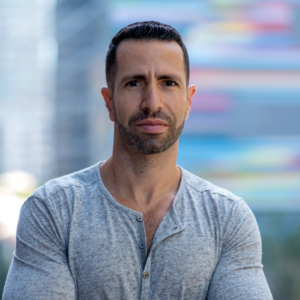
Rany Burstein
Our biggest early-on problem was a technical one. We started Diggz, our roommate finder web app, with a MVP version that worked great and quite fast. As we grew and acquired more users, our app slowed down and the user experience was quite bad.
At one point, our roommate search section took longer than 10 seconds to load. Our MVP wasn’t built for scale and we didn’t plan for it initially. To solve this problem, we sought guidance from several technical growth experts (who actually helped us voluntarily).
They advised us about what technologies to implement to speed things up and how to redesign our algorithm and database to work in a more efficient manner. We implemented multiple of the proposed solutions and that got our roommate search to load in less than two seconds. Major improvement.
This problem challenged us not to think only on how to make our app work today, but build it for scale and for continued growth. This lesson had an impact on any new feature we released since and we continueosly work to improve our user experience even when it seems it works well at the present.
While you don’t want to spend time and money building the perfect platform or app with all the bells and features from day one. You still want to keep your eyes on the road ahead, and not end up paying for “technical debt” later. Build things simple, but make sure you have a plan for scale, whether it’s your code, infrastructure or even team.

Mark Aselstine
Without a doubt, it’s government regulation and enforcement, especially when both of those things change consistently!
When we opened our wine club, we saw a number of court cases moving through the system, all of which seemed to suggest that more states would be open to more types of shipping of alcohol. That happened, but only for wineries and not for retail.
How can you overcome it? While government regulation is always going to change, especially after elections, there are almost always work arounds. Even in alcohol sales, which we’ve been arguing about in this country for over a century now, there are work arounds.

Sam Cohen
The biggest challenge I faced in recent years was finding suitable candidates for vacant positions after the Great Resignation. A lot of employees quit their jobs which left me in dire need to hire new people.
However, it was not as easy as I thought it would be. The applicants that were applying didn’t have the experience or the skills to fill in the role. So, I took a different route after constant failure to find what I had been looking for in potential hires.
I automated my accounts by using bookkeeping software’s like Zoho and QuickBooks. It took some burden off my shoulders, as I wasn’t manually doing the finances on my own. Therefore, I advise every young entrepreneur to automate any process they believe is demanding too much of their time and energy. This helps you to focus on what’s more important in the growth and stability of your business.

Michael Dean
The most unexpected challenge of running a business was how much goes into maintaining an online presence. If you are a business leader and you are not investing in your online presence, then you are missing out on endless opportunities for growth and longevity.
Consumers are spending more time on their devices than ever, so optimizing your business’ website and marketing for the digital landscape is crucial. When I first started my business, I underestimated the importance of social media and SEO, but now it is a top priority, as those are two major factors in securing my business’ audience and brand.
Having a good online presence includes unique social media content, an accessible website and consistent communication with your audience. All of these factors have the ability to set your business apart from your competitors, but it is up to you to invest the time and money.

Regan Ervin
Snippet:
I started my business on an ethical premise. The problem was that I needed excellent, agency-caliber storytelling to develop the concept and make it viable, yet I’d left behind my job to do the right thing (a financially risky choice). My now-partner and I began an unconventional creative partnership to help me accomplish all this, and it worked out for us.
Detailed Story:
Three years ago I started Capital E Advisors, a wealth management firm in the Kansas City area. Leaving an established firm to start my own business was a Jerry-McGuire-kind-of-moment for me. I had quit my job because I believed a large swath of the financial services industry had gotten some fundamental things wrong, and I was embarking to get it right.
I had a big vision, and knew the unique advantages I planned to offer our potential clients were compelling ones. The challenge I faced was communicating my business’ messages in a simple, effective way—and doing so without hiring a big agency with an even bigger price tag.
The answer to my problem was simple, strategic storytelling. I formed a partnership with a local creative director, Stephanie Klein, who used a combination of her academic background in fiction-writing and the StoryBrand marketing method to tell my story. Eight months after launching the new brand, we’ve been able to gain 250+ followers on both LinkedIn and Facebook, 100+ on Instagram, and high-relevance engagement on our Twitter.
We’re also very pleased with our client acquisition rate since then. Attached to this email is a simple case study with audience data and financial results included.
We credit our success to four distinct solutions. The first solution was a brand messaging guide with story-driven messages. The second solution was implementing those meaningfully and strategically. We implemented these messages on a new website, social channels, and a short video series. Implementing our guide also included a visual rebrand to match the messages we’d written.
The third solution —which powered the first two—was an unconventional, small-business-to-small-business partnership. Solution four was simple, but can’t be overlooked. We had a business model that was worth taking a bet on.
Solution Number One: Our Brand Messaging Guide
The brand messaging document was intended to make sure our marketing copy was purposeful and succinct (and it’s done just that). Creating powerful messages required a deep dive into the brand’s history and motives. Stephanie was emphatic that we were thorough with this part, reminding us that the story has to be deeply true for story-centric marketing to work.
We spent several days in interviews, ending the research with beers at a local brewery. Stephanie recorded the conversations, journalist-style, just like she had been doing all week. During that conversation, the four of us who were involved in the interviews collectively hit the answer we’d been looking for. A couple weeks later, she called me, saying she’d finished the first draft. It needed more work, as she’d indicated it would, but the feeling I got even at that early stage was that we were
telling our client’s story. And, by extension, our own.
The above order of the characters in our story is particularly significant. We know now that the most captivating stories for customers place them in the main characters’ role and help them imagine a successful journey with a brand. We found it to be crucial that potential consumers see one of our messages and feel immediately seen. This messaging step set us up well because we had a central checkpoint for our marketing strategy, something to make sure whatever we were writing aligned in all the ways we decided were important at the onset.
Solution Number Two: Implementing the Messages
We took on a massive amount of work to implement our messages. Maybe even more than we needed to. But it ended up being more fun than tedious. We built a website with the help of a local developer, spent a couple of days shooting the videos (and many weeks editing them). Once the brand was ready, we established social media objectives and channels to meet those objectives. The process took months, with a launch date almost a year later.
Stephanie shares her perspective of this stage here:
One of the coolest moments we had was after the brand was launched and we started running a social paid campaign. We’d been pretty thorough in our audience research, and we noticed that there were some big gaps in the potential audience and the current audience being targeted by other firms.
- We identified that millennial men of all ethnic and racial backgrounds, and women 35 and up, would be interested in the transparent promises of our brand, and we believed that there was data out there that proved this interest would turn into leads.
- After we launched the first brand awareness campaign, our click spend was incredibly low—and we discovered that 60 percent of our audience was women in the targeted age bracket.
- Finally, we noticed that the men who engaged with us were from a far more diverse age and race demographic than other firms were experiencing.
Solution Number Three: Building a Partnership
Like most new business owners, I needed to find a way to market my business without adding more financial risk than was fiscally prudent. A partnership was the solution, and we both had to take risks
to form one.
As I mentioned earlier, my big vision was difficult to convey. I was inspired, but I needed help captivating and inspiring others. I’m merely an entrepreneur with an idea, and I needed a creative with vision of her own to take this idea and mold it into a tale that can have an impact.
Finding the partner I needed required me to take a risk. Agency costs for the kind of project we completed are intended for corporations, and even small-scale collaborations with creative consultants (like the one I opted for with Stephanie) can eat profits in those early days. In my case though, the story and the business were so dependent on each other that I couldn’t see myself waiting to work on the brand.
I haven’t heard of a financial firm with a creative partner before, but doing it this way meant both of us could experience exceptional results. We feel great about the success we’ve found in this joint venture.
Stephanie’s perspective:
When we started negotiating, we chose to be transparent about our mutual business goals. If we hadn’t started this way, I don’t know if it would have worked in the long run. We ended up reaching an agreement that included profit-based compensation for me, and ownership of certain business assets at a second growth stage. It was a risk for both of us. There was risk for me because there was a lot of commitment involved up front, and for Regan, he was giving up a significant share of future earnings if we were successful.
I think the reason why this arrangement worked is because we both really believed in this idea. Regan was willing to take me on based on my passion for his story. He chose to overlook the fact that my corporate acumen was different than partners he may have envisioned having when he made the leap—he was a former COO at a successful investment firm; I was a former English instructor finishing an MFA degree.
When we met, I was wearing a teacher’s blouse and cardigan, and probably came off as a little reserved. I was definitely the unconventional choice, and it would have been easy to dismiss me as “not a good fit”. But he prioritized risk differently, and we’ve both benefited from it.
Solution Number Four: A Business Idea Worth Betting On
When I launched Capital E, I had a big vision to genuinely help clients simplify their financial lives without sacrificing investment quality. I believed there was a better way to serve clients and I was eager to put this into practice. Under a standard fee structure, I aimed to deliver a robust, holistic client experience inclusive of estate planning, tax preparation, financial planning and unique investment management that prioritized value-added activities.
I knew how improved the results would be compared to traditional RIA outcomes, even from good firms. Stephanie had to have her own discovery of my idea. Her’s came from an outside perspective of what I was offering (one that was more similar to what my clients might have). But the important part was that, looking at it from either end of the idea, the business was a solid concept.
Stephanie’s take:
One of the things I like best about telling stories is this possibility on the horizon that I might discover someone with a really great story. I didn’t know when I met Regan that I’d get that feeling of epiphany. But during our early days of what we marketing professionals call “brand discovery”, I started to realize he had that indescribable thing I am always hoping to find when I met with a new client.
We connected over the logic (and yes, it was logic) of why he’d quit his incredible c-suite job at a respected firm to rally a small slew of clients under a different premise. As Regan described to me the systemic problem he noticed —across the investment industry—I realized he was pitching something brave. Smart. And in an industry nearly void of empathy—his whole idea was particularly empathetic.
In the investing industry, most clients hire their advisor to manage their money. Therefore, the advisor needs these clients to believe they are good investment managers. But studies repeatedly indicate the vast majority of investment managers underperform their benchmarks. Regan had data to show how he’d corrected this aspect, but the corrections he’d made for investment performance were only part of his overall plan.
He explained that the over-focus on investment decisions distracts from the aspects of wealth management in which advisors have a greater impact on their clients’ well-being. Regan reprioritizes the allocation of resources to those items he can control.
Truly knowing each client as a person allows him to identify the matters that are a source of financial anxiety and complication. Consulting with clients on financial matters that are important to them, keeping clients organized and on task, helping clients optimize their financial decision making, facilitating the completion of estate planning and tax preparation by professionals –these are the things an advisor can do to add value. After all, isn’t the experience of wealth the whole point?
This realization was my moment of epiphany. I thought of luxury brands I’d worked on and how honesty and adding holistic value was high on the “needs” list of Regan’s high-net-worth client demographic. I also thought of big brands who successfully told their disruptor stories and changed their industries.
For me as a storyteller, a disruptive brand with a big heart is one heck of an exciting find, especially since I could also see how the business could scale. The story and the scaleability combined gave me the courage to jump in with both feet.

John DiBella
The greatest challenge that my business has ever faced and had to overcome was the sudden demand for our services when the pandemic hurt. All of a sudden, everyone was working from home, launching their own online businesses, and looking for any edge that they could utilize to increase their profit margins.
And it felt like they all decided at exactly the same time that the one thing they really needed if they were going to be the best at what they were doing was SEO optimization. The sudden influx of business meant that we went from working eight-hour days to twelve-hour days, and we’re still locked into the same pattern, and it doesn’t look like anything is going to change anytime soon.
The greatest challenge my business ever faced is the one that it’s still facing, and that’s the incredibly enviable position of having more work than we can comfortably handle. It is a challenge, but someone has to rise to face it head-on, and that someone may as well be me.

Tequila Cousar
The greatest and unexpected challenge that I have come against as entrepreneur in business was creating content on a consistent basis that converts. Warming: in the beginning you will be fired up and may be finding customers or clients, but you need to create a long-term strategy for growth.
The best thing you can do now is to start creating content that converts. How? There are 3 fundamentals of creating content that converts into 1-3 clients.
The 3 keys are: results, pain points, and invitation to work with you. It really is that simple. You want to highlight the results in the headline of your content. Touch on the pain point of what they may be struggling with to receive results. Invite them to engage on your post or reach out to you.

Jim Rennert
There are so many challenges when you go to work for yourself. First and foremost, as an artist, you not only have to create the work, but you also have to find those who are interested enough to purchase it.
While most artists can create, not all artists can sell. And without sales, you can’t continue to create the work. So it’s important to find a gallery and build a loyal collector base so you have those consistent sales to continue creating more work.
In addition to that, the financial aspect is huge for most artists and was a challenge when I wanted to become an artist full time.
Typically, when a piece of artwork is sold, there are three people that get paid – the gallery that makes the sale, the foundry that produced it, and the artist that created it. Back in those days, the breakdown of payment was 1/3 for each of these people. Now, if a piece of my work sold for $3,000, the gallery would make $1,000, the foundry would make $1,000 and I would make $1,000.
The problem was, I then had to pay the foundry another $1,000 to make the next piece, so I couldn’t figure out how I was supposed to make any money. So, I had a decision to make. I could either open a gallery to receive 2/3 of that payment, or I could learn the casting process and receive 2/3 of the payment.
When opening up a gallery, you need a brick and mortar, a lease, employees and other aspects I didn’t want to take on. I’m a worker, and have always been a worker, so I knew I would be able to figure out the casting process. And that’s what I did. Learning the process allowed me to create my own work, have the independence to cast it myself and make my money go twice as far. To this day I still cast my own work and haven’t looked back.
My advice to everyone is to believe in yourself and keep going. It can be tough at times, but if it’s something you truly enjoy, go for it. And most importantly, don’t let those who can’t do what you can do determine your future.

Howard Birnbaum
Uncertainty is one of the biggest challenges that my business faced during the pandemic. Uncertainty in business can arise at any time, sometimes because of the global debt or sometimes due to the economic crisis. Due to uncertainty, many businesses tend to shy away from long-term planning and so did I.
A failure to plan your next 5-10 years can destroy the value of your business. Always plan for more reactive long term policies.
The post How Businesses Reacted and Adapted To The Covid -19 Pandemic first appeared on Tekrati and is written by Jed Morley
]]>
Entrepreneurs Discuss the Top Unexpected Business Challenges They Have Faced
Many firms were prompted to pivot and adapt to changing market conditions as a result of the pandemic. We spoke with a number of business owners in the United States to learn how some of the country’s most successful entrepreneurs altered their firms and added new product lines or services. INTERVIEW HOST The host [...]
The post Entrepreneurs Discuss the Top Unexpected Business Challenges They Have Faced first appeared on Tekrati and is written by Jed Morley
]]>Entrepreneurs Discuss the Top Unexpected Business Challenges They Have Faced
The host of this interview was Jed Morley. Jed Morley is the CEO of a leading payment processing service provider called PlatPay.

Wiliam Scott Goldman
Having pioneered the field of Branding Law and working primarily with startups/entrepreneurs for the past thirty years, here are three very common but easily avoidable mistakes:
1. Using a brand name with the mistaken belief that filing as a corp. or LLC with the Secretary of State confers trademark protection.
2. Applying for a trademark and/or using a brand name without properly clearing it first with a thorough database search, including all possible variations, checking for similarities in sound, appearance and meaning.
3. Choosing a trademark that’s generic or descriptive rather than coined, arbitrary or even suggestive as generic marks are unregistrable and descriptive marks are considered ‘weak’ and difficult to enforce. BONUS: Mistakenly believing that hiring an independent contractor confers copyright ownership as a work made for hire.
Instead, the contractor automatically owns copyright unless otherwise assigned by written agreement.
Chris Kille
The greatest unexpected challenges I have faced in my businesses over the years have always been people-related. Daily challenges will occur in day-to-day operations, and usually, those can be anticipated and corrected without much damage.
Employees and talent, however, are a completely different story. Employees can be like the ocean: ever-changing, unpredictable, and even hostile at times. On the other hand, they can also be gentle, warm, and calming. Both perspectives can change without notice.
The past 2 years have been extremely challenging because of what has been going on in the world. People have been laid off and started their own hustle. Some have decided they do not want to go back to work altogether. Some have risen to the top and made the best out of a bad situation.
Now that things appear to be calming down, there are another set of challenges. Who’s coming back? Do we need as big of an office as before? Can people continue to work from home indefinitely? These challenges can be frustrating, but are also some of the most rewarding because building and maintaining a business is one of the most satisfying experiences an entrepreneur can have.
Chris Kille is the Founder and CEO of Payment Pilot- a financial technology company, and Elevate Outsourcing- a global outsourcing agency. He has been an entrepreneur since 2005 and has built and sold multiple businesses for a profit. He currently resides in Charlotte, NC with his wife, Kristen, and their 3 dogs.

Leandro Sandmann
The most unexpected challenge we faced was scaling quickly enough to meet the demand. Since ExitLag was originally created for ourselves and a few friends, we were not prepared for a lot of users to be using the software but word quickly spread and more and more people were interested in signing up for the software.
From payment approval to granting access to the software, everything was done manually. One day, there were suddenly hundreds of clients waiting for their payments to be processed and their accesses to be granted.
I had to spend the entire day grating access to the new clients and processing their payments manually. I learned that business can grow a lot quicker than you anticipate and you need to be ready for that growth.

Christina Russo
Too Much Content – The Right People For The Right Job When my friend Cassie and I started our business, we thought it would be a humble little site that maybe twenty or so thousand people visited a month and we never expected it to grow into the behemoth that it has.
Instead of twenty thousand visitors, our business now attracts more than three million, and as the site grew faster and faster, we had to research and create more and more content, and before we knew it, we were overwhelmed and had to face the truth.
If we were going to stay in business and satiate the appetite of our community, we needed to hire researchers and writers and we need to do it fast. So we reached out to the people who mattered most to us, our community of faces and readers, and within a month we’d recruited a team that knew exactly what kind of content we needed, as they were part of the community that we were trying to appease.
I never imagined that runaway success would ever be an unexpected problem that I’d have to deal with, but it was and I’m eternally grateful that the universe saw fit to throw that problem at us.
Paul Sherman
I never thought that hiring the right team members would be so incredibly difficult. This is especially difficult when you’re small because small businesses often need employees that can wear many different hats as they grow and figure things out.
I would warn entrepreneurs to be very careful about hiring people that are qualified but a poor cultural fit. This is hugely important when you’re a small business because if you have one bad apple in a company of 500, it’s not so bad; if you have one bad apple in a company of three, it’s a real problem.
We overcame this issue by focusing on word-of-mouth hiring and less on traditional hiring boards. At the time, and still very much today, I felt more comfortable getting a referral from someone I trust because that person knows me and what I’m looking for in an employee. This made it easier to hire people that were cultural fits for the company.
Annie Singer
The biggest surprise to me in launching my own business was the sheer patience it takes to be successful. After launching, it is incredibly common to enter a phase that my business mentor refers to as the “trough of sorrows”. During this phase, your business is growing… one user at a time.
It makes you question everything you know to be true about your business and your product. It might take weeks to get out of this trough — or it might take many months! The best way to persist through this challenging phase of business is to have a strong network of support, including your family, friends, and business mentors.

Anthony Martin
Insurance companies pool money to pay claims. They have a ballpark of the premiums they will receive and the payout they will have to make. The pandemic resulted in a increase in the number of payouts in the form of business interruption claims, travel, cyber liability and trade credit.
This means that payouts have seen a massive spike in a very short period of time. Even though certain insurance companies factor in unexpected events, pandemics are difficult to gauge as they occur rarely and lack historical data. Since we are directly in touch with insurance companies in our line of business, this has affected us as well.

Yuvi Alpert
Our industry typically relies on an in-person experience, as consumers often wish to have a tangible feel for the types of products we offer, so recreating that in a virtual environment was our biggest challenge.
Whenever a business, especially those in the fashion and accessories industry, utilize an ecommerce platform, finding the best ways to instill confidence in the consumer can be a difficult hurdle.
I never anticipated the amount of platforms and programs, content, and service outlets we would need to utilize in order to find that perfect combination. Definitely, recreating the consumer experience in virtual space was the biggest challenge I faced in my business.

Adelle Archer
When we started our business, we knew that our product was unique and rare, and although it touched upon several different market spaces, the greatest challenge was identifying the best ways to communicate that to the public.
The vast majority of startups are entering a well defined market space, where expectations are already set on what is required of a product and service. Ours was a completely new and different concept, and deciding how to promote what we did, both to stakeholders and the public, was more difficult than I had anticipated and presented great challenges. After much work, and some trial and error, we were able to overcome these difficulties and carve out our space.

Joel Jackson
It’s a challenge to find the kinds of people willing to listen. In the entrepreneurial space, you have a lot of talkers, a lot of aggressive salespeople – but not a lot of listeners. I started early at Honest, and no one noticed what we were doing, but we didn’t let that deter us. In the end, the entire diaper industry changed its practices because of what we did.
You can’t let discouragement creep into your head. You have to be willing to put yourself out there. The key is to get your ideas in front of as many people as you can find. If you’re persistent enough and strategic enough, you will find those people who are receptive to your ideas. You never know which conversation will lead to success, so keep finding ways to put your product in front of people.

Gene Caballero
The thing I didn’t expect when starting my business was how lonely the journey would be. Immediate family and a few friends will always be supportive….sharing on social media, writing reviews, actually using your product, bringing food to the office at midnight, etc. Second-tier friends, like your bar buddies and old co-workers, just don’t understand the work it takes to build something from scratch.
They can’t fathom why you are not able to grab a happy hour or grab dinner on a Tuesday because you have to work. Slowly but surely, these friends will eventually quit asking and become mere acquaintances. There are 3 8-hour workdays in 24 hours…pick which two you want to work and you will be successful.
Nakia Whittaker-Woody
I am an entrepreneur, small business for 4 years now, my greatest and most unexpected challenge was Imposter Syndrome. I have been an Administrative Professional for 24 years and I am a ROCK STAR! But when translating those years and skillset to being a business owner, I cowered like it was day 1 of my career.
I would hyperventilate on camera, studied everything I could get my hands on, and still felt incompetent. I had never had any business experience or knew how to be an entrepreneur, so I learned to align myself with like-minded individuals who encouraged and supported me. I invested in some courses, because coming from Corporate, education equaled authority, thus helping my confidence.
I also invested in Mindset Coaching. It was an investment in myself, I was lucky to be associated with a great coach who was growing and testing her program using a Pay What You Can process. It was so instrumental in me learning to celebrate small things in my business, understand the reason for my pricing, and gave me the courage to increase my pricing to my expertise level.

David Jacobs
The greatest, unexpected challenge most successful business owners will face in the lifecycle of their company is successfully exiting from the business. With the success rate of finding a buyer and negotiating a transaction which closes close to 20%, most business owners will be unable to successfully from their companies after years and years of hard work and effort.
It is typically for successful business owners to receive unsolicited offers from time to time. While it is possible for a cold inquiry to result in a sale and a lucrative exit, most end up as wasted weeks or months spent supplying highly confidential materials for a due diligence process to a buyer who ultimately walks away. This happens because buyers reach out to hundreds of potential business owners per year but only make 1-2 acquisitions. After a few of these failed deals, many buyers conclude their business can’t be sold.
The most reliable path to a successful business exit is to find an advisor who understands your industry and can create a competitive auction between the potential buyers. The competition not only pushes up the transaction value, it also keeps deal structures and terms reasonable. A good intermediary will be able to properly package up your business for sale and then attract a large number of potential buyers quickly in order to create the needed competition.
Shaunak Amin
SnackMagic launched in 2019 and scaled rapidly. Our team now consists of in-house, hybrid, and remote employees across the globe. While flexible schedules offer a better work/life balance, we quickly discovered that good team collaboration doesn’t come down to workers being available at all hours.
Round-the-clock communications can put a significant amount of pressure on your team and lead to lower productivity and higher staff turnover. Fostering a good work/life balance for hybrid and remote employees across time zones comes down to managers and team members being mindful of everyone’s designated hours.
As projects require a significant amount of interaction, workers must be conscientious of when and how they contact their teammates to avoid a constant sense of urgency. We find that being considerate of time zones keeps the stress levels of our employees lower and reduces the chances of human error.

Becky Brown
One of the greatest business challenges that I had to face was learning how to set up, organize, and manage a remote workforce. As an executive, working remotely comes down to so much more than “work-from-home using a computer.”
First, it was the technology — I had to research, develop, optimize, and manage all of the technology necessary to run an efficient remote business. After all of that, I had to learn how remote management and leadership so that my whole team was up and running efficiently. If you are considering working remotely, you should be ready and prepared to do your research and optimization to make it all work. I hope that helps!

Zach Letter
Taking a passion and converting it to a business requires viewing that market differently, and making the transition from enthusiastic participant to a business creator represented my greatest challenge. It is very simple to critique a business from afar, passing judgement while not fully understanding the complexities they face.
]When taking my passion into a business model, I began to realize some of my unrealistic expectations, forcing me to make adjustments and thinking about modifications I never considered. Being able to merge my vision with the reality of business, and picking and choosing where I could realistically meet my goals was my biggest challenge.

Omer Reiner
The greatest challenge we experienced with our business was cash flow. We underestimated the importance of keeping healthy cash reserves in the bank to cover months where cash was not flowing in steadily, but the expenses, on the other hand, did not stop flowing out.
So we learned the hard way, and now we try to keep at least 3-4 months of operating expenses in a separate savings account just in case we have slow revenue months.

Jaclyn Strauss
Be aware that you don’t know what you don’t know. As entrepreneurs, we plan to launch our new company and feel quite confident that we have dotted every “I” and crossed every “T.” However, the truth is that you will have no way of knowing what the market desires until you launch your product or service.
Every entrepreneur should have completed numerous potential customer interviews, received feedback from a BETA version, or had a fresh set of eyes and ears on the concept and/or the product pre-launch. Before launch, these are all must-do items; however, the real valuable stuff comes in after the service or product is on the market. Be ready and willing to change paths, incorporate new ideas, change your target market, adjust your product/service for better market fit.
Do NOT resist what the market is telling you, or you will fail. We must be willing to listen, take the feedback as a gift and continue moving forward. Thinking that I had all of the answers and not quickly releasing this belief would not have been a recipe for my company’s success since the launch of my company. I am solving a real problem, but the way I am solving it looks different and feels different from what I initially thought it would be.
Overcoming the hurdle by being flexible and receptive to embracing the feedback has been the most valuable shift I have made on my entrepreneurial journey.

Nikhil Arun
Developing testing and vaccination products for governments, corporations, and communities in need during a pandemic was the hardest challenge we’ve faced. We were able to accomplish this by spending a lot of time understanding our customers and the intricacies of the issues in the pandemic to understand exactly what would help our customers.
When you do that, you recognize patterns and build solutions that address many problems at one. Doing this, we were able to deliver the first at-home saliva test, a way for organizations to launch their own tests, and a simple way for organizations to track and report vaccinations.
The post Entrepreneurs Discuss the Top Unexpected Business Challenges They Have Faced first appeared on Tekrati and is written by Jed Morley
]]>
How 20 entrepreneurs in the United States Adapted To Changing Market Conditions During The Pandemic
The Covid-19 outbreak wreaked havoc on the commercial sector, forcing several enterprises to close or file for bankruptcy. Thankfully, some people made it out alive and even stronger. Many business owners quickly adapted to the pandemic situation by converting to a digital office. Some pivot only to improve the corporate culture and flexible working paradigm, [...]
The post How 20 entrepreneurs in the United States Adapted To Changing Market Conditions During The Pandemic first appeared on Tekrati and is written by Jed Morley
]]>How 20 entrepreneurs in the United States Adapted To Changing Market Conditions During The Pandemic
The host of this interview was Jed Morley. Jed Morley is the CEO of a leading payment processing service provider called PlatPay.

Paul Moody

Logan Mallory
The biggest challenge we faced was ensuring that we retained employees during times of change and uncertainty.
The way that we did this was by doubling down on the employee experience and employee engagement. With the Great Resignation looming, ensuring employees are happy and engaged is the secret to helping a business thrive by keeping turnover rates low and morale high.
A company’s performance overall can be tied back to one factor – and that’s employee engagement, for better or for worse. Increased employee engagement leads to happier employees, which in turn leads to a better customer experience, which means that we have happier customers as well, and happy customers remain loyal and become long-term clients.
Mark Pierce
The biggest challenge we faced was constantly evolving market conditions. We pivoted to adapt to the changing market conditions by re-focusing our efforts on services geared towards entrepreneurs.
We’ve seen an increase in entrepreneurship driven by the Great Resignation, so we’re more actively promoting our business formation services, and added a more robust offering geared towards entrepreneurs.

Tom Schaefer
I would say the greatest unexpected challenge is exactly that: dealing with the unexpected. In business, you can very easily fall into a mode of doing business as usual, where you expect the jobs and orders to come in just as they always have.
You get comfortable to the point that you can’t imagine the work not being there. It seems like a safe assumption until something like COVID comes along to disrupt that. The warning to new entrepreneurs would be to avoid being one-dimensional. Be able to work in multiple business sectors and keep a good variety of companies or products that you do business with.
If a certain area or sector has a lull or even completely disappears, have a contingency plan where you can swing your efforts into other areas.

Thomas Samuels
As a full-service trade show and exhibition company, we provide exhibit rentals and management services to a large number of clients all over the country. When the pandemic began, we had to quickly adapt to protect our clients, their customers, and their livelihoods by offering high-quality personal protective equipment (PPE) for our display booths and demo stations.
With venues having to adjust their events and safety precautions—sometimes without much notice—it was also important for us to ensure fast turnaround times for these new products in small and large quantities alike. We began to offer protective additions such as sanitizing stations, sneeze guards, and clear barriers, all of which help to keep our clients (and their employees) safe. Additionally, we began to print custom face masks and floor decals, incorporating our clients’ logos and branding into their public health protocols.
To account for the uptick in open air trade shows, we began to offer new outdoor curbside signs and flags, hanging banners, and weather-resistant tents, ensuring that our clients’ outdoor exhibits are just as impressive as their indoor booths. These new signs, displays, and safety products encourage social distance and physical separation, keeping customers protected and ensuring that trade shows can continue safely.

Brian Nagele
One of the most challenging tasks I faced as an upcoming digital marketer was staying relevant. Technology has infiltrated nearly every industry, and it’s accelerated the fluidity of customer behavior.
Print ads worked well for specific demographics, but they were no longer a leading tactic for marketers by the 2020s. Being an entrepreneur pushes you to be creative and always think one step ahead of your competitors.
Ultimately, my team spent countless hours not only strategizing for existing marketing clients but looking for new ways to keep scouting prospects for our startups in such a face-paced landscape.
That dry spell taught me that if I wanted to expand my client base, I’d have to meet people at their level and develop the agility to maintain their attention. Through humanized marketing – curating a social media presence and engaging within niche consumer groups – I was able to scale multiple businesses to multi-figure brands that sold for their value. If you’re looking to be a successful marketer, you have to run at the pace of your audience (or faster).

Stephen Light
A mission statement is why you start a business in the first place and is what keeps you energized and passionate. What I didn’t expect was how easily the myriad of moving parts involved in starting and running a business can get in the way of that initial spark, and how much work goes into continually recommitting and reminding yourself of why you began.
Entrepreneurs wear a million different hats and make a thousand decisions a day, and it can really bog you down. Continually recommitting to your mission is difficult but necessary, and entirely worth it. Schedule a specific time with your team to regularly reassess your mission statement and to take stock of anything that doesn’t align.

Scott Spivack
For instance, we’ve added an ‘Accessibility Adjustments’ feature on our website that adjusts the interface as per the user preferences. As a medical financing company, we get customers facing all kinds of health problems and physical disabilities.
With this feature, we were able to smoothen their experience. Here’s how it works: If a particular user selects ‘Seizure Safe Profile’, our website automatically eliminates flashes and reduces color. Similarly, if someone selects ‘Cognitive Disability Profile’, our website assists with reading and focusing. This has helped us earn the trust of users and build loyalty during the challenging times of the pandemic.

Marliis Reinkort
The greatest challenge that has faced my business so far, was definitely Covid-19, and as we know now, changed the world for everyone. I’m the CEO of Code Galaxy, which offers online coding courses to kids of all ages.
We teach kids coding, design and other technology subjects and skills in a virtual classroom. However, before the pandemic started in March 2020, we were a fully in-person coding school, about to open up a new location in Austin, Texas. Once the pandemic started, we were forced to close our in-person locations for an unknown amount of time, so we decided to make a pivot and transfer our business from in person to fully online.
Since our curriculum was already online and we had a good amount of courses available for kids, the transition ended up being easier than we initially expected. We had to create online scheduling systems, find a virtual classroom platform to run the classes, retrain our teachers and completely change our marketing strategy.
It was definitely a challenge but now that we have fully made the switch, we are actually very grateful that we were forced to pivot the business model, since now we get to work with students all over the world as well as with schools across the U.S. to provide their coding electives and after school programs. It’s a more accessible, flexible and financially viable business model.
Learning from this experience, what I would like to warn all entrepreneurs about is that never get too comfortable with your current business model and always look for new trends and options to diversify your business. And once the change has to be made, in a situation like the pandemic was, even if you’re not ready, be open-minded and try to find solutions that can turn around your business quickly. Don’t wait and just start testing and experimenting to find out what works. The more you try, the higher your chances of success.

Ryan Reed
CHALLENGE 1
The home improvement sector is currently experiencing the most severe labor shortage in its history. Failure to break the labor code will stifle growth, profit, and cash flow. Some businesses can perish due to their incapacity to deal with the issue.
The second option is to “survive” rather than “thrive,” with an insufficient profit to compensate for the risk and work necessary to produce a little net pre-tax profit. As a result, many businesses are sacrificing potential earnings to develop and strengthen their businesses while also providing stability for themselves and their families.
CHALLENGE 2
Advertising, the web, exhibitions, events, and self-developed leads, such as canvassing, have all seen an increase in lead development costs. This, along with backlog and cash flow issues, reduces profitability and restricts expansion.
It’s vital to have a well-thought-out strategy for dealing with these challenges. It also needs to be consistent with a plan to make your company stable and capable of weathering unanticipated changes, which can come from a variety of sources: a lack of financing, changes in the current economy, high turnover, the cost or effectiveness of the lead generation sources you use, and so on.
CHALLENGE 3
The expense of acquiring, training, and sustaining employees rises for small businesses. The ease of finding a job due to Great Resignation, especially for persons with mediocre talents or bad experience, results in high turnover, borderline mediocrity, and increased personnel expenditures.
These three challenges can become quicksand for small, closely-held businesses. This nation’s expanding economy, consumer confidence, and disposable income produce a two-edged sword: the sparkle of higher revenue clouds judgment and lessens the caution required in concerns such as staffing shortages, mis-hires, and mishandled staff.
OVERCOMING CHALLENGE 1
To overcome challenge 1, you need to train your labor. You need a highly efficient training mechanism to train your workforce effectively. You may have to cut back on potential profit in order to retain your skilled workforce as it will be beneficial for you in long run.
OVERCOMING CHALLENGE 2
As the advertising cost has skyrocketed, you need to set aside a specific budget that should be solely used for marketing purposes. I know this will cut down significant portions of the profit but it will effectively generate many leads for your business and it’s a necessity for eventual growth and expansion of your business.
OVERCOMING CHALLENGE 3
Every business is suffering from a wave of great resignation. Coupled with challenge 1 you need to effectively manage your employees or it will put an end to your business. To tackle this provide your employees with good remuneration packages. Provide them with effective perks and benefits that are actually beneficial and provide value to your employees.

Sherrie High
One of the challenges about running a business is that you need to expect the unexpected! There will be unexpected expenses that you did not plan on for your business, slow periods where you may not get as much business as you thought you would, payment delays even supply increases.
Whatever it may be make sure you have the financial resources to keep your business afloat, a good budget plan which includes extra capital for these unexpected events.

Carolyn Barbarite
In business nothing ever goes exactly the way you had planned and as entrepreneurs you must be open-minded to change.
The most unexpected challenge that I faced with Javamelts Flavored Sugar is having to completely rebrand, reformulate and reintroduce Javamelts to the marketplace as a direct result of losing not only one manufacturing facility (co-packer) but the second one we had found.
This challenge, by far, was my most difficult because my original product was very labor-intensive to manufacture. I had to figure out a way, as fast as possible, to create a seamless, more efficient, better-for-you and packaged more conveniently product all at once. The trick for me was to PIVOT and not fight the situation. It was very important that I evaluate all of the pros and cons and go down the path of least resistance.
I simplified the ingredients, packaging and formulation to allow Javamelts to stay in the game. My advice to anyone who is faced with a tremendous problem or hurdle is not to resist the change that is inevitable. Gather the information, consult with a team of experts in that field as best as possible, ask for help and then make a sound, informative decision.
Most often than not the problem that you are having is meant for you so that you can learn so don’t be afraid to switch gears and prevail. The problems I had led me to creating better products, packaging and process overall.

Shira Truitt
Work/Life balance was my greatest, unexpected challenge with my business. After the newness of business wore off, no one wanted to hear about the business as much as I wanted to talk about it.
Moreover, I was spending extraordinary time working, but I was making extraordinary progress– and it was great! I was enjoying myself, my work, and my accomplishments.
I didn’t miss any of the big things, but my quality of life was diminished by the amount of work I was doing–even though I enjoyed it. I managed to overcome that by determining what, specifically, I would do if my business went as planned so that time and resources were not an issue. Then, I selected all the ideas that did not have a financial basis and that did not serve a dual purpose of helping me AND helping my business.
In that way, no change would be financially incentivized. Additionally, the changes that I choose to make would only impact me–not the business. I worked to implement those ideas by scheduling everything that was important to me and committed to keeping that schedule. That made time for things like a more meaningful prayer life, journaling, and exercise. I scheduled one night a month were work ends no later than 5:00 p.m. and I must do something I enjoy.
That lead to crafting, binge watching tv, and planning new opportunities. Additionally, I took classes at the local community college on everything from cooking to jewelry making and, even if I weren’t successful, I’d had a positive experience and raised the quality of my life for just those few hours.
That lead to meeting people with similar interests but from a different walk in life. I scheduled a monthly review of my activities so that I am intentional about maintaining this balance. The regimented nature of this decision took some time to get used to, but it has allowed me to be relevant in my community, meaningful time to reflect, a healthy lifestyle, and time to do the things I enjoy while my business continues to grow. As an entrepreneur, I could not ask for more.

Steve Silberberg
Marketing is a loathsome, never-ending Sisyphian task that not only drains my company’s finances at an unprecedented rate, but also drains my spirit and the amount of time I can devote to any and all other aspects of running my business.
It forces me to permanently assume the role of a repugnant, self-aggrandizing, narcissistic shyster in a desperate attempt at getting the fleeting attention of prospective clients through a dense fog of sales messages incessantly generated by unimaginably wealthy, over-capitalized business interests.
Devin Schumacher
The pandemic changes globally brought a new reality for the business and its own set of challenges. Pivoting during the pandemic is not just a concept for me but a reality we live with in the new normal of businesses.
Since our service is in digital marketing and transformation, I pivoted in this pandemic by onboarding new types of clients. I began developing campaigns for traditional companies that are new to digital marketing and diversifying our client base.

Alexa Allamano
Before the pandemic my answer would have been split between overcoming a store burglary and partnering with a flash-sale website that was a flop and left me with thousands of pieces of unsold inventory. However, the pandemic caused unexpected disruptions to my main sales channels – in-store retail, wholesale partnerships, and pop-up events.
My online sales had been the smallest growth area since establishing a storefront in 2014, but everything shifted to DTC during 2020. I shuttered my previous storefront and ended an unpleasant relationship with the lessor during covid lockdown, re-establishing in a new tiny storefront later that year.
Due to the size limit of the new space, I innovated Scan to Shop window shopping by merchandising my window display to be shoppable 24/7 with QR codes. Now my storefront drives business online and I am in-store by appointment (I also teach other store owners how to implement Scan to Shop).
Overcoming the disruption of a global pandemic requires flexibility, creative problem solving, and making hard choices on what best aligns with your business goals and values. Making those tough decisions centered around my ethics led my business to prosper in a way I couldn’t imagine before the pandemic. I gave up my dream store and created my dream life.

Kathleen Ahmmed
Speaking from personal experience, one of the biggest challenges that I faced at the start was overcoming the need to hire fast in order to fill empty positions in my business operations. This is because when you are first launching a business it can often feel like you are in a race with yourself to get things done and solve problems quickly.
However, when it comes to recruitment, this is a process that usually requires a lot of time and patience, because one wrong hire can often damage the reputation of your company by having a negative impact on employee morale, productivity, and collaboration, which ultimately leads to a toxic work culture.
And in my case, I was only able to see the effects of my hiring decisions much later in the startup process, as it was apparent that I failed to take into account other important factors like soft skills and cultural fit, with some of them either not meshing well with others, some lacking the necessary skills needed to communicate effectively with customers and others failing to collaborate with their team members in the field.
As such, I learned the importance of taking your time to do your due diligence and always hiring for intelligence, skills, and cultural fit first, because while it is easy to recruit people who are “good enough”, they can often end up being “detrimental” to your business progress down the road.

Ouriel Lemmel
The biggest challenge I faced when I started was that there was no model for my particular business. It was a new idea, and no one had really tried anything like an app to connect drivers with lawyers to help fight traffic tickets. So I did my research. I studied my market well and ensured my product is something people want and need.
Don’t stay in your own bubble. My partner is a very good check on that as we come from different backgrounds. I’m also fortunate to have great mentors, advisors, and friends that are super helpful. Most successful entrepreneurs I know didn’t wake up one morning and decide to become one, they’ve always had an entrepreneurial mindset. If you have a business idea or project, don’t be shy—try it.

Sam Cohen
The greatest, unexpected challenge was staying focused on business development. Sometimes the distractions are too heavy to resist. So I had to learn to manage my time properly. I will share how I did it and you can do the same too.
The solution is to reserve some time in your calendar for business development, and don’t let anything disturb you during those times. Also, you should try not to get too attached to any project because you will have to let go of all of them eventually.

Glen Bhimani
Marketing was my greatest initial and unexpected challenge.
Ultimately, it came down to an assumption I made. After spending years in the security industry as a guard, I realized most guards don’t care about the clients because they aren’t being taken care of by their employers.
That was when I started BPS Security. My company’s purpose is to provide a better security option at a lower price, so I developed an operations system that allows us to provide highly qualified guards who are well-paid so that they put their best effort into taking care of the customer. My assumption was that clients would find me because I had a website and was offering a better service at a lower price. That was a big mistake.
Because of that assumption, we spent several years without any clients at all: it’s a miracle we’re still standing. But when I finally realized we needed to work on our marketing and sales to actively let people know we are here, the business exploded! Even though it wasn’t all at once, it still exploded and today we’re one of the fastest growing security firms in the United States because of it.
I would love for new entrepreneurs to avoid my mistake: don’t assume people will come to you just because you’ve started your business. You need to find ways to actively attract clients.
Also, allow time for your marketing to kick in and begin working.
Our sales improved our clients drastically, but I had a business partner who would constantly argue for the first month that our marketing needed to be cut because it wasn’t bringing in new clients. I reminded him of exactly what I would tell new entrepreneurs: marketing isn’t a magic pill that works overnight.
Most of the time it doesn’t even begin to show serious results after two to four weeks. But marketing is a crucial part of building out your company’s reputation and improving your client base, and needs to be an essential part of your company at all times! Especially during difficult times.
These are a few of the very important things I learned and implemented that helped me overcome my marketing challenges:
Continue adjusting
The market is constantly changing, so you have to continually adjust as you go. One marketing campaign might not work super well, but another one might be incredibly effective. So keep trying different things and give them a few weeks to work before you cut them.
One of the ways we’ve developed such strong marketing is that we’ve continually revamped what we’re doing. Our website has changed multiple times in the last two years, and it has resulted in much higher leads and client acquisition every time we’ve changed it. So continually adjust your marketing and pursue what seems to work best after you’ve given it a few weeks to work.
Don’t expect immediate results
I know I mentioned this already, but understanding this is crucial. There are going to be marketing companies that tell you they can bring in hundreds of leads a month right from the start. They are frauds. Not because they can’t get leads, but because their leads are bad leads.
Good marketing requires time and effort, and as one of my mentors says, “great marketing has exponential growth.” Which means you might not see much right now, but it will grow and expand on itself if you keep at it diligently. Ours did, and now we’re getting regular news features and sometimes have more client requests than we have capacity to take on.
Be consistent
Marketing is a huge part of your reputation, so you need to make sure you have the same reputation everywhere. Your brand needs to be consistent, from your brochures, to your social media, to your website, to even how you answer the phone!
Building a consistent feel across every aspect of your company is a great way to work on your marketing, because it creates a more solid relationship between the company and the clients. If you look at your marketing assets and realize that your facebook page is completely different from your website, that’s a sign your marketing isn’t consistent and that your potential clients may not even know they’re looking at the same company.
Get feedback
Finally, getting feedback is one of the most important parts of marketing. Speak with your current clients to find out why they work with you and build that into your marketing. If you compete in the market on service or price alone, you’ll run yourself into the ground and won’t be able to compete with bigger companies. Find out what makes you unique and why your clients like working with you, then build your marketing on that feedback. When we began to do this, our marketing took a huge turn and began to show serious results.
The post How 20 entrepreneurs in the United States Adapted To Changing Market Conditions During The Pandemic first appeared on Tekrati and is written by Jed Morley
]]>
Pivoting For Pandemic Success: How 26 American Entrepreneurs & Business Owners Adapted To Changing Market Conditions
Many businesses have had to close as a result of the COVID-19 pandemic, while others have had to adapt their operations. Many firms were prompted to pivot for pandemic success and adapt to changing market conditions as a result of the outbreak. We interviewed 26 company owners and entrepreneurs in the United States to understand [...]
The post Pivoting For Pandemic Success: How 26 American Entrepreneurs & Business Owners Adapted To Changing Market Conditions first appeared on Tekrati and is written by Jed Morley
]]>Pivoting For Pandemic Success: How 26 American Entrepreneurs & Business Owners Adapted To Changing Market Conditions
The host of this interview was Jed Morley. Jed Morley is the CEO of a leading payment processing service provider called PlatPay.

Jessi Beyer
As a speaker, the pandemic could have sent my business crashing to the ground, but instead, a simple pivot from in-person presentations to virtual presentations allowed my revenue from speaking gigs to skyrocket during the second half of 2020 and beyond. While this pivot seems obvious, there were two key things I did that made this pivot as successful as it was.
First, I put some serious thought into how I could make virtual presentations as engaging as in-person ones. People were already sitting on Zoom all day, so I didn’t want them to just sit there and listen to me blab on for an hour.
Secondly, I sold bulk copies of my book to event and conference hosts that booked me to speak so that, firstly, attendees would have something they could physically touch and engage with after my virtual presentation, and secondly, the revenue from each virtual gig would be increased.
After so much time doing virtual presentations more frequently than in-person ones, I have to say that I like virtual ones more! They’re more accessible for attendees and less time consuming for me, and they allow me to speak at multiple events across all parts of the country in the span of a few short days.

Lucie Chavez
Here at Radaris, we had to pivot in a big way in order to keep everyone safe and secure, while also continuing with the forward momentum we had leading up to the pandemic. We seemed to have a communication issue between departments and different levels within the company. A specific team was very communicative with each other, but there was an issue in continuously relaying progress and specific updates to the rest of the team in a timely manner.
This caused some delays and confusion among different teams who were waiting on the other for a specific item or answer. We also struggled to figure out an effective communication line from the managerial team down to part-time employees and more junior-level employees.
We had to find a way to connect everyone for important communications and also figure out how we can relay messages to other parts of the company. It came down to finding the most effective programs for us and making sure everyone was on the right page. Once we found these platforms and put them into effect, we had an easier job in staying on the same page, but there was definitely a learning period.
We had to find out who would do what and how they could do it to be effective. I think we had to stumble a bit early on in order to find our way and make sure we are as effective at communicating virtually as we needed to be. After that, things were much easier for us!

Manville Chan
I founded The Story of Ramen in 2016 in San Francisco. We host ramen cooking classes as corporate team building events. We welcome company teams to our facility and make ramen as an offsite activity.
The majority of our customer base tech companies such as Uber, Facebook, Google and Salesforce which see great value in team-building activities for their employees. Prior to the pandemic, we hosted an average of 800-1,000 people per month.
We found our niche and market our business mainly via SEO traffic to our web site as well as positive word of mouth. Obviously with the pandemic, in-person events ended and all customers canceled their events in March 2020. By April 2020, we introduced virtual ramen cooking classes, which includes an instructor-led Zoom session and ramen kits delivered to our customers’ doorsteps.
It has become a hit as companies are desperately trying to find ways to motivate remote/work from home employees. When we first introduced virtual classes, we had a steep learning curve in knowing how to package and ship perishable food ingredients across the country and how to make the experience more interactive and engaging. We have learned and adapted very quickly mainly through feedback from our valued customers and simply making mistakes!
As the pandemic continued, we found ways to expand our business beyond the Bay Area as we host events all over the US and globally. We are also no longer limited to the capacity of the facility which seats 40-45 people. We frequently host nationwide corporate events with 100+ people.
Our virtual business grew from 150 guests in July 2020 to close 1,800 in December 2021. We recently launched an udon class that allows us to ship ingredient kits internationally; and we’re getting a lot of traction lately.
I do think that the stress brought by the pandemic actually helped us to think outside the box to grow our business, turning lemons into lemonade. Previously, we were in our comfort zone and we were too busy to innovate.

Rohan Kadam
Hello, I am a marketing consultant and an established entrepreneur. I run a successful Niche website called Biking Know How.
I would like to share how I quit my job as a banker at JP Morgan Chase and started my blogging business for less than $1000 and turned it into a successful business. I started my blog just as a hobby.
I scaled my business, especially during the challenging COVID pandemic, and made it profitable in a short period (From the first month itself). I focused on doubling down my efforts on growing my niche website, which was initially just my passion project.
I would say that my online business has helped me stay occupied, motivated, and financially stable. I love the outdoors, biking and camping. I always wanted to share my unique experience with people. Initially, I would maintain a diary and would write about my outdoor camping endeavors.
Thanks to social media and my website, my audience over time has increased significantly. With social media and my website, many more people can access my adventures and plan their own.
This gives me immense joy and fulfillment. Some of the details on my blog are as follows.
- Bikingknowhow.com is my third blog (I run 2 blogs currently, all in different niches. I sold my first blog) that I had started. And it today gets approximately 5,000 monthly unique visitors. I earn money through two Ad-Networks namely, Google AdSense and Media.net which show ads on my website. (I make a minimum of $200 per month with both ad networks combined).
- I also partnered with Amazon via an affiliate partnership, and I promote the products and services of Amazon on my website (I make approximately $100 per month) by promoting products on my blog.
Challenges
As far as the hardest part or challenges are concerned, I had to face many, but two challenges stand out the most. They are as follows.
1. Time Management:
This was a very significant challenge because I was managing and growing my blog while having a full-time job. I would use my weekends and holidays to educate myself on skills, especially web development and digital marketing.
My blog allowed me to have multiple streams of income. As I saw decent cash flow coming in, I was interested to upskill myself on digital marketing and social media. I knew this would require my time and dedication. So, at every opportunity that I got to polish my skills, I made sure that I dedicated my time and attention to get better.
2. Getting Right Education
Well, to educate and polish my skills in digital marketing, I enrolled in many digital marketing and web development courses. I used platforms like Udemy and Udacity to enroll in the courses. I started voraciously reading blogs and success stories of food bloggers. This helped me get creative and experiment with the growth strategy of my blog.

Peter Ord
“The pre-pandemic world looks much different than our current times. With more employees working remotely or within a hybrid-like environment than ever before, we wanted to ensure that we adjusted our product, GuideCX, to meet the needs of business professionals everywhere, no matter what their workspace looks like.
It is critical for internal and external teams to be on the same page right from the beginning in order to achieve long-term success – and that begins with the client onboarding process.
We recently introduced a tool that we had been working on for years called the Navigator Reporting Engine because we recognized the need for teams to be able to understand each component of a project and the bigger picture of how it all intertwines, whether they are working side by side or across the world from one another.
The Engine offers never-before-seen metrics including forecasting revenues and the ability to meet deadlines, creating a strong foundation for projects and continued growth.”
Ian Sells
We know how the pandemic has forced people to stay indoors and this has caused a huge spike not only in the number of people doing online shopping, but even the time they spent doing so. Surveys also found that many people do so on their phones more than on their computers.
To meet this customer behavior and make the most out of the influx of people doing online shopping, we decided to launch an app for both iPhone and Android users. This makes it a lot easier for them to shop and save money.

Eddie Bye
I’m Eddie. Founder of Physio Flex Pro. As a business owner during the pandemic, I either had to give up and stop doing business or continue. Fortunately, I was able to make my joint supplement business profitable. I want to share the realization that I had.
As well as the challenges faced and lessons learned along the way The biggest lesson that I’d learnt during this whole crisis is that you get a chance to improve your life when a huge problem comes. Some of us are entitled. We want things to be given to us. We don’t want to work, we don’t want to suffer, we just want the good things in life despite our character not deserving it.
And so tragedy happens and we find ourselves whining. It’s important to understand that an entrepreneurial life without crisis is not possible. You’re going to encounter one if you play this game long enough. Knowing this, we understand that it’s useless to want something that is impossible.
Furthermore, I realized that in order to solve a business problem, you need to improve as an entrepreneur. The best solution that I found during the pandemic was by changing myself initially and letting it reflect on my business. I consider it a blessing considering that I make money the more I improve myself. If you have any questions, please don’t hesitate to reach out.

Lauren Gast
Chief Marketing Officer on Pivoting in the Face of a Pandemic Because truck drivers are a part of one of America’s Essential Industries, pivoting in the face of the COVID-19 pandemic was of the utmost importance. Before the pandemic, our training required our instructors and students to be in close contact with each other constantly.
After COVID numbers began to rise, and supply chain shortages became more prevalent, we knew that stopping classes altogether was not an option. To create a safe CDL training environment for our students and staff so we could continue training, we developed a comprehensive pandemic protocol. In accordance with CDC guidelines, we instructed our trainees to postpone their training if they had recently been exposed to the virus or were experiencing flu-like symptoms.
We also published extensive sanitation and social distancing guidelines, requiring that our trainees wash their hands often and keep their masks on during in-cab training and testing. —Lauren Gast, Chief Marketing Officer at Truck Driver Institute, a truck driving school with eleven campuses across the United States

Brice Gump
The onset of the pandemic brought a shock to the system of many companies including ours. It is no secret that marketing services become a secondary concern for several businesses but as a business leader it has always been my priority to never remain stationary when faced with a crisis and to keep it ongoing.
The one thing that I did was constantly stay engaged with my existing clients and even network more than usual on my social media platforms to increase engagement and spread greater brand awareness. We started posting testimonials on our website to show potential clients a more realistic aspect of the services provided.
Constant engagement helped me gain more clients than I thought I would in these turbulent times and we even increased our brand awareness through this. we had to return clients as well. It wasn’t all sunshine and happiness for us, we faced serval setbacks with communication and workflow being hindered due to the transition from physical to remote/ hybrid work. But with a great team and the use of efficient crisis management, we learned to adapt and supported each other to adjust to the new norms.

Richard Lubicky
Ever since the pandemic, the whole world has been transforming, whether our lifestyle or business! Majorly, a lot of businesses have had serious impacts!
Since such changes have Vern accounted as the new normal, businesses have to alter and align their business goals and vision to grab opportunities at the right time to gain competitive advantage.
Considering such a situation and changes, I also altered some of my Cybersecurity SaaS business elements to become a leader in the market. Since people had to wait in long queues in government offices to find vital information, we advanced our reach and provided them with that information within a fraction of seconds!
Most of our services are introduced as free services to help our clients test the deep waters! We added client reports and background checks as our revenue-generating streams. This was largely possible due to the Covid-19 pandemic.

Paul Baterina
The pandemic presented unique challenges for businesses all across the board. Sleep Advisor was fortunate in that the bulk of our workforce (our marketers, developers and bloggers to name a few) already worked remotely before Covid-19, so all we needed to do was modify our work model to a remote environment for everyone who works in our headquarters (myself included) in Austin, Texas.
The pandemic gave us an opportunity to use alternative digital platforms to intensify our planning phases for our digital marketing campaigns and collaborate remotely simultaneously. For example, we shifted all our work communications and physical operations over to Slack and Microsoft Teams so we could utilize video calls and digital channels for specific work departments and projects.
My team and I at HQ had lots of days where our digital platforms didn’t sync up the way we hoped and where we experienced difficulties with performing certain tasks timeously. For example, we often struggled to stay on schedule with filming our YouTube demonstration videos due to some of our main vloggers contracting Covid-19 and needing to stay in quarantine and recover at different stages of 2021.
With that said, we did our best to keep the lines of communication open, express empathy and support those of us who couldn’t cope as well with our workload and physical health during the pandemic. We’re still learning and constantly finding new ways not only to survive during these trying times, but to thrive as well.

Kim Marie Branch-Pettid
The pandemic was a shock to all of us and we had to make some quick changes to adjust to the state of the world and do whatever we could to stay afloat. It was especially important to me to ensure that all my members and staff felt supported and had the resources necessary to succeed in spite of the times.
To offset barriers to connection in the pandemic, I invested in LeTip Wired, a new proprietary software and mobile app that helps members electronically track existing business networks and recruit new members. Introducing LeTip Wired certainly helped my team feel like they belong to a nationwide community and ultimately ensured many small businesses wouldn’t have to close their doors.
As a result, between 2020 and 2021 we were able to invite more guests and had a 60% join rate. Thanks to a recent LeTip membership survey, I also discovered that many of LeTip’s members across the US also made individual changes to their businesses in order to adapt to the rapidly changing market conditions.
For example, Jack Watkinson is a member of LeTip of Somerset Hills representing the I.T. category for the Somerset Hills Chapter in New Jersey with a company called Outsource My I.T. He reported that in 2020 he used more online methods of service, added new products, and services to his catalog, hired new employees while retaining most of his employees.
Similarly, Chief Executive Officer at H3 Systems and member of LeTip of Napa, CA, Donald Hartung reported that to offset business slowing down he used more online methods of service and adjust because of supply chain issues as well.
About LeTip International: LeTip International, Inc., the world’s largest privately-owned business leads organization, is a networking organization made up of members held to the highest caliber of professionalism and achievement, all of whom strive to do business with one another.
Founded in 1978, LeTip has more than 250 chapters throughout the USA and Canada and is credited with hundreds of thousands of business referrals per year. Setting the standard for referral organizations, LeTip members are known throughout the B2B referral industry for their dedication to helping each other grow their businesses. Join a chapter or start your own at letip.com.

Nathan Hughes
Due to the pandemic and its subsequent restrictions, both small and large businesses have suffered. As a marketing firm, we had barred traditional methods to market products and services. Traditional PR strategies were no longer functional. At the right moment, digital platforms came in as aid for us.
Digital Marketing and PR strategies, including backlinks, SEO (On-page and Off-page), social media, and email marketing, were some of the best strategies that helped our firm soar high from this pandemic.

Adit Jain
The pandemic brought with it a lot of uncertainty for companies and people alike. Back then, we had not secured our series fundings, and we were operating with a smaller fund. We’ve always strived to be as transparent as possible with our team. So, following that same principle, we conducted town hall meetings and apprised each member of Leena AI of the situation regarding our finances.
Every member of our team was on board, and in fact, delivered 200% more than what we expected. Their perseverance reflected their dedication and motivation towards the company. Soon after, we secured our Series A funding, followed by Series B in the second consecutive year, and things started to get back on track.
For us at Leena AI, the pandemic really helped us grow as a company, both internally and externally. This adaptation to Covid brought in new ideas – we were introspective on what we learnt as a company, and utilized that to build solutions for enterprises that were facing issues brought on during the pandemic.
We introduced a number of products, such as the Covid-19 Workplace Response Suite, which assists organizations facilitate a safer return to the workplace, by helping them track and maintain employee vaccination records, employee health statuses, employee rostering, and even booking vaccination slots. In addition to this, during the pandemic we were approached by a number of healthcare providers for their requirements of a similar product.
One to track systems for vaccination statuses for both patients and staff, send reminders to patients about their second or booster doses, conduct Covid tests, and so on. We also came up with Work-From-Home surveys for employees to keep a check on their wellbeing, both mental and physical. In my opinion, Leena AI took the pandemic head-first and came out stronger, larger, and better than ever.
We pooled in all our resources, gave it a 100% and assisted millions of employees around the world cope with the pandemic.

Edith Pearce
As a law firm involved with personal injury cases, we constantly have paperwork our clients must sign. Some of these documents include fee agreements, medical authorizations, and settlement agreements.
This often meant the client would have to come into our office to sign various paperwork during their case. When the pandemic hit, we began using DocuSign to provide clients the ability to electronically sign documents.
The DocuSign electronic signature solution in the United States complies with the definition of an electronic signature under the Electronic Signatures in Global and National Commerce (ESIGN) Act and the Uniform Electronic Transactions Act (UETA).
This has allowed our clients to sign all of their documents in the comfort of their own homes. While we have also adopted other tools such as video conferencing software, DocuSign will probably be the most important remote working tool for our firm in 2021.
Michael Dean
The biggest way my company had to adapt during the pandemic was in our online presence. With consumers stuck at home, it meant they were spending way more time on their devices. In order to continue growing as a business and obtaining a bigger audience, we had to start optimizing our business site for mobile use, and developing more of a presence on social media.
New businesses are popping up online everyday, so prioritizing your business’ online presence is crucial. As a content-based business, website traffic is currency, and the only way to secure consistent traffic is to lean into the current global digital landscape.

Tennille Thomas
I adapted to changing market conditions by doing things in reverse by creating a brand new business model that was a continuum of my current model. My business model was to create a living canvas if you will; whereby my products had to become services and my services became products.
This would spark innovation for the continual creation of products and services born out of the services and products I currently offer. In other words, my industry encompasses e-commerce, health/beauty, from the realm of natural skin care. I had to find a way to combine all those elements without losing the voice of my brand.
Please understand that your brand is your voice visually. It will speak for you before you show up. It is imperative for the message of your brand to be clear and concise so that people can identify it and engage with it no matter the platform(s) being utilized to represent it. By introducing new services and products out of your current offerings you will not compromise your brand identity.
For example, one of my products is a luxury hand oil. I made this oil come to life for my customers by way of a demonstration video in real time. This not only increased engagement by making them feel a part of the product but encouraged sales in real time. In addition, I created a service that is video on demand for those who truly desired this type of educational engagement by way of a subscription. It provides a platform for them to be able to watch how to use these products and services at their leisure.
Lastly, providing them an opportunity to engage with me directly. As a result of that direct engagement, opportunities have been afforded to those that are active on my platform. Such as participation in helping to create a product. If I use that product their contribution is recognized, they are given perks and directly become a part of my specialized engagement team.
As an entrepreneur you have to be innovative, creative, and inventive to separate yourself from the masses with never compromising your customer base. You do this by employing hi-touch.
You will not only create multiple streams of income for yourself but be able to continuously create avenues of opportunities and one of a kind experiences for your customers. Who would of thought that all of this would derive from a product that turned into a service sparked by innovation through the service that would create a product everlasting.

Darren Lopez
“We adapted our business plan in two different ways. First, we added product lines that we thought people in the new normal would find appealing, including a new adult beverage we call Milli. We also added additional immune and health-related products including our Be-OnGuard series targeted toward people that want to “be on guard” against viruses and bacteria.
In addition, we adapted our distribution strategies and started focusing on streamlining and simplifying the sales process with an enhanced emphasis on direct sales and a new aggressive Amazon strategy.”

Carter Reum
When we look at the pandemic and its effects on companies across the globe, it’s important to also look for some of the positives that have come from such an unexpected situation. Many companies have made huge pivots; yet this has also encouraged those businesses to become more innovative, creative, and open to taking well-calculated risks.
Some employees are finding that they can be more productive even when working remotely. Of course, many companies have found the pandemic conditions to be challenging, but just as many are also finding newfound strength and exponential growth. Specifically, we’ve seen that wellness and mental well-being are now unprecedented opportunities for innovation and investment.

Greg Gillman
Being a leader during a pandemic will put your leadership skills to the test–most importantly empathy and flexibility. With the ever-changing rules surrounding the pandemic comes a lack of structure or even an office, which can potentially lead to feelings of isolation, lack of motivation, disruptions to processes, and even workplace conflict.
During these uncertain times, you can’t lead with certainty, which can be a challenge to leaders stuck in their ways. Pay close attention to your employees and their performance, and be sure to be sympathetic to their needs and pivot when and where necessary to ensure optimal success.

Ryan Rottman
Functioning effectively as a leader or an entrepreneur during a pandemic is only viable if you can be flexible and understand how and when to pivot. This means encouraging innovative thinking and really listening to all the ideas your team brings to the table – big or small.
Playing it safe in uncertain times might seem appealing, but it’s important to take risks in order to yield results. Additionally, as some business environments slow down to accommodate changes, use this opportunity to brainstorm and plan for your next big move!
Becky Brown
As a blogging business, we noticed a big increase in traffic as the pandemic grew but our audience’s demands grew as well. Producing content was no longer enough to convert our audience as they were looking for more concrete ways to engage with our business. What we did to adapt was we built a new webpage that shows limited-time shopping deals where our customers can quickly and easily buy their favorite products at a discount.
All we had to do was keep the page up-to-date and running, and our customers were more than happy with the feature. This approach helped us turn a simple shopping blog into something more than that, and we are looking forward to adding even more fun features like this in the future.

Megan Sumrell
“The pandemic definitely brought many opportunities to add a digital focus to my business. Prior to the pandemic, my planners were all physical planners and much of my training was conducted live or in person. The pandemic caused people to really lean into technology and leverage digital assets more.
I created a digital version of my planner for tablets along with launching an app in the app stores to make training readily available via mobile devices. Now, my customers are able to participate in training events from their phones at their convenience instead of from their office at set times.”

Nick Collins
When the pandemic began, my clients in many parts of the country faced shut-down mandates issued by state governments struggling to slow the spread of the novel Coronavirus. Using this time to pivot again, I relaunched my company as Sartoris Digital to offer my clients an expanded and inclusive menu of services.
I previously had worked with big pharma, major airlines, telecommunications, finance, and sporting goods brands, which has given me a diverse set of skills to bring to my growing digital marketing firm. However, when the pandemic hit, I realized that many small businesses could benefit from my services, so he re-launched my offering (previously Sartoris Technologies), to include services that are better suited for small businesses, including better price points and a more tailored, hands-on experience.

James Parsons
It’s crazy that people thought the importance of content would have decreased many years ago, but it has only risen in importance. Even during the pandemic, content continued its dominance and has been so important for online companies if they want to secure their position in the market.
It’s vital for businesses to have unique, quality content on their website for a variety of reasons. It stands out to potential clients, it helps them rank better on Google, it can be used across their entire marketing strategy, and it can even impact their PR campaigns.
We saw the demand for quality, on-time content when the pandemic hit and we worked hard to find writers who could join our team and become an asset. That’s the biggest thing we had to do when the pandemic hit and we were swamped with work: hire more quality writers so we could keep up with orders, but also cement our place in the industry because of the quality we deliver.
Finding writers to fit our team wasn’t easy, but that was helped by the fact that more people were working from home and open to working remotely. It took time to make a plan and execute it, but we did it and were able to pivot to this new demand.

Gabriel Dungan
We didn’t introduce any pandemic-specific products or services, but we did use the sudden shift to increased online shopping as an opportunity to really personalize our social media engagement.
We started using customer testimonials and reviews in more marketing campaigns in an attempt to create more unique and personal consumer engagement. With digital engagement becoming the most important part of marketing, we used that as a chance to really invest time and money into creating high quality content on all channels, including TikTok and Instagram.
If you are a business leader and you’re not prioritizing your business’ social media channels, you are going to miss out on tons of possible conversions and traffic.
The post Pivoting For Pandemic Success: How 26 American Entrepreneurs & Business Owners Adapted To Changing Market Conditions first appeared on Tekrati and is written by Jed Morley
]]>
30 Entrepreneurs From USA Share Their Experiences With The Challenges They During The Pandemic
Businesses all throughout the world had to respond quickly and decisively to the pandemic’s difficulties. COVID-19 has impacted nearly every firm in the globe, yet results have varied greatly, even across countries and industries. To learn more about the impact of coronavirus disease 2019 (COVID-19) on businesses, we interviewed 30 entrepreneurs and business owners in [...]
The post 30 Entrepreneurs From USA Share Their Experiences With The Challenges They During The Pandemic first appeared on Tekrati and is written by Jed Morley
]]>30 Entrepreneurs From USA Share Their Experiences With The Challenges They During The Pandemic
The host of this interview was Jed Morley. Jed Morley is the CEO of a leading payment processing service provider called PlatPay.
Kathleen Ahmmed
The number of active gig workers in the current market has already begun to increase due to the pandemic, as well as the rise of remote work.
This combined with the volatility of the job market in the past two years has proven that the gig economy is a valuable resource that small businesses will now need to take advantage of, in order to adapt, scale and survive in the post-pandemic future.
As such, we have opted to be more agile in our business operations, moving forward by outsourcing some of our projects to more skilled contractors, as we start to focus more on minimizing business costs and maximizing outsourced talent to boost productivity in this new remote work environment.
And an added benefit of this new change is that we no longer have to deal with the hiring and training costs that tend to be associated with bringing in full-time employees.

Mike Belsito
COVID seemed to have an impact on all types of businesses. But especially for conference organizers like me, COVID’s impact was especially dramatic. In 2019, my company, Product Collective, generated nearly all of our income from our live, in-person conference series — INDUSTRY: The Product Conference — which serves tech and software product management professionals. Our last in-person conference ended on March 11, 2020 in Dublin, Ireland — a day that felt like the world closed down.
Yet, in 2021 — we enjoyed (nearly) our most profitable year ever despite not putting on a live, in-person event. This happened because of three specific reasons:
1. We took swift action.
While many things were unclear about the longevity of COVID at the time, it was clear to us that live, in-person conferences wouldn’t be happening any time soon. So on the flight home, we began crafting our strategy for how we would change our business. We didn’t wait it out. We worked with extreme urgency.
2. We introduced new product lines that leveraged our strengths.
It wasn’t even two full weeks after we arrived back when we announced the launch of a series of virtual workshops. We already had great relationships with product management leaders and influencers.
Despite us never offering virtual workshops before, we worked with these individuals to create these high-value experiences. Our community responded — as hundreds of attendees signed up for the several sessions we created, which not only provided much-needed immediate revenue, but it also opened up an entirely new business line for us.
3. We reimagined the products we already had.
In 2019, very few virtual conferences existed. Those that first started emerging in 2020 were mostly free. We reimagined what our conference series could look like if it was “virtual-ized” — and still be worthwhile for attendees to pay for. In Spring 2022, we introduced a Virtual edition of INDUSTRY that ended up being one of our most profitable events ever (complete with Ben Folds playing a virtual set just for our attendees!).
We’re grateful to have adapted greatly throughout COVID in a time where many companies that have relied on live events as a primary revenue stream have struggled. But it couldn’t have happened without all of the above happening.

Angela Olea
As a nationwide senior placement and referral service, Assisted Living Locators quickly adopted a high-tech and high touch approach to meet the challenges of the pandemic. Our company’s franchisees used ingenuity with virtual consultations and online tours of senior communities to provide care when most facilities closed their doors to tours.
By leveraging technology, our franchisees created joint videos with communities for safe virtual tours, zoom call meetings for in-take interviews, and utilized state health department databases for the latest COVID-19 information to protect older adults. Assisted Living Locators franchisees persevered during the pandemic by upgrading personal service and guidance.
Our 140 Assisted Living Locators franchisees became dementia care certified, making us the first nationwide senior placement service to achieve system-certification. Using this knowledge, along with high tech tools, our franchisees are providing a new standard of solution-based alternatives for families.
Throughout the pandemic, Assisted Living Locators franchisees reached out to their communities to help in many meaningful ways. From letter writing campaigns to isolated seniors, to countless hours of Meals On Wheels volunteering, to collecting and donating iPads to ensure senior veterans connect to their families, our franchisees have worked tirelessly to support and improve the quality of life for seniors.

Corey Tyner
Everyone wants to buy and sell
I had a firm belief that there are still a lot of determined buyers out there who want to take advantage of the current market. I took advantage of the bright side, such as low-interest rates. I realized that market activity would continue despite what the pandemic may appear to be.
Using technology
No more face-to-face meetings with prospects or clients, much smaller open houses, and no door-knocking/networking to generate leads are all examples of social distance.
Virtual meetings
Until further notice, everything was under lockdown, and this was a new reality. So I didn’t simply sit around waiting for it to end since I didn’t know how long it would take. I had to adapt and overcome obstacles. When I needed to talk to a prospect or customer who would ordinarily call for a face-to-face appointment, I utilized video chat apps like Zoom, Skype, or Google Hangouts. Video calls are far more successful than phone conversations in establishing rapport.
Hosting virtual open houses
At the time, open houses were ghost towns. Furthermore, several brokerages were beginning to prohibit them for the time being open. What was my strategy if I didn’t want to lose my listing? Having a virtual open house. There were several approaches I could take. Ideally, I hired a 3D camera technician to come in and film a tour. I put the 3D photos on a landing page and used Facebook and Google ads to promote the “virtual open house.”
Digital marketing
I’ve always been a big fan of Facebook and Google advertisements since they’ve helped me develop my business. And while the pandemic may not have seemed like the perfect moment to start using Facebook advertisements at the time, it turned out to be the exact opposite. That was a fantastic moment to launch Facebook advertisements.
Why? Many people were lounging around at home doing nothing except browsing social media. As a result, more individuals were viewing my adverts. Because many other businesses had to cut back on their advertising, there was less competition. Consequently, I was able to get more exposure for less money, resulting in exceptionally cheap costs-per-lead. I experienced around 30% more ad reach during the pandemic.
Some types of ad campaigns that I ran: Hottest homes for sale in (area) under ($X) Virtual open house Free guide for home buyer’s Free guide for home valuation Free guide for home seller’s Please link this to my website ‘Buy Yo Dirt’

Luisa Favaretto
When the pandemic hit, we quickly realized that people were not going to be able to travel much, so we transformed our travel website into one that focused more on places to live and settle.
We updated our content based on interviews and market research to reflect the shift in people’s preferences for cities that offer more space and are more livable overall. As a result of this shift, we have achieved more growth in 2021 than ever before.

Stephen Light
The pandemic heightened environmental awareness, and over the past two years, consumer demands for organizational transparency and accountability regarding social causes have spiked.
Our mission was always focused on the elimination of harsh chemicals found in typical memory foam mattresses, but the pandemic threw into relief just how much more we could be doing to offset climate change, especially in the eyes of consumers.
In 2021, our company committed to a more eco-friendly footprint and launched products made with sustainable latex and bamboo materials. A pivot towards further sustainability was exactly what we felt the mattress industry needed to stay relevant and in touch with the world. We sourced all-natural and sustainable materials like Talalay latex, organic cotton and wool, and recycled steel coils.
Our two new latex hybrid mattresses and new bamboo sheet set are the truly natural options that we felt the market needed.

Monica Barnett
I run a wardrobe styling and personal branding company which is traditionally very hands-on (e.g., touching fabrics, dressing people, ensuring fit, connecting with people) but the pandemic put a halt to that along with all of my speaking opportunities.
Given I am visual when I think of the word pivot, I immediately envision a line that is required to change directions thus creating an acute or obtuse angle of some sort, and then the line continues moving in that new direction.
As a small business owner, I adapted by making my services accessible digitally and being able to access me online/virtually. More specifically, I created an online style school to allow people to do short-form courses that still allowed them to pose questions to me but get the key takeaways that I would share in a one-on-one session, I doubled down on my social media by getting a social media marketer to help me create more posts that would engage people so they could still feel a “connection” to me and like they were getting to know me, and I shifted all of my in-person services to virtual options but leaving the same pricing intact.
I think the BIG keys in my pivot were not just offering virtual styling but:
- In finding ways to stay connected and create touchpoints so clients felt like they were still get personalized attention, and
- Reinforcing that style needs to happen whether they were at home, on Zoom, or doing occasional in-office. So no new services but finding ways to change the current services to virtual offerings!!

Peter Robert
The pandemic has forced businesses across all industries to implement massive digital transformation efforts to stay relevant and productive. With ECS Office being a business that provides IT management services, we used the pandemic to update and increase the services that we provide.
Many businesses at the beginning of the pandemic had no idea how to run a remote working environment, so we decided to use that as an angle for advertising and pushing our services. We began using our social media more consistently, and advertising content on our business website that could provide business leaders with more insight into navigating their IT through the pandemic.
By creating more specific, useful social media engagement, this helped increase traffic on our website, and secure more conversions in the long-run. One of the most popular features we offer at ECS Office is our free IT consultations for businesses. This was something we really decided to push at the beginning of the pandemic, as it’s a very affordable way for businesses to gain insight into the current state of their business’ IT department.
During times of transition, collecting as much insight and information as possible is crucial for making informed business decisions.

William Scott Goldman
Flexibility has always been key to our firm’s survival and growth. And this past year was no exception. Recognizing early on that the pandemic would affect various geographic areas and economic sectors in different ways, we decided to expand our focus globally, also reaching out to a wider range of industries.
As a result, when certain parts of the U.S. and particular regions of the world would see a spike in COVID cases, any consequent declines in demand for our services would be offset by increased demand elsewhere, thus ensuring a consistent flow of business and no interruption of workflow during these challenging times. We now intend to continue with more of the same as we’re perfectly positioned for this year and beyond.

Liviu Tanase
Our entire team went remote in March 2020, but we soon realized the need for our service was going to increase quickly. As most businesses used email to communicate critical updates, they needed to make sure their email lists were fresh and healthy.
Using an email verifier is a must, so we stayed focused on best serving our customers. On top of that, we launched more tools our customers needed to ensure their emails land in the inbox.
In April 2020, we launched three tools:
- An email server tester to help senders make sure their configurations are correct.
- An inbox placement tester that allows them to see if their emails will land in the inbox (if not, they can adjust before they send).
- A blacklist monitoring tool to help them check if they risk being blocked by inbox providers.
In the spring of 2021, we launched a fourth tool, Activity Data, that tells them which of their subscribers have been active in their inboxes for up to a year prior. While some of our competitors have added extra tools to their platforms, none of them offer the variety of features ZeroBounce does.
The ability to access all these features on one single platform makes ZeroBounce the preferred service for brands like LinkedIn, Airbnb and Samsung. Another critical aspect is that we’ve worked relentlessly on our product and brand awareness. When the pandemic hit, ZeroBounce was already highly regarded in the email verification industry.
The product itself, the 24/7 customer support, our PR and marketing through the years, the awards we received – they all built up our brand, and that certainly helped when we needed to be top of mind. During the pandemic, we’ve intensified our PR and marketing efforts with tremendous results.” — Liviu Tanase, Founder and CEO of ZeroBounce.
Ouriel Lemmel
The single most important mindset we had to adopt in order to make it through a pandemic was to be flexible. Our business longer functions in the way it always has.
We worked quickly to come up with new ways of thinking about our business and how it would function in the new context. Instead of finding this change stressful, we thought of it as an obstacle to solve.
We immediately introduced more technology into our daily work lives. Video conferencing and collaboration apps made sure our team members were always in contact with each other and felt supported no matter where they were working from. Because we were early adopters, we have managed to stay relevant and we weathered the pandemic coming out ever stronger on the other side.
Paige Arnof-Fenn
I started a global branding and digital marketing firm 20 years ago. The biggest change for me, my team and my clients from the virus is the shutdown of all networking events, travel and conferences. This is typically a very busy time with many events, trade shows, business meetings on the road, etc. and for the past almost 2 years everyone is staying put and meeting virtually instead.
I have had more Zoom and Skype calls in the past 15 days than the 12 months pre pandemic! Pivoting to online meetings, webinars, etc. is a smart and productive way companies can continue to have conversations that educate and inform, build relationships and move forward during this crisis period.
So first and foremost I have learned to help small businesses to be flexible and open minded so we can keep working together during the crisis and create more flexible capacity going forward over the next year as the economy fully reopens. If small groups on the team want to talk through specific issues (managing anxiety, kids, parents, etc.) virtual coffee meetings online have been helpful too.
A few colleagues have even met online after work for virtual happy hour/beer/cocktails as well when they had more time to chat. It is starting to feel like the new normal by leveraging technology to build and maintain my relationships. We have learned that finding routines and things we can control helps I think.
Communication is key to all of our community, customer and employee engagement. Another pivot because of the pandemic, this is a great time to build your brand through online marketing and social media. Social media and technology are 24/7 so it is easy to get sucked into it but you do not have to let it run your life!
My advice is to pick a few things you enjoy doing and do them really well. You cannot be everywhere all the time so choose high impact activities that work for you and play to your strengths. I am a big fan of Content Marketing and Thought Leadership which are great ways to build your brand, increase your visibility more broadly, raise your profile and attract more clients/customers.
Activities like hosting a podcast or webinar, speaking at a conference online/offline, writing articles, building your following on social media all contribute to increasing your awareness with potential customers and building your credibility with a larger community. If you are not committed to blogging at regular intervals (weekly/biweekly/monthly) instead of trying to start your own blog or newsletter, try contributing regularly to existing well trafficked blogs in your industry or newsletters of like minded organizations reaching the same target audience as you.
Make sure you put your URL or contact info on it so they can find you and follow up. When your articles or talks become available online, make sure to send them out via social media to all your friends, followers and contacts. Everyone is not going to like you or hire you but for the ones who would be a great fit for you make sure they feel and keep a connection and give them a reason to remember you so that when they need your help they think of you first.
Don’t let social media drive you crazy, you do not need to be everywhere, the key is just to pick your platform, it does not matter which ones you choose just pick one or 2 that are authentic to you. It should look and sound like you and the brand you have built. Whether yours is polished or more informal, chatty or academic, humorous or snarky, it is a way for your personality to come through.
Whether you are B2B or B2C, thought leaders need to be on LinkedIn so that they can be found easily. It adds credibility and transparency when you know the people you are meeting or working with. LinkedIn has become more than an online resume or rolodex, it is the foundation for building trusted relationships in the digital economy.
You do not need to blog or be on all social media platforms but make sure you are active on the ones where you are. If your audience does not use Facebook, Twitter or Instagram to find you then you do not need to make them a priority. For many professional service businesses like mine, leveraging LinkedIn matters the most.
We have learned that CRM tools are only as effective as the relationships you have built so disconnecting from technology periodically and focusing on cultivating human, face to face relationships when not social distancing is important. Meeting for coffee or lunch even virtually can accomplish so much more than e-mail exchanges, social media posts, etc. and it is a great way to get to know people better, their interests, hobbies, and dreams.
I have found that building trusted relationships is what drives my business and technology supports them once they are solidified. Technology helps advance the conversation but it will never replace the human interaction that builds trust over time. I predict the most trusted leaders and brands will have a big competitive advantage in the new normal that evolves in a post-Corona world.
Employees, customers and clients will remember who treated them well during the crisis and they will be rewarded with loyalty from earning that trust during the bad times. The current crisis has provided a stage for leaders to rise to the occasion. We have learned that it is about touching people in meaningful ways which may mean being less busy not more for a while.
Maybe the silver lining is that this crisis reminds us that we have always needed each other and we have learned that everyone is struggling right now to find a new normal so the key is to show our humanity and compassion while we look out for one another.
With Zoom, social media, cell phones, etc. we see that technology does not have to be isolating, it can be used to build our real world communities and relationships too! This advice is not fancy and does not require big budgets but it does take time. It is a smart investment to get this right. Authenticity is the key, it has to be and feel real for it to work I think. For professional service firms like mine we will recover even if our revenues slow from the crisis.

Cody Candee
The pandemic changed promotional narratives, pushing ecommerce companies to focus their efforts more on informative customer communications that related to their current experiences.
As the stresses of the COVID began to wear on the public, businesses realized that pivoting to a more compassionate and sensitive communication style became necessary.
Addressing physical and mental health concerns of customers and employees alike, and utilizing a public service announcement style, was needed and used by ecommerce businesses to be more sensitive to the current climate. By pivoting in this manner, they were able to show they were part of the community, rather than just selling to it.
Yuvi Alpert
The pandemic caused many problems, one of the major ones being the shipping of goods, which caused a loss in sales, so last year, we pivoted to pop-up shops to bring our products into the physical market space. The mountain of available retail space created a unique chance for retailers to lease property for short periods of time at very affordable rates.
Pop-up shops generated over 20 billion dollars in revenue in 2021 and will continue to grow in the foreseeable future. They not only allow retailers to get their in-stock products in the hands of customers, but created wonderful branding, promotional, and market research opportunities to continue to benefit businesses in the years to come.

Woody Sears
The pandemic caused an increased demand on ecommerce businesses, and thus, extra stress on their websites, which means that companies had to pivot towards digital capacity adjustments to handle increased demand.
Nothing can be more crippling to an ecommerce business than a website crash or problems with accepting online purchases. Hiring experts to handle and increase bandwidth capacity, digital communications, and shopping cart transactions, was a necessity in order to avoid disruptions in service.
Ecommerce businesses that brought in professionals to assess, and then implement a strategic plan, were the ones that best weathered the website traffic onslaught.

Amira Irfan
The pandemic has been a significant event for the world. It has affected the economy, culture, and way of life. The pandemic is not just about the virus, it is also about how you adapt your business to survive. One of the ways we adapted as a company to reach our target market was to focus more on video creation and Facebook Lives rather than written blog content.
We also developed new digital products and services (legal templates and blog online coaching) that people could sign up for and begin receiving results right away. Because people’s attention spans were short, it was critical to design products that were inexpensive and offered quick wins.
Video became a powerful tool for our marketing and business. It has become the most popular form of content on the internet. One of the main reasons why video has become so popular is that it helps communicate ideas in a more personal manner than other types of content like text or images.
It also provides us the opportunity to engage with customers on an emotional level, which leads to higher conversion rates and more sales.

Abe Breuer
There have been a lot of uncertainties and volatility in the market since Covid 19. Most business owners have had a terrible year, from canceled events to supply chain issues to the actual threat of Covid-19.
One thing was certain: we needed to be adaptable. Flexibility is essential in times of extreme uncertainty, as anything that does not bend will break. We learned at VIP To Go and John To Go that our staff was quite concerned about the long- and short-term effects of Covid-19 on themselves and their family.
We wanted to take some of the worries away from our employees because they are like family to us. After a great discussion, we decided to implement a comprehensive healthcare plan for all of our employees.
We only did it because we care about our staff, but we’ve already seen renewed passion and loyalty as a result. Our colleagues once again saw how much we care about them and wanted to reciprocate by showing their gratitude. We also offered a complete refund on any cancellations submitted within 48 hours, which significantly increased our sales.
This was so successful that we continue to do it. Improving communication was also critical to our survival and success. We devised a new communication strategy for clients, partners, suppliers, investors, and other stakeholders. Keeping customers up to date on our company’s policies, any operational changes, and any new methods we can serve them.
Furthermore, I discovered that the ability to pivot and be adaptable distinguishes the winners from the losers.
Wayne Winsley
The pandemic caused us to totally pivot from the large assembly-style in school presentations which were our main product and develop something new to serve the in-need students who are our core clients.
We developed and launched Brave Enough To Fail’s BOSS Academy, a twelve session course that equips students with actionable tools and practices that they can use to achieve success in school and beyond.
As a result of quickly adapting to the changing landscape, we are now able to serve more students than ever before and Brave Enough To Fail is now the fastest growing student motivational program in America.

Calloway Cook
Illuminate Labs is a supplement manufacturer, so when we officially launched in March of 2020 we planned to grow through wholesale and retail marketing. The goal was to get our product in as many retail stores as possible, starting regionally and expanding domestically and internationally.
The pandemic shut down pretty much all of our retail marketing goals. We couldn’t pitch in stores, we couldn’t attend conferences, and many retail stores were shut down for months on end. This forced us to pivot to content marketing. Towards the end of 2020 we began formulating a content marketing strategy which we launched in July of 2021.
At the time we were achieving around 2,500 organic monthly pageviews to our site. Today we get over 100,000 monthly pageviews to our site, and nearly all of our sales are through our website rather than retail.
We only have our products in one single retail location and the pivot has been so successful that we plan to grow online-only at least for the time being.

Bishal Biswas
The pandemic caused us to shift our entire business model remotely. Due to the pandemic’s increased uncertainty, we used different tools at our disposal, such as Trello and Slack. Through this technology, our employees could effectively communicate with one another and bridge any communication gaps.
Google Meet replaced the physical meeting at our office during the lockdown. This measure allowed for streamlined communication and didn’t affect our organization’s operations. Unfortunately, we didn’t introduce any new product line as our priority was to improve company culture. Through a flexible work environment, we gave reassurance to our employees that we hadn’t left them to fend for themselves.

Jason Kraemer
Our e-commerce business made a major pivot in our user acquisition strategy to adjust to the pandemic. Our acquisition had been nearly entirely paid ads for the first few years of the business, but when Covid hit we very quickly realized that would not be sustainable.
The cost per click skyrocketed and conversion rates plummeted. We made a major pivot from paid ads to 100% organic traffic acquisition. This was a major shift in the business model and meant creating & implementing a brand new SEO strategy.

Jesse Richardson
We’re a small, family-owned business who were impacted by the pandemic like everyone else, but we didn’t let the past two years get us down. We’ve continued to expand and actually add new products to reach a broader audience. While we’ve always been passionate about CBD tea, we’ve expanded into CBD daily superfoods, essential oils and body products, rosin honey and coconut oils, and more.
Our acclaimed lines of products are sold all over the country and we ship nationwide as well, which further expands our reach. The pandemic has forced us to be even more creative and innovative to stay afloat. Now, we like to think we carry something for everyone.
Victor Garcia
I opened up my paleteria in Haltom City in October 2016 under the name Helados la Azteca. It was basically an extension of my family’s business in Waco, Texas. Between my father, brother, and several uncles, we own over 12 paleterias in Texas.
It runs in our blood. That being said, while my family has made paletas from scratch for as long as I can remember, we purchased scoop ice cream from Blue Bell or Blue Bunny throughout the years. I believed we needed to change that and incorporate the Mexican flavors of our paletas to the ice cream as well. In 2018, after many failed attempts, I learned how to make homemade ice cream onsite.
I added flavors to the menu like avocado, mamey, tres leches, and even tequila. People loved it, and we continued to tweak the recipes to improve the taste and quality of our ice cream. In Feb. 2019, Helados la Azteca was invited to participate in Big Taste of Fort Worth, a premiere event that raises money each year for Big Brothers Big Sisters of Tarrant County.
We won Best Dessert out of over 20 of Fort Worth’s best restaurants and caterers. This validation really boosted our confidence that we could do so much with our brand. In May of 2019, we cleaned up an old building next to us and began renting it out for parties and events.
It quickly grew as our community really needed an affordable spot to throw parties. Later that year, we began building out our online store. I worked several hours each day learning to code and build our website and product line. It started off extremely slow. In the first month of going live, we only made a couple of sales. We continued working to improve the site and over the months it has proven to be a worthy investment.
It accounts for 33% of our revenue today. COVID 2020, the year of COVID, was a wake up call for us all. As an entrepreneur, you expect unforeseeable challenges that force the business to pivot. It’s probably one of the most exciting parts. COVID brought an entirely different level of uncertainty.
You didn’t know when they may shut restaurants down, how long it would all last, or if one of our team members would get infected. Never mind the worries of providing for your family and their health. We invested heavily early in the year expecting to kick off our busy season in March strong. As the pandemic hit and sales dropped to all time lows, we weren’t sure if we’d be able to pay our bills. We took a HUGE gamble by moving locations, rebranding and investing heavily in our e-commerce store. Three big challenges with no guarantee.
Months of hard work and dedication later we saw our efforts bear fruit. We now have a simple, universal name, a better location with a drive-thru, and our customers can reach us in safer, more convenient ways. In early 2021, we permanently closed our event space down (which we opened in 2019 to offer our community an affordable place to throw parties) after many months of poor performance and transformed it into a fulfillment center for our online store.
We believe in our mission, want to bring our delicious treats to more spots in Texas and want to give our team more opportunities so we are looking to open another storefront but have been struggling to convince landlords to give us a shot at leasing their spaces. Nonetheless, we will continue searching. This is simply another obstacle we must overcome in our journey.

Lindsay McCormick
Many leaders were thrown through a loop when Covid hit, especially when their daily management tasks often morphed into being a marketer, a content writer or whatever the day called for. People were working from home for the first time and sometimes, things fell through the cracks.
During this time, leaders either put expansion plans on hold, or found ways to slow down the process, so that it wasn’t depleting funds during extremely uncertain times. Additionally, leaders became mentors – and the idea of an open door policy was embraced more than ever before.
Every successful leader had to have their eyes on their team – anticipating when there was a lack of engagement. You see, with employee retention at an all-time low, there was no time (or often a budget) for hiring and training new team members. However, at Bite, we didn’t allow the pandemic to slow us down.
We still continued with the process of offering new products, and continuing to monitor our current product line. In fast, slowing down a bit during uncertain times actually allowed us the opportunity to reflect, brainstorm like crazy, and get really innovative and creative.

Liz Hutz
The Covid pandemic has forced so many companies to shut down or file for bankruptcy. Thankfully we were able to survive the scare. We adapted by digitalizing our operations to cut costs and alleviate loss of international competitiveness.
We have made good use of information and communication technologies to enable remote work, supply chain management and an online relationship with our clients. No, we did not introduce any new product lines or services. Our only pivot was to digitalize our operations.
John DiBella
How Did You Adapt? I didn’t have to. My business has always used a remote working model, and the small staff that I employ all work remotely. The nature of my business meant that it was uniquely placed to cope with the problems the pandemic created and capitalized on the surge in people looking to start their own online businesses. As horrible as it sounds, the pandemic actually helped my business to expand.
Did You Have To Introduce New Product Lines Or Services? We didn’t have to, as the service we offer caters to people setting up their online businesses and we were almost overwhelmed by new clients by the time we entered the second month of lockdown, and we’ve been rushed off our feet ever since.

Ryan O’Donnell
“We communicate with our clients as much as possible. It’s our way to be able to pivot during the pandemic successfully. All businesses are competing for attention to retain existing customers and attract new ones, and it isn’t easy to stand out among your competitors.
What worked well for us was continuing to connect with our customers across platforms. Connecting with them allows us to let them know that we understand their challenges, especially during the pandemic, and tell them about the strategies we have that enable us to adapt to the new normal. We also let them know that we are doing safety measures to keep our employees and customers safe during the pandemic.”

Marina Vaamonde
I make all my decisions through a framework called First Principles, which is a thought process in which you boil a problem down to its most molecular level and always ask yourself the question: “What am I absolutely sure is true?”
Likewise, during the chaos caused by the pandemic and the madness that happened in the real estate market, I did the same thing. I knew that the changes in the market and the tremendous price inflation were caused by certain fundamentals: a lack of housing supply, a labor shortage, people wanting to move to less densely-populated areas (especially because they could work remotely), and supply chain issues that caused the price of materials to skyrocket.
Hence, I addressed these fundamentals, especially the issue of materials and labor shortages. We’re trying to partner with trade schools so that we can hire students who graduate and we’re trying to source materials more locally so that we’re less vulnerable to supply chain problems. All in all, we adapt by sticking to our First Principles and not letting “hot takes” in the media sway our decisions.

Federico Crespo
It’s more that our clients adapted rather than us. Valiot has always been a company that operates remotely, however manufacturing has typically been more of an in-person industry, and one that, in my experience, likes to cling to older methods. However, with the pandemic we noticed that far more manufacturers were open to change, despite limiting their capital expenditures.
So we started a more aggressive sales campaign and supplied data showing manufacturers just how much money they are losing by sticking to older methods. This garnered a lot of positive results, and we have seen more and more companies open up to the idea of using remote operations, which in turn has led to more clients and greater innovation in the industry as a whole.
Jon Carder
The health-care system is getting tested in ways never before seen in modern times, so it was beneficial to lean more into a concept that not only gave people more control over their physical and mental wellbeing, but also didn’t further inundate medical and laboratory professionals during a prolonged pandemic.
We created a way to provide greater health access to people by offering an easy, at-home wellness testing application.
Instead of going to a doctor and undergoing complex and time-consuming lab work to discover which toxins are affecting you or what nutrients you’re deficient in, we created a way to make testing easy and affordable for everyday people.
Our business is accelerating because the services we offer are greatly beneficial to those looking to better balance their lives. At-home medical testing is turning into a commonly used practice in the wake of the covid-19 pandemic, so our product is perfectly in line with what the public desires.
The post 30 Entrepreneurs From USA Share Their Experiences With The Challenges They During The Pandemic first appeared on Tekrati and is written by Jed Morley
]]>
20 USA Entrepreneurs Reveal Some Of Their Top Secrets To Success
Every leader has faced difficulties and hurdles on their path to the top, but it is how they overcome these issues that distinguishes exceptional leaders from the others. In this interview series, we spoke with 20 USA entrepreneurs, business owners, and leaders to learn how some of the country’s most successful entrepreneurs and leaders faced adversity and [...]
The post 20 USA Entrepreneurs Reveal Some Of Their Top Secrets To Success first appeared on Tekrati and is written by Jed Morley
]]>20 USA Entrepreneurs Reveal Some Of Their Top Secrets To Success
The host of this interview was Jed Morley. Jed Morley is the CEO of a leading payment processing service provider called PlatPay.
Kristina Alexandra Kovalyuk
Being taken seriously. As a woman you automatically get a discount and your ideas are taken less seriously. Women typically have to work twice as hard as men to bring their product/service to life.
Another difficulty has been getting the right support resources and systems in place. When you are an entrepreneur you have to do everything yourself – it works great for areas of strength and much tougher for areas of weakness.
Having to balance both operations, back office, and business development. Balancing both home, personal and work life. Hiring staff. Dealing with COVID uprooting and changing not only my business but HOW business is done.

Kathleen Ahmmed
Speaking from personal experience, one of the biggest challenges that I had to deal with at the start of my entrepreneurial journey was making the right hiring decisions. This is because, as any new entrepreneur can attest, when you are first launching a business it can often feel like you’re in a race with yourself to get things done and solve problems quickly.
And while it is prudent to speed things up at the start, in order to avoid being left behind and lose potential market share, when it comes to recruitment, I learned the hard way that this is a process that demands a lot of time and patience, because one wrong hire can not only damage the reputation of your company but it can also have a negative impact on employee morale, productivity, and collaboration, which ultimately leads to a toxic work culture.
This was a mistake that led to the downfall of my first startup a few years back, but I learned from my mistakes and started over, which is why I would often advise young startup leaders to always take the time to do their due diligence and hire for intelligence, skill, and cultural fit first, because while it is easy to recruit people who are “good enough”, there’s a risk of them being the biggest hindrance to business progress.

David Reischer
When hurricane Sandy flooded Battery Park in NYC in 2012 we lost all our data for our business because our servers were completely destroyed.
I learned the painful lesson that the false peace of mind that comes from running regular backups is worthless without testing that the backups are actually working as expected.
The major tip for overcoming future setbacks and failure from that point forward for me has been to make sure that a similar mistake or a foreseeable accident cannot ever be repeated. We now have redundancy built into all our data collection efforts and we also periodically test our systems.
It is critical for a CEO to learn the lessons from past adversity and be sure to learn the proper lesson so as to avoid a repeat setback or failure. A CEO must learn to forgive oneself for past setbacks and set up policies and procedures that plan for future events with the benefit of hindsight.

Luisa Zhou
The biggest difficulty I faced when I first started my business was that I didn’t have any role models in my life.
No one in my family is an entrepreneur and at the time, I didn’t have an entrepreneurial network. It was difficult to go against what everyone else thought was “smart” or “normal” (climbing the normal career ladder).
And it made me doubt myself. I’d think, “Am I throwing it all away?”, “What if I’m making a mistake?” At the same time, proving everyone wrong helped me achieve fast growth early on.
In fact, it ultimately made me a more resilient entrepreneur and I learned how to not limit myself based on other people’s opinions.

Kyle Kroeger
I’m an entrepreneur and finance expert at theimpactinvestor.com. After working 10+ years in sustainable private equity and impact investing, I realized that becoming a successful entrepreneur is quite a challenging feat.
Having done some research and on the basis of my personal experience, I have attempted to summarize the ingredients required to become an impactful craftsman in your trade.
Meaning
As you have probably experienced, there exist millions of accords of successful entrepreneurs wherein they have elaborated on their personal and professional journeys. Amongst the best of them, a common denominator that research coupled with my personal observations has shown is that they pursue what is meaningful and impactful.
Entrepreneurs, most successful ones, as much as it may seem that way, rarely take up decade long projects only for the sake of its potential monetary rewards without ensuring it holds within itself a personal calling for them, and achieving which would result in not only a sense of meaningfulness but also make an impact with respect to the betterment of the society. As you read along, it will also become clearer as to why such projects are much more sustainable with respect to the long run.
Planning/Assessment of Feasibility
Secondly, it must be acknowledged that entrepreneurs who have that cutting edge to their business also go the extra mile with respect to planning their projects out. They do not hold back in budgeting in terms of availing consultancy and advisory facilities.
The feasibility of projects before undertaking them is comprehensively covered. This includes forecasting all expected fixed, variable, implicit, and explicit costs. To ensure practicality, lower bounds for projected sales returns are incorporated.
Mindset and Values
Lastly, what are arguably amongst the most important factors that go into running a business successfully, are the values and the mindset that one takes to it. Interviews with the best and most successful entrepreneurs have shown some common psychological thought processes.
Firstly, such individuals look at mistakes in a different way. Mistakes and failures do not prove to be deterrents from pursuing their goal. In fact, they are seen as learning experiences and lessons to incorporate appropriately going forward. This sense of persistence is channeled through consistency.
Successful businessmen and businesswomen do not start with a bang and end with a whimper as they say. Instead, in the beginning, they might start by giving their idea as little as an hour a day, whilst progressively increasing this time period as they go along.
Admir Salcinovic
The most difficult challenge we faced in building our business, PriceListo, is recruitment and employee retention. According to research in 2021, the unemployment rate reached an all-time low and this made it difficult for us to find top talents to fill important roles in our company.
The Great Resignation of 2022 has also brought about series of employment challenges that left several companies exposed and in critical state. Despite the fact that a lot of people are not working at the moment, securing the right candidate for roles remains a big issue. Hiring mistakes can be very expensive, as employee turnover costs can set the company back by more than $3,000.
To overcome this problem, we had to strategize on the best approach to achieve desired results. The first step was creating a goal that expresses what we want. Assessing the roles which a new recruit would play in our company, the experience and skills they need to fit what we want we’re considered.
Then we created a job description that fits and attracts candidates that we want. While executing each step, we ensured we had a clear vision so that our recruitment process would not be unproductive. Considering the employment and retention issues, we created a competitive salary structure and integrated employee benefits such as remote work, work flexibility, health insurance, mental health care programs, and so on. Over time, we were able to get the right results by hiring top talent and minimal employee turnover.

Paul Dillon
I retired as a consultant from the Chicago office of the McGladrey accounting firm in 2006. Upon my retirement from McGladrey, I reinvented myself by starting my own firm in Chicago, which is now devoted to helping veterans who want to start their own business. I am a former U.S. Army Reserve 1st Lieutenant, who fought in the Vietnam War. I was the creator of the concept for an incubator in Chicago for veterans who want to start their own businesses, called The Bunker, which has been recently rebranded as Bunker Labs.
In November of 2013, I moved my headquarters to Durham, NC , but maintain an office in Chicago, also. I worked with an organization, called Entredot, to start a support program for aspiring veteran entrepreneurs in North Carolina, called VetStart, which has recently been rebranded as Bunker RDU. I have been in the professional services business for most of my working life, but have never worked with veterans before this.
But, my business didn’t start out with the idea of helping veterans. I started out thinking that I was going to provide project management and business development services to companies in the service industry. But, that didn’t work out. I had to “pivot” several times, before I found a niche that worked.
My big break, and big pivot point, was when one my clients, Crain’s Chicago Business, our regional business publication in Chicago, asked me to do some research in 2011 on companies in Chicago that were hiring veterans. I spent a considerable amount of time on this assignment, much more than was necessary or what I got paid for, and learned what I could about businesses in Chicago, and around the nation, who were hiring veterans, and the support programs for veterans wanting to enter the workforce upon leaving their military service. All of this research led to a very successful section in the publication around Veterans Day in 2011, called “Veterans in the Workplace”.
Sam Cohen
I have gone through many challenging times in my career and have learned many lessons. One of the most challenging times was when I had to manage a team larger than I had ever handled before. My previous teams had been small and I had been able to control everything by myself.
However, this time there were a lot more moving parts and the stakes were much higher. I learned that at times you need to delegate in order to achieve your goals, but this also means you need to be able to trust your team. I also learned that some people are there for the long haul, and some give up when the going gets tough.

Ouriel Lemmel
When I first started out, I had an idea that I wasn’t sure was going to work, but I decided that if I was going to be an entrepreneur, I needed to take a chance on myself. The biggest hurdle is believing in your idea and knowing that you can make it work.
I knew that in order to succeed I would have to do my research if I wanted to be sure my idea would work. Here’s how it started, I was driving in New York City and it seemed impossible to avoid tickets. I decided to create a product that would address a major pain point for everyday drivers and help them save money. I did my research: First, the product was relevant and needed.
Second, I tested with my own tickets and realized there was a way to create a process to efficiently dispute them. Third, the economics, with the size of the market and our clear business model, we knew we had a shot at trying this. The biggest obstacle I faced was taking that first step with my innovative idea and deciding to go for it. Entrepreneurs need to believe in themselves if they want to succeed.
Mark Daoust
The biggest challenge I faced when I started out, was that there were no business models for me to follow. In 2002, I sold an affiliate business and a friend asked me to help him sell his own online business.
At the time there was no such thing as an online brokerage firm and nobody to ask how to even start such a business. So I made my own template and started my own brokerage. Even though it may have been risky to jump in without any guidance, I knew that my idea was solid and that my service was needed.
Today we have 14 advisors and are adding all the time. We are an entirely distributed company with advisors from the West Coast to Eastern Europe and everywhere in between.

Marilyn Gaskell
The journey to the entrepreneurship level is not easy. You may be standing alone at the end of the day. There are many challenges I faced as well.
1. Building team
The first challenge to my successful entrepreneur journey was team building. Recruiting the right persons for the tasks was a challenge. The skilled person expected high wages, which was not affordable initially, and freshers were ready to come for fewer wages but with no experience.
2. Managing family with work
Not having enough family time was indeed a struggle. I had to cut off all the essential dinners and family gatherings to focus on my work.
3. Difficulty in accessing capital growth
Being new to the entrepreneur world, it was an obstacle to reach the contacts and get funds from capital growth for recognition.
4. Getting crushed by the rivals
Rivals gave me a tough time rising on my feet. And as I was fresh in the market, the consequences were in terms of less number of loyal customers.
5. Mentally unstable
In the journey to entrepreneurship, every step had much mental stress waiting for me. At times I even had thoughts of quitting this voyage and getting back to a 9-5 job. It was devastating with loneliness and work pressure.

Bryan Philips
Hey there Jed, As an executive and founding member of In Motion Marketing, I can definitely speak on the difficulties that come with making your dream business a reality. The biggest difficulty I faced on my journey to becoming an entrepreneur is my own self doubt and fears that I wouldn’t be strong enough to reach my goal.
The biggest challenge with climbing the ladder of success is that you can never be sure of where that ladder will lead. I know that, in order to be successful, you have to get up every single day to work towards your dream and this is definitely easier said than done. While the end goal for any entrepreneur is to own a successful company that they can be proud of, the steps to getting there can be stressful and ignite you with self doubt.
However, it is important to keep your eye on the prize and take the process day by day. By setting small, achievable goals, I was able to stay calm and professionally handle all the curve balls thrown at me. The journey to success can be long and stressful but understanding the specifics of your goals can make the process much more fulfilling. Hopefully this insight was helpful.

Sean Chaudhary
The major difficulty I faced when becoming a CEO was having to get comfortable saying no. Being a leader has its challenges, and you simply always want to make people happy. However, you have to make some tough choices and be able to say no more often in order for your company to be successful.
Saying no is not always a negative experience, and you should always continue to be appreciative to those who help you. However you need to be able to set boundaries and recognize that you cannot do it all. This was something that I struggled with at the beginning, but have become more comfortable now in knowing what I want and how to get there, which sometimes means saying no.

Richard Lubicky
6 years back, when I was in the planning stage to start my business, the biggest challenge that I faced (being a green youth) was that no one took me seriously, and precisely and targeted me with unsolicited bits of advice cum criticism. But, thanks to my strong nerves, with persistence to achieve my goals, I ignored everything but the good advice.
And, let me give you a hint; it is necessary to protect yourself, particularly in the beginning, so as not to let these criticisms and attacks on your proposed venture prevent you from positioning yourself in the market with pride. To overcome this challenge, first, you must know how to filter the advice people give you. Don’t absorb all the advice promptly.
Consider whether it fits your experience and life. Second, you must learn the art to silence the voices (without hurting) of people who have had bad experiences in the market and who therefore try to daunt you. Advice that focuses on discouraging you and averting you from growing should be overlooked.

Aaron Masterson
One of the most difficult challenges I struggled with when building my business is employee termination. As a business owner that built a business with family, I have a great deal of empathy towards my employees. As a result, I find it hard to lay off staff even when the productivity and efficiency of operations of the company is affected.
There is no business leader that does not experience some sort of worry when it comes to firing a team member, especially in cases where the team members have become a tight-knit group. However, as a company continues on its path to growth, employees are required to keep up.
As a leader, you are required to make hard decisions that will help the company continue on its growth trajectory, one of which is to continuously upgrade talent. Nobody wants to work in an organization that is stagnant and with no opportunities to move to the next level. Keeping employees who drag the team down will eventually lead to stunted growth.
As a result, I had to learn ways to approach employee elimination with respect and grace. Anyone would agree that laying off an employee is less than ideal, so it is important to remain transparent and honest on reasons for termination. Remaining professional in these situations have helped to build my character as a business leader.

Lauren Gast
Truck drivers are key members of one of America’s Essential Industries, so pivoting in the face of COVID-19 was extremely important. Pre-pandemic, instructors and students in TDI’s training program were in near-constant close contact.
During the pandemic, COVID numbers began to rise alongside an increase in supply chain shortages. The country needed truckers to transport cargo and mitigate these supply chain backups, so we knew that completely stopping classes was not viable.
In order to ensure the safety of our students and staff during CDL training, we developed a comprehensive pandemic plan. To follow CDC guidelines, we instructed our trainees to postpone their training if they felt under the weather or had recently been exposed to COVID. We also drew up comprehensive sanitation and social distancing guidelines, mandating that our trainees wash their hands often and keep their masks on during in-cab training.

Christopher Smith
I faced many obstacles to becoming a Senior SEO analyst. To start with, I was a fresher in the field who had no prior experience. Advancement from position to position is always difficult. In my organization advancement has its own importance. There were two main obstacles in my way of becoming a Senior SEO analyst.
The first was the lack of formal training I received. Due to this, I lacked the expertise most of my colleagues had. I had to work harder to keep up with them. The second obstacle was the lack of relevant experience. Despite my experience with SEO, most of my colleagues had more experience with SEO techniques. I also lacked SEO experience outside of a large corporation.
In spite of these obstacles, I was able to leap past them. I reached my goals by promoting myself. I offered to help my colleagues in need of extra help. I became an advocate for SEO within the company. I used my time and knowledge to become a leader in the field. My company gave me the opportunity to expand my expertise in SEO. I did this by attending conferences and learning from other professionals.

Brad Hall
These days, consumers are inundated with great products and services. In becoming an entrepreneur, you’ve got to be more innovative than all the rest when building your product or service.
Thinking outside the box to create something that takes your industry to the next level is both extremely difficult and vitally important. Not only innovation in creation, but innovation in marketing is also imperative to elevate your business above the competition.
Confidence, creativity and conscientiousness are qualities required to set your business on the right trajectory.

Phil Shawe
In business and in life growth is hardly ever achieved without struggle. Reflecting on past business battles won certainly yields takeaway lessons I wish I had when I first started. It’s hard to imagine now that TransPerfect started as a two-person company out of an NYU dorm room in 1992 with a $600 fax machine and $40-per-month rented computer.
From securing our first contract – translating a three-page document from English to Slovak – to headquartering on New York’s Park Avenue and expanding internationally¬, our success continues to be defined by challenges overcome as a company with a vision is to be the world’s premier provider of global language and business solutions.
I believe every leader— every person— reaches a point in the face of adversity where they consider giving up, but finding the motivation, the drive to keep going is what separates successful leaders from everyone else. For me, whenever I find myself facing a particularly challenging situation, I think back to what my late father used to tell me, “If you keep going, the other guy eventually quits.” I never want to be the person who quits, so I decided early on to become the person who keeps going.
We have faced challenges, indeed, but this pandemic has been a unique issue for us, and I recognize it has deeply impacted many companies. When the pandemic first hit, our leadership stepped back and made four priorities to guide our team through trying times. Our first priority was staff safety, both at home and in the office.
The second priority we set was to continue servicing our customers, especially because global communication became more important throughout the crisis. Our third priority was financial stability for the corporation, ensuring that we could be a stable partner and operate profitably. After taking care of these first three priorities, we were able to focus on the fourth which was adhering to our guiding principles.
It was my role to lead by example and set these priorities to ensure that our team had the proper resources and motivation to follow through on what needed to be done to complete each of our goals. One of the most important components of strong leadership is to instill the guiding principles, ideals, work ethic, and client-service orientation in your staff so that your mission is upheld across the company.
By doing this your company can not only endure, but thrive, even in the face of something seemingly catastrophic. Based on my experience in leading TransPerfect’s growth into an almost one billion-dollar company it is today, here are the five most important guidelines a business leader should follow in order to lead effectively when facing adversity:
1. Never give up
There were so many times I could have walked away from TransPerfect, both after failures and after successes, but I stuck with it and, together without our incredible team, grew it into the international language services hub that it is today.
During uncertain times, I look back and remember all the times we persevered, knowing that while I haven’t necessarily navigated the specific problem we may be facing at the moment, we have come out the other side from countless others. So, while it sounds cliché, never give up and you’ll go far.
2. Set goals you can reach and goals you want to reach
During trying times, setting priorities and realistic expectations to keep your team in line and company stable is a must, but I think it’s important to go even further. Even throughout the pandemic, I expected TransPerfect to continue with our civic duties, which pushed us a little harder to ensure we had the needed resources to do so.
While we could have simply kept going as we were, hitting the easy-to-reach benchmarks we set early on, we decided to go one step further and reach that next level of not only surviving, and not only thriving, but helping others thrive as well.
We volunteered resources and services to help municipalities and locales translate important Covid guidelines, vaccine information and public emergency protocols. With setting higher goals also comes long-term thinking which provides the needed push to get through uncertain times.
3. Communicate Effectively
Communication is the center of a trusting business relationship. When you’re direct with your teams and clients, solutions come easier, and problems become smaller. Especially during uncertain times, you must be a source of certainty for your partners, and open and direct communication provides the perfect forum to do so.
4. Motivate yourself and your team
If you as a leader can’t show up giving 100% during tough times, you can’t expect your teams to do so either. Fostering a sense of community where you lead by example and actively prove that you’re all in this uncertainty together will go a long way in ensuring short-term survival and long-term success.
5. Don’t be afraid of change
Over the course of my life with TransPerfect, I’ve seen the company go from a two-person team in dormitory to a leading international language service provider, and between when I started and now, what was expected of me as a leader and TransPerfect as a company has changed numerous times. Rather than shying away from new roles or new technologies, we leaned into it and continued to ask, “what comes next?” During uncertain times, you never know what will be asked of you, but having an open mind to change will always give you the upper hand.
I cannot stress enough the importance of internal self-development for any aspiring entrepreneur or anyone in a business leadership position. I’ve learned in my career that self-development and internal work never stops – one can always make improvements and adapt to an ever-changing environment.
Keep these guidelines in mind as you navigate your own leadership journey, but also feel free to forge your own guiding principles as you see fit. With the proper tools you can weather any storm and overcome any challenges the world throws at you in both business and in life.

Craig Anderson
One way that efficient leaders overcome difficulties is by staying focused on their goals. They do not allow themselves to be distracted by challenges or setbacks. Instead, they stay motivated and continue working towards their objectives. Furthermore, these leaders are also flexible and adaptable. When things do not go as planned, they are able to adjust their strategy and continue moving forward.
Efficient leaders also have a strong sense of self-awareness. They know their strengths and weaknesses, and they use this knowledge to their advantage. They also constantly work to improve on both. Leaders who are aware of their own shortcomings can more effectively manage their teams and lead them to success. Additionally, self-awareness allows leaders to be more authentic and transparent with their team members, creating a more open and trusting relationship.
Lastly, a good way leaders overcome difficulties is by seeking advice from others. Asking for help allows them to tap into the resources, expertise, and wisdom of those around them, thus increasing their chances of success. In addition, seeking input from others can also create a sense of collaboration and team spirit, which can be beneficial for the overall morale and productivity of the organization.
The post 20 USA Entrepreneurs Reveal Some Of Their Top Secrets To Success first appeared on Tekrati and is written by Jed Morley
]]>